
When Do Soccer Players Retire? Average Age
On this page5
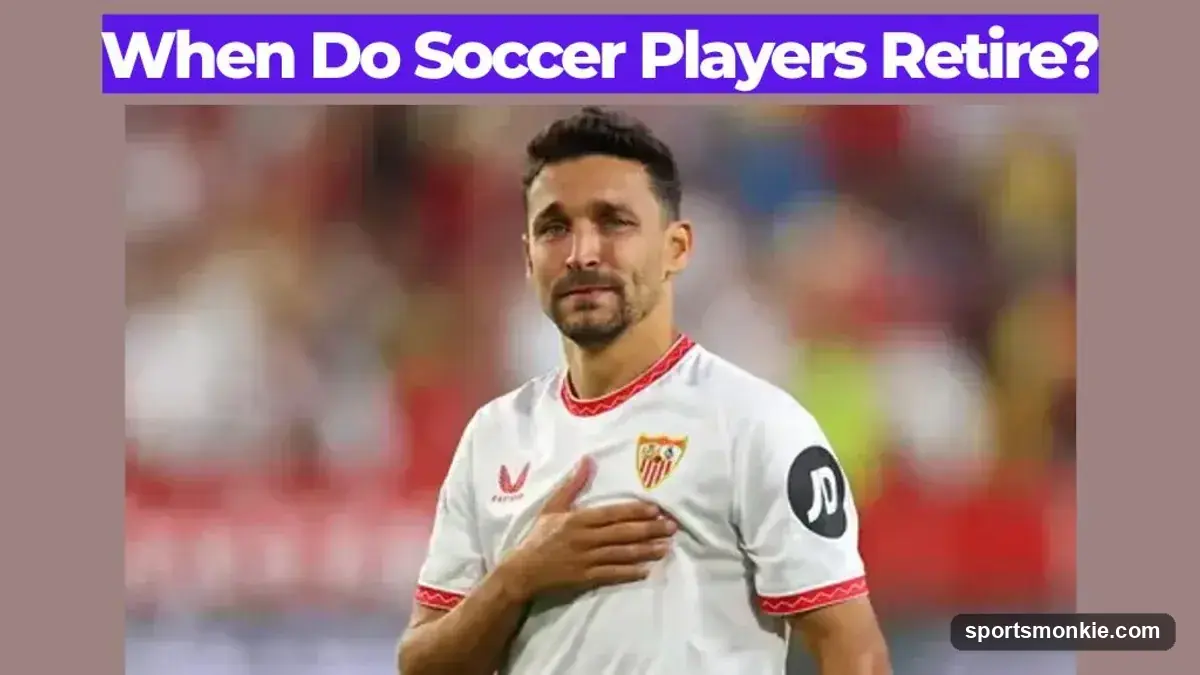
A 34-year-old centre-back can still read the game better than anyone on the pitch. He just can’t chase down a 21-year-old winger anymore, and that gap is usually what ends a career, not a sudden collapse in ability. Most professional players retire between their early and mid-30s, with careers running from the late teens or early 20s through to roughly 32 to 35, but the exact number depends heavily on position, injury history, and how much of a player’s game relies on speed versus reading the play.
There’s no single trigger. A mix of physical decline, whether clubs still want to pay for the player, and personal choice about how the story ends all factor in, and different players weigh them differently.
Typical Career Spans by Position
Position plays a significant role in how long players remain active at professional level.
| Position | Typical Peak Years | Common Retirement Range |
|---|---|---|
| Goalkeeper | Mid-20s to late 30s | Late 30s to early 40s |
| Defender (centre-back) | Mid-20s to mid-30s | 32–36 |
| Full-back / Wing-back | Early 20s to early 30s | 30–34 |
| Central midfielder | Mid-20s to mid-30s | 32–36 |
| Winger / Wide forward | Early 20s to early 30s | 29–33 |
| Striker | Mid-20s to early 30s | 30–34 |
Goalkeepers last the longest because the position leans on positioning, reading the game, and reflexes rather than the sprinting and explosive changes of direction that fade first with age, which is one reason the most successful goalkeepers so often played into their late 30s. Wingers and quick forwards, who live off pace, tend to notice the decline earliest, and even the best football strikers rarely hold their peak past the age range in the table above.
What Actually Pushes Players Out
Physical decline. Speed and recovery time erode gradually. A player whose whole game was built on pace can lose effectiveness even while his technical ability stays intact.
Injuries piling up. Repeated knee, ankle, or hamstring injuries wear a career down faster than age alone. Once chronic issues start limiting training and match availability, continuing becomes impractical rather than impossible.
The market. Clubs keep signing younger players. A 33-year-old might still be playing well but find fewer offers of the minutes or wages he wants, which is why so many players drift into lower divisions or less demanding leagues to keep playing a few more years.
Choosing the exit. Some players walk away while they can still perform, on their own terms, rather than wait for the decline to become obvious to everyone watching. Teemu Pukki did exactly that in October 2026, announcing his retirement with four games left and a league title still to play for.
The Outliers
A handful of players push well past the usual range, and goalkeepers make up most of that list, some staying competitive into their 40s, a few of them even scoring goals of their own along the way. These are exceptions, not a preview of where the norm is heading. Below the elite level, in lower professional and semi-pro leagues, careers commonly stretch longer too, since the physical bar is lower.
Why Careers Run Longer Than They Used To
Better training methods, nutrition science, and injury rehab have pushed the typical retirement age later than it was for players in the 1980s and 1990s. Clubs now track detailed physical data on every player and build conditioning programs around it, and rehab from injuries that once ended careers is far more reliable than it used to be.
What Comes Next
Plenty of players stay in the game after playing ends, moving into coaching, club management, punditry, or front-office roles. Others step away entirely into business or charity work. It’s a bigger life transition than it looks from the outside, and player associations have put real resources into helping players prepare for it rather than leaving them to figure it out alone.
Frequently asked questions
What is the average retirement age for soccer players?+
The average professional soccer player retires in their early to mid-30s, with most careers at the top level lasting from the late teens or early 20s through to roughly ages 32 to 35.
Which soccer position has the longest career?+
Goalkeepers typically enjoy the longest careers among outfield and goalkeeping positions, often playing competitively into their late 30s or even early 40s, since they rely less on explosive speed than outfield players.
Do soccer players retire earlier than athletes in other sports?+
Soccer players tend to retire earlier than athletes in sports with less physical demand on explosive movements. However, improvements in sports science and nutrition have extended careers notably compared to earlier generations.
Which injuries end soccer careers most often?+
Repeated knee, ankle and hamstring problems are the usual career enders, because they limit training and match availability season after season. A single injury rarely finishes a top-level career on its own now, since rehab has improved so much. It is the accumulation, and the loss of a yard of pace during recovery, that pushes players out.
Why do some players drop down the leagues instead of retiring?+
Because the offers change before the ability disappears. Clubs keep signing younger players, so a veteran in his early 30s may still play well but find fewer offers of the minutes or wages he wants at the top level. Dropping into a lower division or a less demanding league keeps the career going for a few more years.
What do soccer players do after they retire?+
Plenty stay in the game, moving into coaching, club management, punditry or front-office roles. Others step away entirely into business or charity work. It is a bigger life transition than it looks from the outside, and player associations now put real resources into helping players prepare for it rather than leaving them to figure it out alone.
Sources
Play & tools
Free browser games and tools — no account, no download.
- Play 38-0 — Sign a 4-4-2 of all-time football legends and chase a perfect 38-0 league season — perfect, not just unbeaten.
- Explore all our games →
Related football guides
View all →
Why Do Soccer Players Flop? Diving and Simulation Explained
Soccer players flop, or simulate fouls, to win free kicks, penalties and get opponents carded. Here's why it happens, how it's punished and the fixes.
11v11 Soccer Formations: The Full-Sided Guide to Every Shape
11v11 soccer formations explained: how full-sided lineups work, the most common shapes (4-4-2, 4-3-3, 4-2-3-1, 3-5-2, 5-3-2), and how to pick one.
7v7 Soccer Formations: Best Youth Shapes for U9/U10 Explained
The best 7v7 soccer formations for youth teams are 2-3-1, 3-2-1, 2-1-2-1, 3-1-2, and 1-3-2 — each suited to a different style of U9/U10 play.
9v9 Soccer Formations: Best Youth Shapes for U11/U12 Explained
The best 9v9 soccer formations for youth teams are 3-3-2, 3-2-3, 2-4-2, 3-4-1, and 2-3-3 — here's how each one lines up and which fits your squad.
High Press in Soccer: What It Is and How It Works
High press in soccer explained: how teams trap opponents deep, key triggers, man vs zonal systems, and why Klopp, Guardiola and Bielsa built careers on it.
Inverted Fullback Explained: What It Means in Soccer Tactics
What is an inverted fullback in soccer? Learn how the role works, why Pep Guardiola popularized it, and which players do it best.