
The 10 Largest MLB Stadiums by Seating Capacity, Ranked
On this page13
- 01The 10 largest MLB stadiums, ranked
- 021. Dodger Stadium
- 032. Chase Field
- 043. T-Mobile Park
- 054. Coors Field
- 065. Yankee Stadium
- 076. Angel Stadium
- 087. Oriole Park at Camden Yards
- 098. Busch Stadium
- 109. Great American Ball Park
- 1110. Citizens Bank Park
- 12Why modern parks are built smaller
- 13How we ranked them
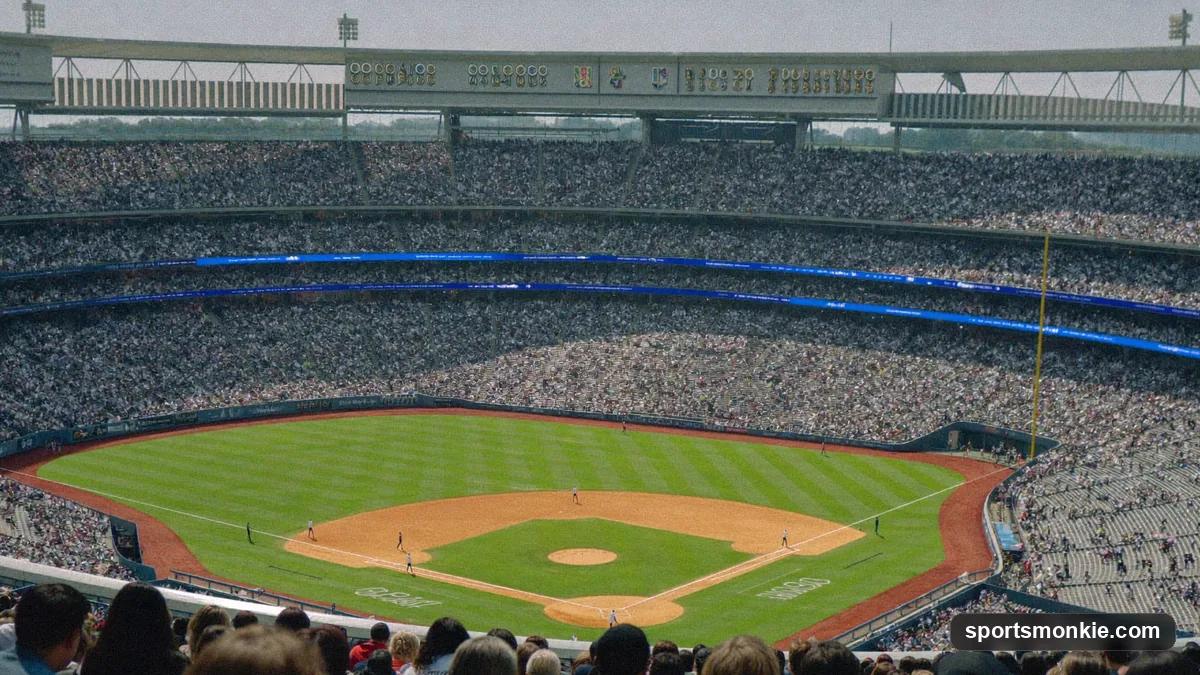
Dodger Stadium in Los Angeles is the largest MLB stadium by seating capacity at roughly 56,000 — nearly 7,700 seats ahead of second-place Chase Field (~48,330). Behind those two come T-Mobile Park (~47,368), Coors Field (~46,897) and Yankee Stadium (~46,537). Here are the 10 biggest ballparks in the majors, ranked, with what makes each one that size.
The 10 largest MLB stadiums, ranked
| Rank | Ballpark | Team | Approx. capacity |
|---|---|---|---|
| 1 | Dodger Stadium | Los Angeles Dodgers | ~56,000 |
| 2 | Chase Field | Arizona Diamondbacks | ~48,330 |
| 3 | T-Mobile Park | Seattle Mariners | ~47,368 |
| 4 | Coors Field | Colorado Rockies | ~46,897 |
| 5 | Yankee Stadium | New York Yankees | ~46,537 |
| 6 | Angel Stadium | Los Angeles Angels | ~45,517 |
| 7 | Oriole Park at Camden Yards | Baltimore Orioles | ~44,487 |
| 8 | Busch Stadium | St. Louis Cardinals | ~44,383 |
| 9 | Great American Ball Park | Cincinnati Reds | ~43,500 |
| 10 | Citizens Bank Park | Philadelphia Phillies | ~42,901 |
Figures are approximate and shift with renovations and configuration changes.
1. Dodger Stadium
Los Angeles Dodgers · ~56,000. Opened in 1962, Dodger Stadium has been the biggest ballpark in the majors for over 60 years and isn’t close to being caught. Built into the hills of Chavez Ravine, its multi-tiered bowl design was constructed at a scale unmatched by any other current MLB venue, and it remains the third-oldest active MLB park behind only Fenway Park and Wrigley Field. Even after renovations that trimmed and later restored seating in various sections, its capacity has held steady near 56,000 — a size that makes it not just MLB’s biggest stadium but larger than most NFL stadiums by seat count too. See the oldest MLB stadiums for where it ranks by age as well as size.
2. Chase Field
Arizona Diamondbacks · ~48,330. Chase Field’s size is a byproduct of its function: as a retractable-roof stadium built to combat Phoenix’s brutal summer heat, it needed a large, climate-controllable enclosed structure, and the resulting bowl came in well above the league average. Opened in 1998, it was one of the first MLB parks purpose-built with a roof for climate reasons rather than rain, and its size gives it flexibility for concerts and other large events beyond baseball.
3. T-Mobile Park
Seattle Mariners · ~47,368. Like Chase Field, T-Mobile Park (opened 1999) was built with a retractable roof — this one to shield fans from Seattle’s rain rather than heat — and the engineering required to support that roof structure over such a wide span pushed its footprint, and capacity, upward. It’s consistently ranked among the more scenic parks in baseball thanks to downtown Seattle and Mount Rainier views from the upper deck.
4. Coors Field
Colorado Rockies · ~46,897. Coors Field opened in 1995 as one of the first “retro” ballparks built in the Camden Yards mold, but at nearly 47,000 seats it was constructed noticeably larger than most of that era’s parks. Its mile-high altitude is famous for turning it into one of the best hitters’ parks in the league, and the Rockies have historically drawn strong crowds that the extra capacity was designed to accommodate.
5. Yankee Stadium
New York Yankees · ~46,537. The current Yankee Stadium opened in 2009 as a replacement for the original 1923 ballpark, and the Yankees built it with one of the largest capacities of the post-Camden Yards generation specifically because of the franchise’s massive, reliable attendance base. It remains the largest ballpark in the American League and routinely sells out for marquee series against the Red Sox and other rivals.
6. Angel Stadium
Los Angeles Angels · ~45,517. Opened in 1966 as a multipurpose stadium that once hosted both baseball and NFL football, Angel Stadium’s size reflects that dual-use origin, similar to other 1960s “cookie-cutter” era parks. Renovations in the late 1990s removed football seating and reshaped it into a baseball-only venue, but it retained much of its original large-capacity footprint.
7. Oriole Park at Camden Yards
Baltimore Orioles · ~44,487. Camden Yards launched the entire “retro ballpark” movement when it opened in 1992, and while later retro parks trended smaller, Camden Yards itself was built with a sizable capacity to match the scale of the historic B&O Warehouse it sits beside. It remains one of the most influential stadium designs in modern sports architecture.
8. Busch Stadium
St. Louis Cardinals · ~44,383. The Cardinals have one of the most loyal, highest-attendance fan bases in baseball, and the current Busch Stadium (opened 2006) was sized accordingly — large enough to consistently rank among MLB’s top-five in average attendance most seasons. Its open outfield frames a view of the Gateway Arch, a signature look tied directly to its St. Louis identity.
9. Great American Ball Park
Cincinnati Reds · ~43,500. Opened in 2003 along the Ohio River, Great American Ball Park was built at a capacity slightly above the era’s typical range, giving the Reds room for the large crowds that turn out for Opening Day, historically one of the biggest single-day events on the MLB calendar in Cincinnati.
10. Citizens Bank Park
Philadelphia Phillies · ~42,901. Citizens Bank Park (opened 2004) rounds out the top 10, sized to match one of the most passionate and vocal fan bases in the sport. Deep playoff runs in recent seasons have regularly filled it to capacity, and its outfield “Ashburn Alley” concourse is part of why it’s often cited among the best MLB ballparks for atmosphere.
Why modern parks are built smaller
Every ballpark built since the mid-2000s — Citi Field, Nationals Park, Truist Park, Daikin Park (formerly Minute Maid Park) and others — falls below this top-10 list, mostly in the 39,000-42,000 range. That’s by design. The retro-ballpark era that Camden Yards kicked off in 1992 favored intimacy, better sightlines and premium seating over the raw capacity that defined 1960s-70s multipurpose stadiums like the original Yankee Stadium, Angel Stadium and the long-gone concrete “cookie-cutter” parks in Cincinnati, Pittsburgh and Philadelphia. Fewer seats also make sellouts easier to achieve, which matters for both atmosphere and franchise revenue optics.
How we ranked them
This list ranks all 30 MLB ballparks by their officially listed baseball seating capacity and presents the top 10. Capacities are compiled from MLB.com’s official ballpark pages and cross-checked against independent stadium trackers, since minor discrepancies of a few hundred seats are common due to configuration changes, added premium sections, or standing-room adjustments between seasons. Where a team plays in a temporary or non-standard venue (such as the Athletics at Sutter Health Park), that park is excluded from the top-10 ranking of purpose-built MLB stadiums. For context on how these parks compare across the sport, see our full baseball coverage and the biggest NFL stadiums for a cross-league comparison.
Frequently asked questions
What are the largest MLB stadiums by capacity?+
Dodger Stadium (Los Angeles Dodgers, ~56,000) is the largest MLB ballpark by a wide margin. It's followed by Chase Field (Arizona Diamondbacks, ~48,330), T-Mobile Park (Seattle Mariners, ~47,368), Coors Field (Colorado Rockies, ~46,897) and Yankee Stadium (New York Yankees, ~46,537) to round out the top five.
How many people does Dodger Stadium hold?+
Dodger Stadium holds approximately 56,000 fans, the largest seating capacity in Major League Baseball. Opened in 1962, it has been the biggest park in the majors for decades and is also the third-oldest active MLB stadium still in use.
What is the second-largest MLB stadium?+
Chase Field in Phoenix, home of the Arizona Diamondbacks, is the second-largest MLB ballpark with a capacity of about 48,330. It's notable as a retractable-roof stadium built primarily for climate control in the desert heat rather than for size.
Which MLB ballpark has the biggest gap to the next-largest stadium?+
Dodger Stadium's roughly 56,000 capacity sits nearly 7,700 seats above Chase Field at #2, the largest gap between the #1 and #2 stadiums of any major U.S. sports league by capacity. No other MLB park comes within 10,000 seats of Dodger Stadium.
Why are modern MLB stadiums smaller than Dodger Stadium?+
Ballparks built since the 1990s' 'retro' era, starting with Camden Yards in 1992, were designed for intimacy and premium seating rather than maximum capacity. Most fall in the 39,000-42,000 range, well below the 1960s multipurpose giants like Dodger Stadium that were built when capacity itself was a selling point.
What is the smallest MLB stadium?+
Sutter Health Park, the Athletics' temporary home in West Sacramento while their Las Vegas ballpark is built, is the smallest at roughly 14,000. Among permanent MLB-built parks, Tropicana Field (Tampa Bay Rays) has the smallest capacity at about 25,025.
Does a bigger stadium mean a better atmosphere?+
Not necessarily. A sold-out smaller park like Fenway Park or Wrigley Field often feels louder and more electric than a large stadium with empty upper-deck seats. See our [best MLB ballparks](/best-mlb-ballparks/) guide for how atmosphere, not just size, is judged.
Do MLB stadium capacities change over time?+
Yes. Capacities shift as teams renovate, add premium seating, remove bleacher sections, or reconfigure the outfield, so published figures can move by a few hundred to a few thousand between seasons. Dodger Stadium's position at the top has still been stable for decades.
Sources
Play & tools
Free browser games and tools — no account, no download.
- Play 162-0 — Draft nine and see if your roster can survive a flawless 162-game MLB season.
- Explore all our games →
- Analyze a trade — Compare both sides of a fantasy baseball trade before you accept.
- Run the MLB predictor — Simulate the MLB postseason bracket down to a World Series champion.
- Open the ERA calculator — Work out earned run average from earned runs and innings pitched — handles the .1/.2 thirds convention.
- Explore all our free sports tools →
Related baseball guides
View all →
Largest Stadiums in the World by Seating Capacity
Narendra Modi Stadium (132,000), Rungrado 1st of May (114,000) and Michigan Stadium (107,601) top the list. All 12 of the world's biggest stadiums, named and ranked.
The Oldest MLB Stadiums Still in Use
Ranked: the 10 oldest MLB ballparks still in use, from Fenway Park (1912) and Wrigley Field (1914) to Dodger Stadium (1962), Angel Stadium (1966), Kauffman Stadium (1973) and beyond, with opening years and history.
The Best MLB Ballparks, Ranked by Atmosphere & History
The best MLB ballparks ranked: PNC Park, Oracle Park, Wrigley Field, Fenway and Camden Yards, weighed on views, history, features, food and atmosphere.
The 10 Best Pitchers in MLB Right Now, Ranked
The best MLB pitchers right now, ranked for the 2026 season: Paul Skenes, Tarik Skubal, Jacob Misiorowski, Yoshinobu Yamamoto and the elite aces defining it.
Most Wins in a Season by an MLB Pitcher
The most wins in a season by an MLB pitcher: Old Hoss Radbourn's 60 in 1884 leads all-time, Jack Chesbro's 41 is the modern record, McLain's 31 was last.
Biggest NFL Stadiums by Seating Capacity, Ranked (2026)
MetLife Stadium tops the biggest NFL stadiums at 82,500 seats, with Lambeau Field and AT&T Stadium close behind. See all 11 venues ranked by exact capacity, team, and year opened.