
The Best MLB Ballparks, Ranked by Atmosphere & History
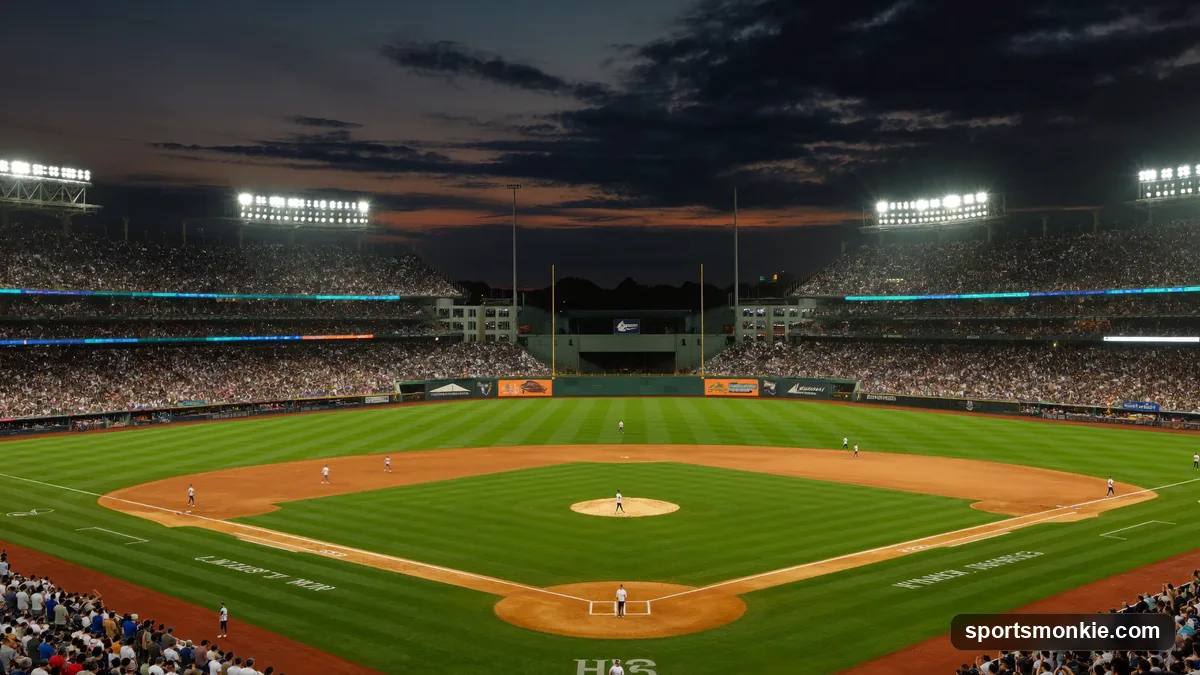
On this page15
- 01The best MLB ballparks at a glance
- 02PNC Park (Pittsburgh Pirates)
- 03Oracle Park (San Francisco Giants)
- 04Wrigley Field (Chicago Cubs)
- 05Fenway Park (Boston Red Sox)
- 06Oriole Park at Camden Yards (Baltimore Orioles)
- 07Petco Park (San Diego Padres)
- 08Coors Field (Colorado Rockies)
- 09Dodger Stadium (Los Angeles Dodgers)
- 10Busch Stadium (St. Louis Cardinals)
- 11Target Field (Minnesota Twins)
- 12How we ranked the ballparks
- 13Views vs. history: two ways to rank a park
- 14At-a-glance comparison
- 15Planning a visit
Placement rewards a park that does something no other park can copy — a unique view, a one-of-a-kind wall, or a setting baseball built around it. We weighted view and setting and signature features most heavily, then history, then food and fan atmosphere; raw capacity only breaks ties.
The best MLB ballparks at a glance
| Rank | Ballpark | Team | Defining feature |
|---|---|---|---|
| 1 | PNC Park | Pittsburgh Pirates | Downtown and bridge view |
| 2 | Oracle Park | San Francisco Giants | Bayfront setting |
| 3 | Wrigley Field | Chicago Cubs | Living baseball history |
| 4 | Fenway Park | Boston Red Sox | Oldest active MLB park |
| 5 | Camden Yards | Baltimore Orioles | Started the retro-ballpark era |
| 6 | Petco Park | San Diego Padres | Complete downtown experience |
| 7 | Coors Field | Colorado Rockies | Altitude and mountain backdrop |
| 8 | Dodger Stadium | Los Angeles Dodgers | Scale and longevity |
- Best view in baseball
PNC Park (Pittsburgh Pirates)
No other park frames a city the way PNC Park does. The outfield opens onto the Allegheny River, the yellow Roberto Clemente Bridge and the downtown Pittsburgh skyline in one unbroken sightline visible from nearly every seat in the 38,747-capacity park. That single backdrop is why it tops more "best ballpark" lists than any other venue and ranks above Oracle Park here — both sell a waterfront view, but PNC adds a full skyline and keeps the seating bowl low and intimate.
Opened in 2001, it refined the retro-classic template Camden Yards introduced: two decks instead of three, exposed steel, limestone facades. Fans walk across the Clemente Bridge from downtown on game days, so the approach itself becomes part of the experience.
Team: Pittsburgh Pirates · Opened: 2001 · Capacity: ~38,747 · Defining feat: river, bridge and skyline in one sightline
- Best waterfront setting
Oracle Park (San Francisco Giants)
Oracle Park earns second on scenery and a landmark all its own: San Francisco Bay sits just beyond the right-field wall, and McCovey Cove draws kayakers who paddle out during games hoping to fish out a "splash hit" home run. Opened in 2000 and seating roughly 41,300, it adds a giant Coca-Cola bottle slide, a working antique arcade and a Bay Bridge view.
It ranks just behind PNC because the view, while gorgeous, is water and bridge rather than a full downtown skyline. The wind swirling off the Bay is no gimmick either — it knocks down fly balls and makes right field one of the hardest home-run targets in the majors.
Team: San Francisco Giants · Opened: 2000 · Capacity: ~41,300 · Defining feat: McCovey Cove splash hits
- Living history
Wrigley Field (Chicago Cubs)
Opened in 1914, Wrigley is the second-oldest park in MLB and, for many rankings, the outright No. 1. The ivy-covered outfield brick, the hand-operated center-field scoreboard and the rooftop bleachers across Waveland and Sheffield Avenues give it a texture no post-1990s park has manufactured. It sits alongside Fenway as one of the two oldest MLB stadiums still in use.
It lands third rather than first because its sightlines and concourses show their age next to newer parks. The neighborhood is the trade-off that makes it worth it: Wrigleyville's bars and rooftops packed with fans extend the atmosphere well past the gates.
Team: Chicago Cubs · Opened: 1914 · Signature: outfield ivy, hand-turned scoreboard · Setting: Wrigleyville rooftops
- Oldest active park
Fenway Park (Boston Red Sox)
Fenway is the oldest active ballpark in Major League Baseball, opened in 1912, and its left-field wall — the Green Monster, listed at 37 feet — is the sport's single most recognizable feature. The cramped, irregular dimensions came from wedging a stadium into a dense Boston street grid, and that accident of geometry is exactly what modern symmetrical parks can't fake.
Seats are tight and legroom is famously short, which is why it sits behind Wrigley among the antiques rather than ahead of it. But no fan sits far from the field, and the bars and vendors lining Yawkey Way and the surrounding streets feed a pregame energy few parks match.
Team: Boston Red Sox · Opened: 1912 · Signature: 37-foot Green Monster · Note: oldest active MLB park
- Started the retro era
Oriole Park at Camden Yards (Baltimore Orioles)
Camden Yards, opened in 1992, is the park every stadium built after it copied. Its brick facade, downtown Baltimore location and the enormous B&O Warehouse running along right field — preserved rather than demolished — set the "retro-classic" template that produced PNC Park, Coors Field, Petco Park and dozens more.
It ranks fifth on influence as much as experience: Camden Yards proved fans wanted old-fashioned aesthetics paired with modern sightlines, ending the era of interchangeable concrete "cookie-cutter" stadiums. Nearly every park above and below it on this list owes some part of its design to what opened here.
Team: Baltimore Orioles · Opened: 1992 · Signature: B&O Warehouse beyond right field · Legacy: launched retro ballparks
- Best all-around day out
Petco Park (San Diego Padres)
San Diego's downtown park, opened in 2004, ranks on the total day rather than any one feature. It borders the Gaslamp Quarter, serves some of the best food in baseball, and adds grassy hillside seating in the Park at the Park — a relaxed, family-friendly setup you can watch the game from without a ticket to a seat. Year-round San Diego weather does the rest.
It sits sixth because it lacks a singular signature like a Monster or a warehouse. Its dimensions long favored pitchers, though fence adjustments in recent seasons have nudged offense closer to league average.
Team: San Diego Padres · Opened: 2004 · Signature: Park at the Park lawn seating · Strength: food and setting
- The altitude park
Coors Field (Colorado Rockies)
Coors Field sits roughly a mile above sea level, and the thin Denver air is the whole story: fly balls carry farther and breaking pitches break less, historically making it one of the highest-scoring, most homer-friendly parks in the sport. The Rockies store game balls in a humidor specifically to blunt the effect.
Beyond the physics, it's genuinely scenic — a single row of purple seats in the upper deck marks the exact mile-high elevation line, and sunset views over the Rocky Mountains from the outfield concourse are among the best anywhere. It ranks seventh because the offense-inflating altitude is as much a quirk as a selling point.
Team: Colorado Rockies · Opened: 1995 · Signature: purple mile-high seat row · Quirk: altitude-boosted offense, humidor
- Biggest and enduring
Dodger Stadium (Los Angeles Dodgers)
Built in 1962 into Chavez Ravine above downtown Los Angeles, Dodger Stadium is the largest MLB stadium by capacity at roughly 56,000 — a figure a conditional-use permit has capped for decades — and the third-oldest active park behind only Fenway and Wrigley. Its multi-tiered symmetrical bowl and palm-lined lots are instantly recognizable.
It ranks eighth because its scale and parking-lot approach trade intimacy for grandeur. Still, sweeping San Gabriel Mountains views beyond the outfield give a park this large a setting few of its size can match, and it has never needed heavy structural rebuilding to stay in use.
Team: Los Angeles Dodgers · Opened: 1962 · Capacity: ~56,000 (largest in MLB) · Note: third-oldest active park
- One unforgettable view
Busch Stadium (St. Louis Cardinals)
St. Louis's downtown park, opened in 2006, delivers a view that belongs only to it: the Gateway Arch rises directly beyond the outfield, visible from most of the seating bowl. Statues and a museum built into the concourse lean hard into Cardinals history, and the crowd is regarded as one of the most knowledgeable fan bases in the sport.
It ranks ninth because outside that Arch sightline, its brick-and-limestone design is a solid retro park rather than a distinctive one. But the atmosphere — reliably strong support, deep team history on display — carries it into the top 10.
Team: St. Louis Cardinals · Opened: 2006 · Signature: Gateway Arch beyond the outfield · Strength: fan support and history
- Modern comfort
Target Field (Minnesota Twins)
Minnesota's downtown Minneapolis park, opened in 2010, brought outdoor baseball back to the Twins after nearly three decades under the Metrodome roof. Built from locally quarried limestone meant to echo the region's bluffs, it's praised for the comfort upgrades — wider concourses, cleaner sightlines — that many 1990s and early-2000s parks lack.
It closes the list because it wins on execution rather than a headline feature. Downtown skyline views and a compact roughly 38,500-seat bowl keep the sound close to the field even on cool early-season nights, which is exactly what an outdoor park in Minnesota needs.
Team: Minnesota Twins · Opened: 2010 · Capacity: ~38,500 · Signature: local limestone, downtown skyline views
Reader interaction
Build your ranking
Drag the names into the order you think is right — or use the arrows — then submit to see how your list compares with everyone else's.
- PNC Park (Pittsburgh Pirates)
- Oracle Park (San Francisco Giants)
- Wrigley Field (Chicago Cubs)
- Fenway Park (Boston Red Sox)
- Oriole Park at Camden Yards (Baltimore Orioles)
- Petco Park (San Diego Padres)
- Coors Field (Colorado Rockies)
- Dodger Stadium (Los Angeles Dodgers)
- Busch Stadium (St. Louis Cardinals)
- Target Field (Minnesota Twins)
Audience ranking
How everyone ranked them
Built from reader rankings using position-based points.
The ranked cards above cover why each park earns its spot. This section explains the criteria behind those placements and the context that helps you compare parks that win on very different strengths.
How we ranked the ballparks
We weighed five things most rankings agree on, in rough order of importance. First, the view and setting beyond the outfield — the single factor that most separates a good park from a great one. Second, signature architectural features that exist nowhere else: the Green Monster, Wrigley’s ivy, the B&O Warehouse, the Gateway Arch. Third, history and age. Fourth, the surrounding neighborhood and food. Fifth, overall fan atmosphere.
Raw seating capacity only breaks ties. A bigger park is not a better one — most post-1990s stadiums were deliberately built smaller, in the low-to-mid 40,000s, to keep crowds close to the field. Dodger Stadium is the exception that proves the rule: it ranks on setting and endurance, not on being the biggest.
No formula fully settles the top spot, which is why PNC Park, Oracle Park and Wrigley Field rotate through No. 1 across nearly every major outlet. A history purist ranks Fenway or Wrigley first; a view-chaser picks PNC or Oracle.
Views vs. history: two ways to rank a park
The parks split cleanly into two philosophies. The view-first group — PNC Park, Oracle Park, Coors Field, Busch Stadium — built the seating bowl around a specific outside landmark, whether a skyline, a bay, a mountain range or an arch. The history-first group — Fenway and Wrigley — earns its place by surviving for over a century with its quirks intact.
Camden Yards bridges both: it’s a modern park that manufactured a sense of history so convincingly that everything built afterward borrowed from it. Where a park lands often comes down to which of these two things you value on a given afternoon.
At-a-glance comparison
| Rank | Ballpark | Opened | Best-known for |
|---|---|---|---|
| 1 | PNC Park | 2001 | River, bridge and skyline view |
| 2 | Oracle Park | 2000 | McCovey Cove, Bay setting |
| 3 | Wrigley Field | 1914 | Ivy walls, hand-turned scoreboard |
| 4 | Fenway Park | 1912 | Green Monster, oldest active park |
| 5 | Camden Yards | 1992 | Started the retro-ballpark era |
| 6 | Petco Park | 2004 | Food, Park at the Park lawn |
| 7 | Coors Field | 1995 | Mile-high altitude, mountain sunsets |
| 8 | Dodger Stadium | 1962 | Largest capacity (~56,000) |
| 9 | Busch Stadium | 2006 | Gateway Arch view |
| 10 | Target Field | 2010 | Limestone design, modern comfort |
Planning a visit
If you’re building a ballpark road trip, cluster by region: PNC Park and Camden Yards anchor an eastern loop with Fenway; Oracle Park, Dodger Stadium and Petco Park make a natural West Coast run. Check whether your dates land on a homestand well ahead of time, since these parks are the ones opposing fans travel for.
For the game itself, brush up on the types of pitches in baseball you’ll watch break — or not break, at Coors Field. If you’re comparing venues across sports, see how the biggest NFL stadiums dwarf even Dodger Stadium. For more, browse our baseball guides.
Frequently asked questions
What is the best ballpark in MLB?+
PNC Park in Pittsburgh, Oracle Park in San Francisco and Wrigley Field in Chicago are the three parks that most often claim the No. 1 spot across major rankings — PNC for its skyline-and-river view, Oracle for its Bay setting, and Wrigley for its ivy and history. Fenway Park and Camden Yards usually sit just behind. The 'best' depends on whether you weight views, character or history most heavily.
What are the two oldest MLB ballparks still in use?+
Fenway Park in Boston, opened in 1912, and Wrigley Field in Chicago, opened in 1914, are by far the two oldest ballparks still in use in Major League Baseball. Both are loved for their quirks — Fenway's 37-foot Green Monster left-field wall and Wrigley's ivy-covered outfield brick and hand-operated scoreboard. Dodger Stadium (1962) is the third-oldest. See our full guide to the oldest MLB stadiums for the rest.
Which MLB ballpark is hardest to hit home runs in?+
Oracle Park in San Francisco is one of the toughest, especially for right-handed hitters, because wind swirling off San Francisco Bay knocks down fly balls to the deep right-center gap. On the opposite extreme, Coors Field in Denver plays as the most homer-friendly park in baseball, since the mile-high thin air lets balls carry noticeably farther. Park factors shift year to year, but that gap between the two is long-standing.
What started the retro ballpark trend?+
Oriole Park at Camden Yards in Baltimore, opened in 1992, launched the 'retro' ballpark movement. Its old-fashioned brick design, downtown location, preserved B&O Warehouse beyond right field and asymmetric dimensions inspired a wave of stadiums that blended classic looks with modern amenities — Coors Field, PNC Park, Petco Park and many others all trace design DNA back to it, ending the era of concrete multi-purpose stadiums.
Which ballparks are best for food and atmosphere?+
Petco Park in San Diego is repeatedly singled out for food and its relaxed Park at the Park lawn, while Wrigley Field's Wrigleyville rooftops and Fenway's surrounding streets add game-day energy no concourse can bottle. Busch Stadium draws praise for a knowledgeable, reliably loud St. Louis crowd. If you want the full sensory day out rather than a single signature view, those parks tend to top the list.
Is Coors Field really different because of altitude?+
Yes. Coors Field sits roughly a mile above sea level in Denver, where thinner air lets fly balls travel farther and breaking pitches break less, historically producing some of the highest-scoring games and most home runs per game in MLB. The Rockies store baseballs in a humidor specifically to add moisture and counteract the effect. A single row of purple upper-deck seats marks the exact mile-high elevation line.
Sources
Play & tools
Free browser games and tools — no account, no download.
- Play 162-0 — Draft nine and see if your roster can survive a flawless 162-game MLB season.
- Explore all our games →
- Analyze a trade — Compare both sides of a fantasy baseball trade before you accept.
- Run the MLB predictor — Simulate the MLB postseason bracket down to a World Series champion.
- Open the ERA calculator — Work out earned run average from earned runs and innings pitched — handles the .1/.2 thirds convention.
- Explore all our free sports tools →
Related baseball guides
View all →
The Oldest MLB Stadiums Still in Use
Ranked: the 10 oldest MLB ballparks still in use, from Fenway Park (1912) and Wrigley Field (1914) to Dodger Stadium (1962), Angel Stadium (1966), Kauffman Stadium (1973) and beyond, with opening years and history.
The 10 Best Pitchers in MLB Right Now, Ranked
The best MLB pitchers right now, ranked for the 2026 season: Paul Skenes, Tarik Skubal, Jacob Misiorowski, Yoshinobu Yamamoto and the elite aces defining it.
The 10 Largest MLB Stadiums by Seating Capacity, Ranked
Dodger Stadium tops the list at roughly 56,000 seats, followed by Chase Field, T-Mobile Park, Coors Field and Yankee Stadium. Every top-10 MLB ballpark by capacity, ranked and explained.
Most Wins in a Season by an MLB Pitcher
The most wins in a season by an MLB pitcher: Old Hoss Radbourn's 60 in 1884 leads all-time, Jack Chesbro's 41 is the modern record, McLain's 31 was last.
The 30-30 Club in MLB (History and Members)
The MLB 30-30 club is hitters with 30 home runs and 30 steals in a season. Ken Williams did it first in 1922; the Bonds hold the record with five each.
Longest Hitting Streak in MLB History
Joe DiMaggio holds the record with a 56-game hitting streak in 1941. Full leaderboard of the longest streaks and why the record is considered unbreakable.