
Why Is Soccer So Popular? The Global Reach of Football Explained
On this page7
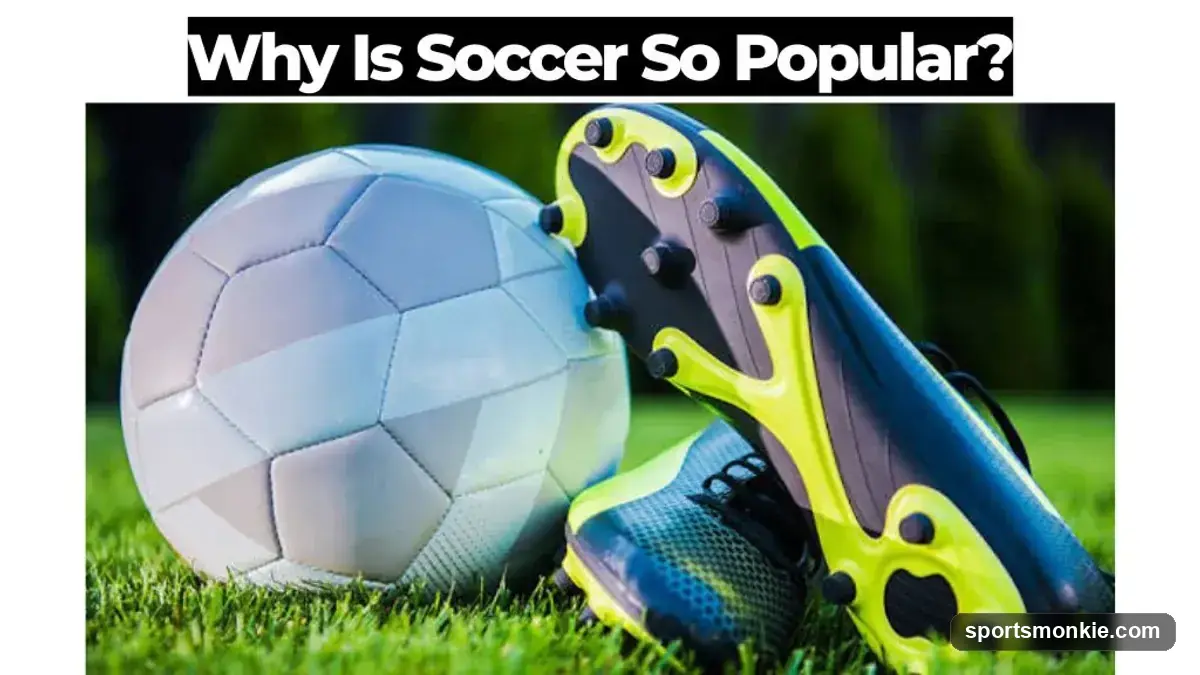
Soccer is the world’s most popular sport for one reason above all others: it costs almost nothing to play. A ball and flat ground is the entire barrier to entry, low enough for nearly anyone on the planet to clear, and that accessibility let the game spread through British trade and colonial networks into places no equipment-heavy sport could reach. Five other factors compound it — rules a newcomer grasps in five minutes, deep national identity, an unbroken clock, FIFA’s 211 member associations, and players famous beyond the sport. The result is roughly 3.5 billion fans and a World Cup that FIFA says drew 5 billion in 2022.
Kids in a Lagos alley, a São Paulo favela, and a Manchester estate are all playing the same game this afternoon, with the same rules, often the same jersey numbers on their backs, even if none of them will ever meet. No other sport has replicated that.
It Costs Almost Nothing to Play
A ball, or something that stands in for one, and roughly flat ground is enough for a game. No protective gear, no groomed pitch, no fixed number of players required to make it worth playing.
That low bar means kids in communities that could never afford rugby kit, American football pads, or ice time can still play soccer at a genuinely competitive level. It spreads on its own wherever it lands.
Anyone Can Understand It in Five Minutes
The core rule is one sentence: get the ball into the net without using your hands or arms, unless you’re the goalkeeper. There’s a lifetime of tactical depth underneath that, but a first-time viewer doesn’t need any of it to follow what’s happening and start caring about the outcome.
| Factor | Soccer | Rugby | American Football | Cricket |
|---|---|---|---|---|
| Equipment cost | Very low | Moderate | High | Moderate |
| Rules complexity (entry level) | Low | Moderate | High | High |
| Pitch requirement | Flexible | Formal pitch | Formal pitch | Formal pitch |
| Players needed to start | 2+ | 15 | 11+ | 11+ |
It Became Part of National Identity
As football spread across the world in the late 19th and early 20th centuries, it fused with local and national pride in a way few sports have matched. Club sides stand in for cities and regions; national teams carry an entire country’s expectations every four years at the World Cup, and that tournament creates a shared focus that almost nothing else in public life can match.
That attachment renews itself. Parents hand the game to their kids, towns build their identity around a local club, and the shared memory of big moments (a title, a heartbreak, a legendary goal) gets passed down for decades.
The Clock Rarely Stops
Two 45-minute halves with very little stoppage keep the eyes on the pitch in a way stop-start sports don’t. Goals are rare enough that each one lands hard, and a single moment late in a tight match can flip the whole result. That tension is part of the appeal.
The Infrastructure Is Everywhere
FIFA counts 211 member associations, more than the UN has member states. Combine that reach with decades of broadcasting deals and now streaming, and soccer is watchable in more places than any other sport. The Champions League, Premier League, La Liga, Copa Libertadores, and international tournaments all get carried on every continent.
The Players Become Bigger Than the Sport
Top footballers turn into celebrities whose fame reaches well past soccer fans. A star from Brazil or Portugal or Senegal builds an audience far outside his home country, and that personal connection, rooting for one player specifically, pulls in fans who might never have cared about the sport otherwise. The two most-followed people on Instagram are both footballers, which is not true of any other sport’s athletes.
So Why Isn’t Soccer Bigger in the United States?
Timing, not merit. By the time soccer had a serious foothold in America, baseball owned the summer, gridiron football owned autumn and the college system, and basketball owned the cities and the winter. Every slot on the calendar and in the media was already taken, and American sport built its own pyramid around universities rather than the club-and-promotion structure the rest of the world adopted.
That gap is closing faster than any other in world sport. MLS has grown past 29 clubs, Premier League matches draw solid American morning audiences, and the 2026 World Cup is being co-hosted by the United States, Canada, and Mexico. The US is the last big market soccer had to win rather than inherit, and it is winning it slowly, on the same terms as everywhere else: the kids play it because it’s cheap.
Frequently asked questions
How many people watch soccer worldwide?+
FIFA reported a global audience of around 5 billion engaging with the 2022 World Cup, with roughly 1.5 billion watching the final itself. No other sporting event comes close on a single-match basis, and soccer's weekly club audiences across Europe, South America, and Asia have no equivalent elsewhere.
What is the number one sport in the world?+
Soccer, by every available measure. It has an estimated 3.5 billion fans, FIFA counts 211 member associations, and the World Cup final outdraws any other single sporting event. Cricket ranks second globally, largely on the strength of South Asian audiences.
Why is soccer more popular than American football globally?+
Soccer needs a ball and flat ground; American football needs helmets, pads, marked fields, and large squads. That cost gap decided the outcome long before television existed. American football also never had an equivalent to the British trade and colonial networks that exported soccer worldwide.
When did soccer become the world's most popular sport?+
The game spread through British trade, industry, and colonial networks in the late 19th and early 20th centuries. FIFA's founding in 1904 and the first World Cup in 1930 standardized it internationally, and by the 1950s soccer was clearly the dominant global sport.
Why is soccer less popular in the United States?+
Soccer arrived after baseball, gridiron football, and basketball had already claimed the American calendar, media, and college system. It is now the fastest-growing US spectator sport: MLS has expanded past 29 clubs, and the 2026 World Cup is co-hosted across North America.
What makes soccer different from other sports to watch?+
Scarcity and continuity. A running clock with few stoppages keeps play unbroken for 45 minutes at a time, and matches average under three goals, so each one carries weight that a score in a high-scoring sport cannot. Tension builds rather than resets.
Sources
Play & tools
Free browser games and tools — no account, no download.
- Play 38-0 — Sign a 4-4-2 of all-time football legends and chase a perfect 38-0 league season — perfect, not just unbeaten.
- Explore all our games →
Related football guides
View all →
Soccer Tactics Explained: Football Tactical Systems, Formations & Styles
Soccer tactics explained: how formations, pressing, possession, and defensive systems shape football tactical systems, from 4-4-2 to tiki-taka and gegenpressing.
Differences Between Soccer and Football: Name, Rules, and Culture
Soccer and football usually mean the same sport, but the terms, cultural ties, and some rules differ by region. Here's a clear breakdown of the two.
What Is a Derby in Football?
A football derby is a match with a special local, regional or historic rivalry between the teams.
What Is a Nutmeg in Football?
A nutmeg is a football dribble or pass that sends the ball through an opponent's legs and back to a teammate or the same player.
What Is a Testimonial Match in Football?
A testimonial match is a commemorative fixture held to honor a long-serving player, coach or club figure, often as a benefit event.
11v11 Soccer Formations: The Full-Sided Guide to Every Shape
11v11 soccer formations explained: how full-sided lineups work, the most common shapes (4-4-2, 4-3-3, 4-2-3-1, 3-5-2, 5-3-2), and how to pick one.