
What Is a Striker in Soccer? Forward Positions Explained
On this page7
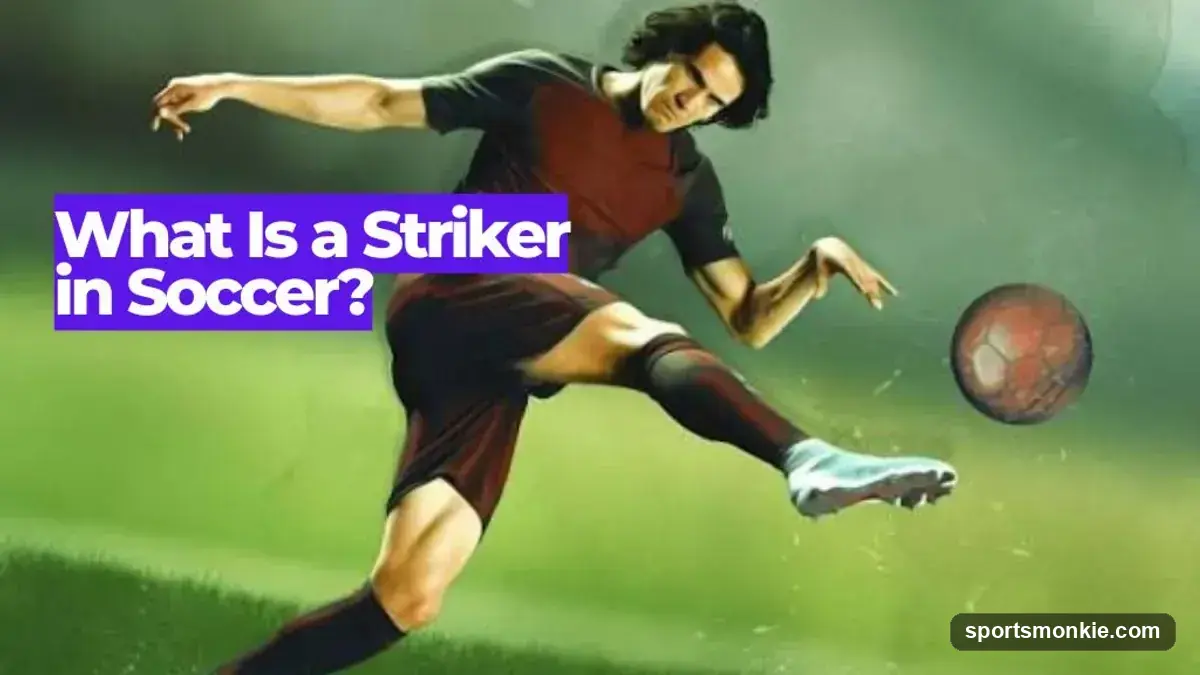
Every kid who plays soccer wants to be the striker first. It’s the position with the clearest job description in the sport: get the ball in the net. But watch a full 90 minutes and you’ll notice the role isn’t nearly as simple as standing near the goal waiting for a chance.
“Forward” covers every attacking player on the pitch. “Striker” is narrower — it’s specifically the central attacker whose job is finishing moves, not starting them. That distinction matters once you start looking at how different forward roles actually function.
Types of Forwards in Soccer
Modern football splits the front line into several distinct jobs.
| Position | Also Known As | Primary Role |
|---|---|---|
| Striker / Centre-Forward | No. 9 | Central goal scorer |
| Second Striker | Support striker, No. 10 | Link play, secondary goals |
| False 9 | Dropping forward | Pulls defenders, creates space |
| Winger | Wide forward, No. 7 or 11 | Wide attacks, crossing, cutting in |
| Inverted Winger | Inside forward | Cuts inside to shoot on strong foot |
The Classic Striker (Centre-Forward)
The traditional centre-forward lives in the central attacking zone. They fight for headers, hold the ball up to bring midfielders into play, and are the one expected to finish chances inside the box. Strength, positioning, and a calm head in front of goal matter more here than flashy dribbling.
Teams built around a single striker, in a 4-2-3-1 or 4-3-3, put a lot of weight on that player’s shoulders. They need to link with midfield and still be the one who converts individual chances when the team needs a goal from nothing.
The Second Striker
Playing just behind the lead striker, the second striker (also called a support striker or shadow striker) works the pockets of space between the opponent’s midfield and defense. Part creator, part finisher, they’re often the one arriving late and unmarked to tap in a rebound or cross.
The False 9
The false 9 breaks the mold by dropping into midfield instead of staying pinned to the last defensive line. That movement pulls centre-backs out of position, which opens running lanes for midfielders or wingers to exploit. It’s a demanding role: it needs sharp passing and game intelligence on top of the ability to still finish when a chance does arrive.
Wingers and Inverted Wingers
Wingers work the flanks, not the middle. A traditional winger stays close to the touchline and whips in crosses; an inverted winger starts wide but cuts inside onto their stronger foot to shoot or thread a pass through. Both count as forwards on paper, but their positioning and job are different enough from a striker’s that they’re rarely interchangeable.
Key Attributes of a Striker
The strikers who succeed at a high level tend to share a few traits:
- Finishing — staying composed and technically sound when shooting
- Movement off the ball — finding gaps and losing markers before the ball arrives
- Aerial ability — winning headers from crosses and set pieces
- Hold-up play — controlling the ball under pressure and laying it off to a teammate
- Work rate — pressing defenders and tracking back when possession is lost
How Tactics Shape the Striker’s Role
What’s asked of a striker changes a lot depending on the system around them. A high-pressing team needs a forward who can close down defenders and win the ball high up the pitch. A counter-attacking side wants pace, someone who can run in behind a backline the moment possession turns over. A possession-heavy team tends to prefer a technical forward who’s comfortable receiving the ball in tight spaces and combining with teammates rather than just waiting on the shoulder of the last defender.
Frequently asked questions
What is the difference between a striker and a forward in soccer?+
All strikers are forwards, but not all forwards are strikers. 'Forward' is a broad term for the attacking line, while 'striker' specifically refers to the central forward whose primary job is to score goals.
What number does a striker wear in soccer?+
Traditionally, the centre-forward or striker wears the number 9 shirt. The 'No. 9' has become synonymous with the classic goal-scoring centre-forward role.
Can a striker play as a winger?+
Some players are versatile enough to play both roles, but they require different skills. Strikers focus on central finishing, while wingers work wide and need strong dribbling and crossing ability.
Sources
Play & tools
Free browser games and tools — no account, no download.
- Play 38-0 — Sign a 4-4-2 of all-time football legends and chase a perfect 38-0 league season — perfect, not just unbeaten.
- Explore all our games →
Related football guides
View all →
11v11 Soccer Formations: The Full-Sided Guide to Every Shape
11v11 soccer formations explained: how full-sided lineups work, the most common shapes (4-4-2, 4-3-3, 4-2-3-1, 3-5-2, 5-3-2), and how to pick one.
Formation in Soccer Explained: How to Read Every Shape
A formation in soccer is the numeric shorthand for how a team's outfield players line up by line: defenders, midfielders, forwards.
4-4-2 Formation Explained: Roles, Strengths and Weaknesses
The 4-4-2 formation lines up two banks of four plus two strikers. Learn the roles, strengths, weaknesses, and famous teams who made it work.
What Does "Park the Bus" Mean in Soccer? Origin, Examples & How to Beat It
Park the bus in soccer means stacking every outfield player behind the ball to shut out an opponent. Origin, tactics, and famous examples explained.
3-5-2 Formation Explained: Roles, Strengths and Weaknesses
The 3-5-2 formation uses three center-backs, two attacking wing-backs, a midfield three and two strikers for a compact, wide-covering shape.
4-1-4-1 Formation Explained: Structure, Roles, Strengths & Weaknesses
The 4-1-4-1 formation explained: a lone holding midfielder screens the back four behind a midfield band of four and one striker. Roles, pros, cons.