
What Is Strike Rate in Cricket? Batting & Bowling Explained
On this page4
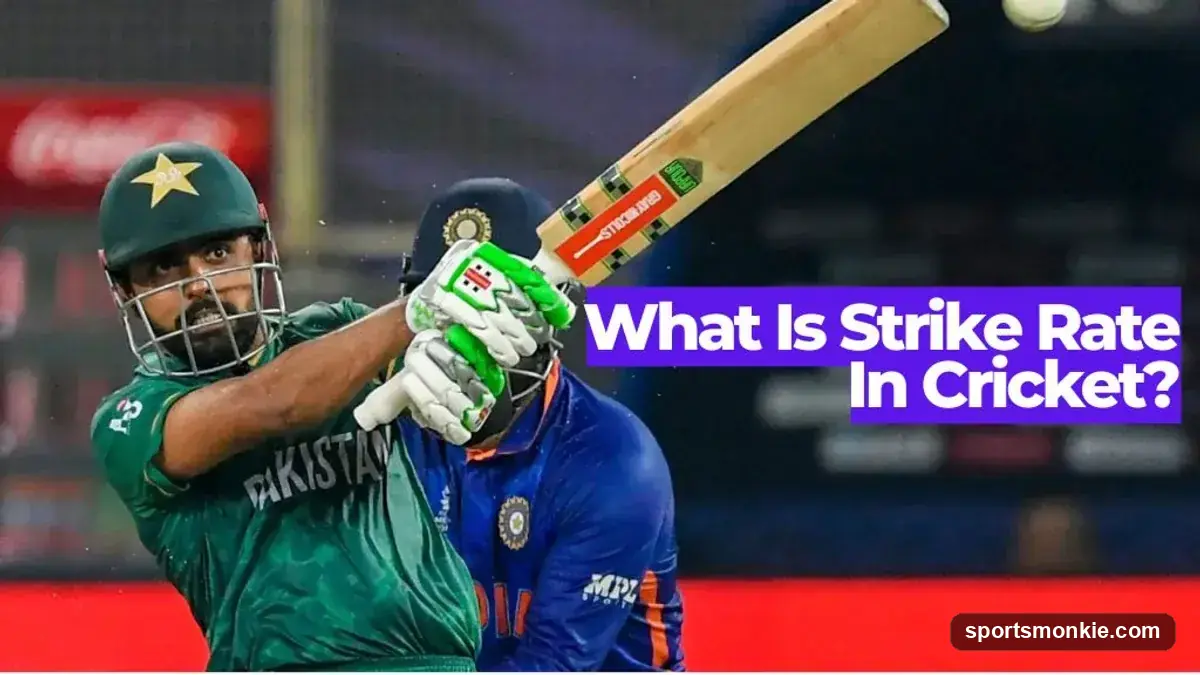
Ask a commentator to name one number that separates a Test blocker from a T20 finisher, and they’ll say strike rate. Confusingly, the same term covers two completely different jobs. For a batter, it measures how fast they score. For a bowler, it measures how fast they take wickets, and the “good” direction flips depending on which one you’re looking at.
Batting strike rate
Batting strike rate tells you how quickly a batter scores runs. It rewards aggression and matters most in limited-overs cricket, where every ball is precious.
Batting strike rate = (Runs scored ÷ Balls faced) × 100A strike rate of 100 means a run a ball. 150 means one and a half runs a ball. 80 means the batter is scoring slower than a run a ball. Higher is generally better, but a Test opener grinding through a tough session and a T20 finisher swinging from ball one are doing entirely different jobs, and comparing their strike rates head-to-head tells you nothing.
Bowling strike rate
Bowling strike rate measures how often a bowler takes a wicket. Here a lower number is better, since it means fewer deliveries needed per dismissal.
Bowling strike rate = Balls bowled ÷ Wickets takenA strike rate of 30 means a wicket roughly every five overs. An 18 means a wicket every three overs, which is genuinely sharp bowling. Pair this stat with bowling average (runs per wicket) and economy rate (runs per over) and you get a much fuller read on how a bowler actually performed.
Worked example
Say a batter scores 75 runs off 50 balls:
- Batting strike rate = (75 ÷ 50) × 100 = 150.00
Now say a bowler sends down 120 balls (20 overs) and takes 4 wickets:
- Bowling strike rate = 120 ÷ 4 = 30.0 (a wicket every 30 balls)
Both numbers describe a good day at the office, but they measure different things entirely, so don’t put a batting strike rate next to a bowling strike rate and expect the comparison to mean anything.
What is a good strike rate?
There’s no single benchmark, because expectations shift by format. A batting strike rate that looks sluggish in T20 might be reckless in a Test match. The table below gives realistic guidelines, not fixed rules.
| Format | Good batting strike rate | Good bowling strike rate |
|---|---|---|
| Test | 50–70 | Under ~55 balls/wicket |
| ODI | 85–100+ | Under ~35 balls/wicket |
| T20 | 130–150+ | Under ~18 balls/wicket |
In Tests, staying at the crease and building an innings counts for more than speed, so a modest batting strike rate is fine. In T20, batters are expected to attack from the first ball, and bowlers earn their keep by breaking partnerships fast rather than just containing runs.
Strike rate on its own only tells half the story. A batting strike rate means little without knowing how many runs came with it, and a bowling strike rate should always be read alongside average and economy before you judge a bowler either way.
Related guides
Frequently asked questions
How do you calculate batting strike rate?+
Divide the runs scored by the balls faced, then multiply by 100. A batter with 60 runs off 40 balls has a strike rate of (60 ÷ 40) × 100 = 150.
Is a lower or higher bowling strike rate better?+
Lower is better. Bowling strike rate measures how many balls a bowler needs per wicket, so fewer balls means quicker breakthroughs and a stronger record.
Why are batting and bowling strike rates different?+
Batting strike rate measures scoring speed (runs per 100 balls, higher is better), while bowling strike rate measures wicket-taking speed (balls per wicket, lower is better). They are unrelated formulas.
What is a good batting strike rate in T20?+
In T20 cricket, a strike rate of 130 to 150 is solid, and finishers or top openers often push well beyond 150. Anything under about 120 is considered slow for the format, where batters are expected to attack from the first ball they face.
How is bowling strike rate different from economy rate?+
Bowling strike rate counts balls per wicket, measuring how quickly a bowler takes wickets. Economy rate counts runs conceded per over, measuring how tightly they bowl. A bowler can have a great economy but a poor strike rate, or the reverse, so the two are read together.
Does strike rate matter in Test cricket?+
It matters far less for batters in Tests, where occupying the crease and building an innings outweigh scoring speed, so a strike rate of 50 to 70 is fine. Bowling strike rate still matters, as taking wickets is how you win, though under about 55 balls per wicket is respectable.
Can strike rate be misleading on its own?+
Yes. A high batting strike rate over just a few balls says little, and a low bowling strike rate against weak opposition can flatter a bowler. Strike rate should always be read with volume of runs or wickets, plus average and economy, for a fair picture.
Sources
Play & tools
Free browser games and tools — no account, no download.
- Play today's Sports Connections — Today's Sports Connections — daily hints, answers, and play the grid.
- Play Guess the NFL Player — A new mystery NFL player every day. Eight guesses, with a clue on each — plus free unlimited mode.
- Explore all our games →
Related cricket guides
View all →
Types of Bowling in Cricket: Pace and Spin Explained
A clear guide to the types of bowling in cricket, from fast and swing bowling to off spin, leg spin, and deliveries like the yorker, googly, and doosra.

What Is a Turkey in Bowling? 3-Strike Name
A turkey in bowling is three strikes in a row. Where the name came from, what longer streaks are called, and how consecutive strikes score.
What Is a Nightwatchman in Cricket?
A nightwatchman is a lower-order batter sent in late to shield a specialist from tricky conditions. See why teams use one and when the tactic pays off.
Duck in Cricket: Golden, Diamond, Royal & Every Type Explained
A duck is when a batter is dismissed without scoring. Here are all the types — golden, silver, pair, king, diamond and royal duck — with clear definitions.
What Is a No-Ball in Cricket? Types, Rules & the Free Hit
A no-ball is an illegal delivery that costs the bowling side a run and a re-bowl. Learn every type, the free-hit rule and how a batter can be out off one.

Candlepin Bowling Rules, Explained
Candlepin bowling uses three balls per frame, a small handheld ball and thin pins, and you don't clear fallen 'wood.' Rules, scoring and strategy.