
What Is a No-Ball in Cricket? Types, Rules & the Free Hit
On this page6
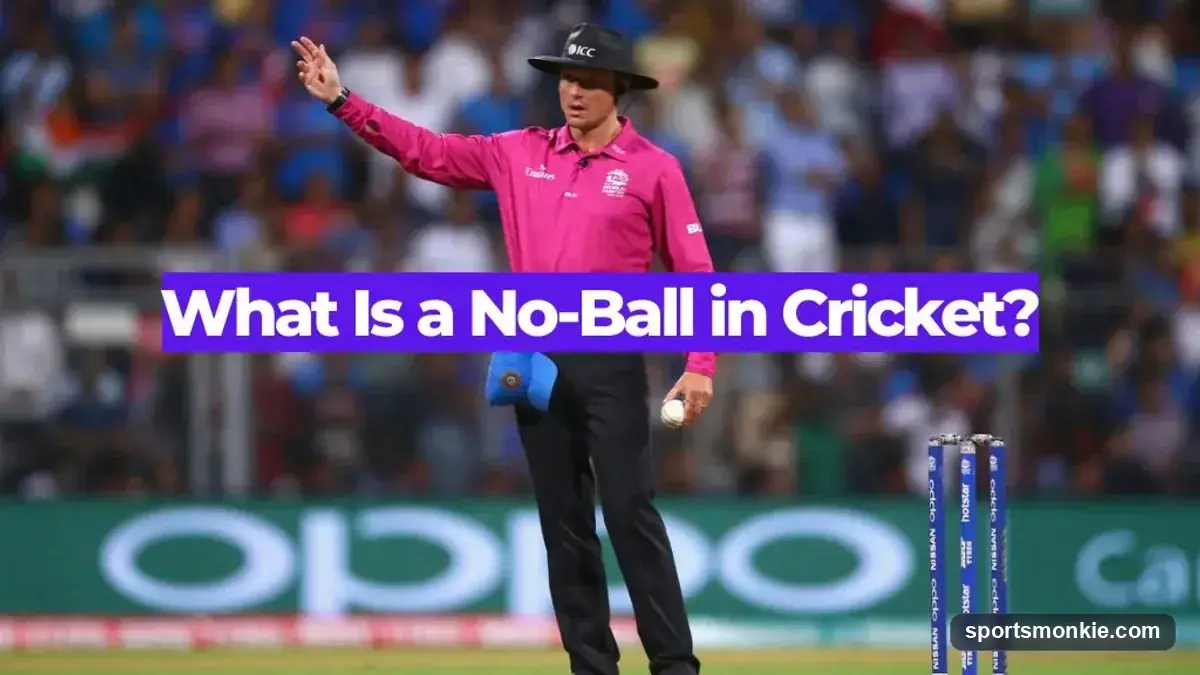
A no-ball is an illegal delivery that an umpire calls when a bowler oversteps the popping crease, throws instead of bowls, or breaks one of cricket’s safety or fairness laws. The batting side gets a penalty run, the batter becomes almost impossible to dismiss, and the bowler must send the ball down again. In white-ball cricket the next delivery also becomes a free hit, which can swing a tight run chase in an instant.
What a no-ball is, in one line
Under MCC Law 21, a no-ball is any delivery that fails to meet the conditions for a fair ball — most often because the bowler’s front foot lands beyond the crease. The call is instant and the ball is scored as an extra rather than a legal delivery.
What a no-ball costs the bowling side
- One penalty run goes to the batting team, on top of anything scored off the bat.
- The delivery does not count toward the over, so the bowler has to bowl it again.
- In ODIs and T20s, the very next ball becomes a free hit.
A single overstep on the last ball of a T20 chase can therefore hand the batting side both a bonus run and a free swing at the worst possible moment for the fielding captain.
Common types of no-ball
| Type | What causes it |
|---|---|
| Front-foot no-ball | Bowler’s front foot lands fully beyond the popping crease (no part behind the line) |
| Back-foot no-ball | Back foot touches or crosses the return crease |
| Height no-ball (beamer) | A full-toss passing above waist height to a batter standing upright |
| Bouncer no-ball | More than the permitted number of bouncers above shoulder height in an over |
| Fielding no-ball | Illegal field — e.g. more than two fielders behind square leg, or a powerplay breach |
| Throwing no-ball | The bowler straightens the arm illegally (chucking) |
Front-foot no-balls are by far the most common, and they are the ones now caught on slow-motion replay far more reliably than the on-field umpire ever could by eye.
How a batter can be out off a no-ball
Most dismissals are off the table. Off a no-ball, a batter can be out only by:
- Run out
- Obstructing the field
- Hitting the ball twice
A batter cannot be bowled, caught, stumped, hit-wicket, or out LBW off a no-ball, which is exactly why bowlers who overstep on a good delivery rue it for overs afterward.
The free hit
After a no-ball in ODIs and T20Is, the next delivery is a free hit. The striker cannot be dismissed by any method that needs a legal ball, so bowled, caught, LBW, stumped, and hit-wicket are all off the table — only run-out-type dismissals apply. Fielders cannot change positions for a free hit unless the batters swapped ends between deliveries. It is one of the few moments in cricket where a batter can swing without consequence, and plenty of sixes have come from exactly that freedom.
No-ball technology in the modern game (2024-26)
As of 2026, the biggest change is not to the laws but to enforcement. A dedicated third umpire now checks front-foot landings on replay in most major events, radioing the call to the middle rather than trusting the naked eye. This automated overstep monitoring was used at the ICC T20 World Cup 2024 and across recent IPL seasons, cutting the number of missed no-balls and settling several tight finishes that the on-field umpire would once have gotten wrong.
Related terms
- Wide — a delivery too far from the batter to be hit; like a no-ball it costs a run and a re-bowl, but carries no free hit.
- Extras — the umbrella term for runs not scored off the bat, including no-balls, wides, byes, and leg byes.
- Popping crease — the front line the bowler must not fully overstep, and the line a batter must stay behind to avoid a run-out or stumping.
Frequently asked questions
How many runs is a no-ball worth?+
A no-ball adds one penalty run to the batting team's total, on top of any runs the batters actually score off that delivery. The ball does not count in the over, so the bowler has to send it down again. In the modern game a bowler can therefore leak several runs from a single overstep.
Can a batsman be out off a no-ball?+
Yes, but only by run out, obstructing the field, or hitting the ball twice. A batter cannot be bowled, caught, stumped, LBW, or hit-wicket off a no-ball, because those dismissals require a legal delivery. This is why bowlers hate wasting a wicket-taking ball on an overstep.
Does every no-ball give a free hit?+
In ODIs and T20 internationals, yes. Since October 2015 every type of no-ball earns the batting side a free hit on the next delivery. In Test cricket there is no free hit, so the only penalty is the extra run and the re-bowl.
What is the most common type of no-ball?+
The front-foot no-ball, where the bowler's front foot lands with no part of it behind the popping crease, is by far the most frequent. Overstepping happens dozens of times in a single T20 match and is now flagged automatically in many competitions.
Can a batter be run out on a free hit?+
Yes. Run-out is one of the few dismissals that still counts on a free hit because it does not depend on the delivery being legal. Bowled, caught, LBW, stumped, and hit-wicket are all ruled out, but a batter caught short of the crease is still given out.
Why is a beamer a no-ball?+
A beamer is a full-toss that reaches the striker above waist height without bouncing, which is dangerous to a batter standing upright. Umpires call it a no-ball on safety grounds, and a bowler who repeatedly bowls dangerous beamers can be removed from the attack for the rest of the innings.
How is a front-foot no-ball checked now?+
In many top competitions a dedicated third umpire monitors every delivery on replay and radios down a no-ball call, rather than leaving it to the on-field umpire's eye. This system was used at the ICC T20 World Cup 2024 and in the IPL, sharply reducing missed overstepping calls.
Do fielders move during a free hit?+
No. Field placements are frozen from the no-ball to the free hit, unless the two batters cross and swap ends. If a fielder changes position without that swap, the umpire calls another no-ball, extending the free-hit situation.
Sources
Play & tools
Free browser games and tools — no account, no download.
- Play today's Sports Connections — Today's Sports Connections — daily hints, answers, and play the grid.
- Play Guess the NFL Player — A new mystery NFL player every day. Eight guesses, with a clue on each — plus free unlimited mode.
- Explore all our games →
Related cricket guides
View all →
What Is a Free Hit in Cricket? The Rule Explained
A free hit is the delivery a bowler must bowl after a no-ball in limited-overs cricket, on which the batter cannot be dismissed by most methods.
Types of Bowling in Cricket: Pace and Spin Explained
A clear guide to the types of bowling in cricket, from fast and swing bowling to off spin, leg spin, and deliveries like the yorker, googly, and doosra.
What Is a Dead Ball in Cricket? Rule and Common Situations
A dead ball is a delivery from which no runs score and no batter is out. Learn when the ball goes dead, who decides, and why it matters in a tight finish.
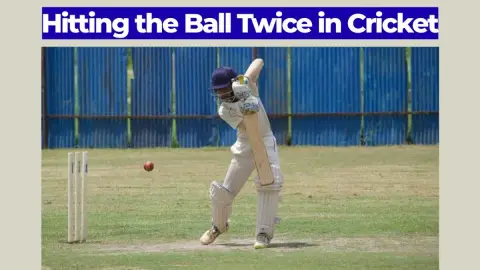
Hitting the Ball Twice in Cricket: Law 34 Explained
Law 34 lets a batter hit the ball twice only to defend the wicket. Do it for any other reason and you are out 'hit the ball twice'. Here is how the rule works.
DLS Method in Cricket Explained: How Rain Targets Are Set
The Duckworth-Lewis-Stern (DLS) method resets targets in rain-hit limited-overs cricket using overs and wickets left. Here's the logic, with examples.
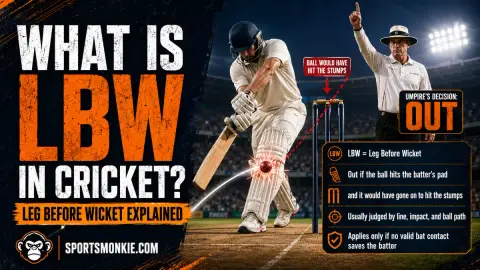
What Is LBW in Cricket? Leg Before Wicket Explained
LBW means the ball would have hit the stumps but struck the pad first. Here are the exact conditions umpires check and how DRS decides close calls.