
Good vs Bad Batting Average in Cricket and Baseball Explained

On this page5
A cricket average of 50 makes you a legend. A baseball average of .500 is mathematically absurd, no one has hit .500 over a season since the 1800s. The two numbers look similar and measure nothing alike, which is exactly why comparing them across sports trips people up.
How Batting Average Is Calculated
Cricket
Cricket Batting Average = Total runs scored / Number of times dismissed
A batter who scores 4,000 runs and has been dismissed 80 times has an average of 50. Not-out innings don’t count as dismissals, which slightly inflates the averages of lower-order batters who often finish unbeaten.
Baseball
Baseball Batting Average = Number of hits / Number of official at-bats
A batter who gets 30 hits in 100 at-bats has a batting average of .300. Walks, sacrifices, and hit-by-pitches don’t count as official at-bats, so they don’t drag the average down.
What Makes a Good Batting Average in Cricket?
| Average | Test Cricket Assessment |
|---|---|
| Above 55 | Elite — among the all-time greats |
| 45 to 55 | Excellent — consistent international performer |
| 35 to 45 | Solid — reliable Test batter |
| 25 to 35 | Below expectations for a top-order specialist |
| Below 25 | Poor for a batter; acceptable only for specialist bowlers |
In ODI cricket, benchmarks sit slightly lower because the format demands faster scoring, and batters sometimes sacrifice average for strike rate.
In T20 cricket, batting average matters less as a standalone stat. Strike rate and boundary percentage carry more weight there.
All-Time Cricket Greats and Their Averages
Several players have maintained career Test averages well above 50, a threshold that separates the very good from the truly exceptional. Sir Donald Bradman’s average sits in a tier entirely his own, far above any other player in history. Among modern players, Sachin Tendulkar, Ricky Ponting, Kumar Sangakkara, and Steve Smith have all maintained averages in the 50s or close to that mark across long careers.
What Makes a Good Batting Average in Baseball?
| Average | MLB Assessment |
|---|---|
| .320 and above | Elite — perennial All-Star level |
| .300 to .319 | Excellent — consistently strong hitter |
| .270 to .299 | Above average |
| .240 to .269 | League average range |
| .220 to .239 | Below average, borderline |
| Below .220 | Poor — often unsustainable at MLB level |
Era matters here too. Batting averages ran higher in the “live ball era” of the 1920s and ’30s, and lower in the deadball era and again in the pitching-dominated 1960s. A .290 average in 1968 meant something very different from .290 in 1998.
A Side-by-Side Comparison
| Measure | Cricket “Good” | Baseball “Good” |
|---|---|---|
| Unit | Runs per dismissal | Fraction of at-bats (decimal) |
| Elite threshold | ~50+ (Test) | .300+ |
| Solid performer | 35-45 | .270-.299 |
| Poor threshold | Below 25 (specialist batter) | Below .220 |
| Theoretical maximum | Technically unlimited (not-outs) | 1.000 (hit every at-bat) |
Why Context Always Matters
Batting average in both sports tells only part of the story. In baseball, stats like OPS (on-base plus slugging) and wRC+ fill in the rest. In cricket, batting average is usually read alongside strike rate, number of fifties and hundreds, and how a player performs under pressure.
A lower-order cricket batter averaging 20 might still be enormously valuable to the team. A baseball player batting .260 with 40 home runs is a completely different proposition from one batting .260 with 5. Context, role, and era all shape what the numbers actually mean.
Frequently asked questions
What is a good batting average in cricket?+
In Test cricket, a batting average above 40 is considered solid for a specialist batter; above 50 is excellent, and above 55 puts a player among the all-time greats. In ODIs, averages above 35-40 are strong. Lower-order players have lower benchmarks.
What is a good batting average in baseball?+
In Major League Baseball, a batting average of .270 to .300 is considered above average. Batting .300 or higher is excellent, and anything consistently above .320 is elite. A batting average below .220 is generally considered poor at MLB level.
Why are cricket and baseball batting averages so different in scale?+
They measure different things. Cricket batting average is runs scored per dismissal — a top batter can score 50-100 runs before being out. Baseball batting average is the fraction of at-bats resulting in a hit, expressed as a decimal — getting a hit in 3 out of 10 at-bats (.300) is excellent.
Sources
Play & tools
Free browser games and tools — no account, no download.
- Play today's Sports Connections — Today's Sports Connections — daily hints, answers, and play the grid.
- Play Guess the NFL Player — A new mystery NFL player every day. Eight guesses, with a clue on each — plus free unlimited mode.
- Explore all our games →
Related cricket guides
View all →
What Is the Mendoza Line in Baseball?
The Mendoza Line is a .200 batting average, the informal benchmark for poor hitting in baseball. Its origin, meaning and use beyond sport, explained.
Highest Batting Average in ODI Cricket: Shubman Gill Leads at 60.33
Shubman Gill's 60.33 is the highest qualified ODI batting average in 2026, just ahead of Virat Kohli's 58.59 across five times the innings. Full ranked top 20.

What Is WHIP in Baseball? Good WHIP Explained
WHIP in baseball is walks plus hits per inning pitched. What counts as a good WHIP, the record holders, and how WHIP compares to ERA.

Average Golf Swing Speed by Age (And What's Good)
Average golf swing speed by age: how driver clubhead speed changes from your 20s to your 70s, what counts as a good number, and how it maps to distance.
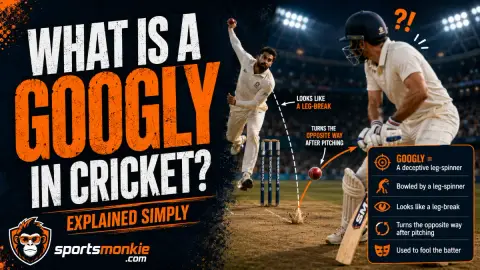
What Is a Googly in Cricket?
A googly is a leg-spinner's disguised delivery that turns the opposite way to a leg break, spinning into a right-hander. See how it's bowled and deceives.

What Is a Nightwatchman in Cricket?
A nightwatchman is a lower-order batter sent in late to shield a specialist from tricky conditions. See why teams use one and when the tactic pays off.