
What Is a Free Hit in Cricket? The Rule Explained
On this page5
Watch a bowler overstep the crease in a T20 and you can almost hear the crowd change gears. The next ball is coming no matter what happens, and the batter knows it can’t get them out in most of the usual ways. That’s the free hit, and it’s turned a routine no-ball into one of the biggest momentum swings in white-ball cricket.
When Is a Free Hit Awarded?
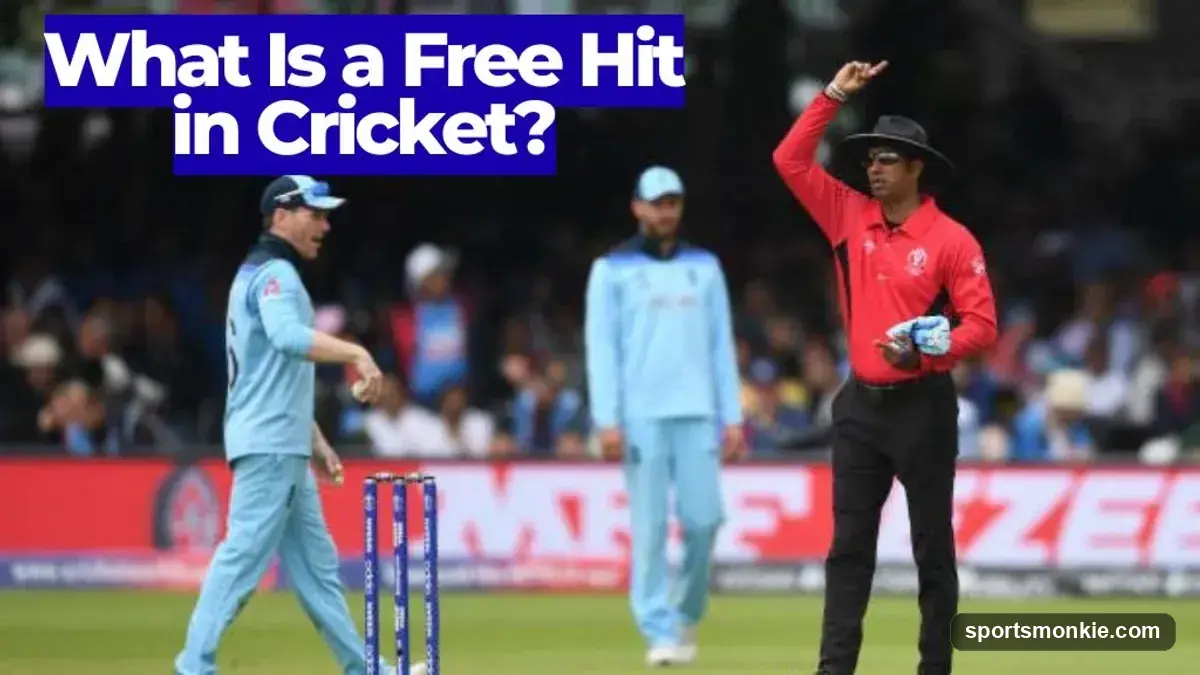
A free hit is awarded on the delivery immediately following a no-ball. The umpire signals it by rotating a raised arm in a circular motion above the head. The batting side benefits twice: they get the run for the no-ball itself, plus a scoring chance on the next ball with the dismissal risk stripped away.
Under current ICC playing conditions for ODIs and T20Is, a free hit follows any no-ball, whether it’s for overstepping the popping crease, exceeding the bouncer limit, or a fielding-position infringement.
How Can a Batter Be Out on a Free Hit?
Most dismissals are switched off. Only methods that don’t depend on the bowler beating the bat still count. The table below lays it out.
| Dismissal method | Allowed on a free hit? |
|---|---|
| Run out | Yes |
| Hit the ball twice | Yes |
| Obstructing the field | Yes |
| Handled the ball / handling | Yes |
| Bowled | No |
| Caught | No |
| Leg before wicket (lbw) | No |
| Stumped | No |
| Hit wicket | No |
If the batter would normally be out for missing or edging the ball, they survive. They can still be run out, because that depends on running between the wickets, not on the delivery itself.
What If the Free Hit Is Also a No-Ball?
If the free-hit delivery is itself a no-ball, the free hit carries over. The next legal delivery becomes a free hit again. This keeps going until the bowler lands a fair ball, so a bowler stuck in a rhythm of overstepping can hand out several free hits in a row, a genuinely painful sequence to bowl.
Field-Change Rules on a Free Hit
Fielders generally can’t change positions for a free hit, to keep things fair for whichever batter is on strike. The exception is when the no-ball changed the striker, say the batters crossed while running; then the field can be adjusted. Once a different batter is facing, normal field placement applies.
Is There a Free Hit in Test Cricket?
No. The free hit exists only in limited-overs cricket. In Test matches and other first-class cricket, a no-ball still counts as an illegal delivery, adding one run to the total and an extra ball to the over, but there’s no free-hit penalty on the delivery that follows. The batter can be dismissed normally on the very next ball.
Related guides
Frequently asked questions
Can you be out on a free hit?+
Yes, but only by run-out-style methods such as being run out, handling the ball, hitting the ball twice, or obstructing the field. You cannot be bowled, caught, stumped, or out lbw on a free hit.
Does a free hit apply in Test cricket?+
No. The free hit is a limited-overs rule used in formats such as ODIs and T20s. Test cricket has no free hit; a no-ball there simply adds one run and an extra delivery.
Why was the free hit introduced?+
It was introduced by the ICC to penalise bowlers more heavily for overstepping no-balls and to add excitement to limited-overs cricket, giving the batting side a near risk-free scoring chance.
Is a free hit awarded for a wide ball?+
No. Only no-balls trigger a free hit. A wide adds a run and an extra delivery but carries no free hit, because a wide penalises the bowler for a delivery the batter cannot reach, not for an illegal one like overstepping.
Do all runs scored off a free hit count?+
Yes. Every run counts, including boundaries. Even if the ball hits the stumps, the batter is not out and can still run, and if it beats everyone to the rope, four or six is scored. That is what makes a free hit such a strong scoring chance.
When was the free hit introduced in cricket?+
The ICC introduced the free hit for the front-foot no-ball in Twenty20 internationals in 2007, later extending it to ODIs. The aim was to punish overstepping more heavily and inject extra excitement into limited-overs cricket.
How does a free hit affect the bowler's figures?+
Runs scored off a free hit, plus the no-ball penalty, are charged to the bowler, so it can inflate their economy quickly. However, if the batter is run out on the free hit, that wicket is not credited to the bowler, since it is not a bowling dismissal.
Sources
Play & tools
Free browser games and tools — no account, no download.
- Play today's Sports Connections — Today's Sports Connections — daily hints, answers, and play the grid.
- Play Guess the NFL Player — A new mystery NFL player every day. Eight guesses, with a clue on each — plus free unlimited mode.
- Explore all our games →
Related cricket guides
View all →
What Is a No-Ball in Cricket? Types, Rules & the Free Hit
A no-ball is an illegal delivery that costs the bowling side a run and a re-bowl. Learn every type, the free-hit rule and how a batter can be out off one.
What Is a Dead Ball in Cricket? Rule and Common Situations
A dead ball is a delivery from which no runs score and no batter is out. Learn when the ball goes dead, who decides, and why it matters in a tight finish.
DLS Method in Cricket Explained: How Rain Targets Are Set
The Duckworth-Lewis-Stern (DLS) method resets targets in rain-hit limited-overs cricket using overs and wickets left. Here's the logic, with examples.
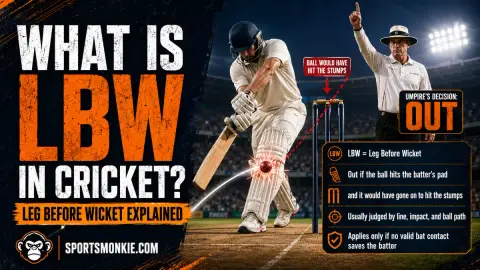
What Is LBW in Cricket? Leg Before Wicket Explained
LBW means the ball would have hit the stumps but struck the pad first. Here are the exact conditions umpires check and how DRS decides close calls.
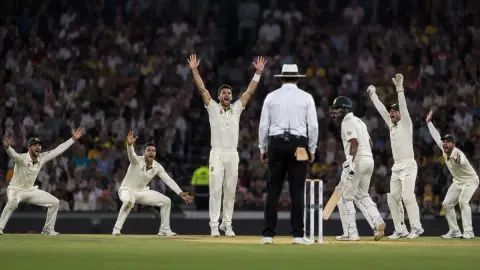
Appealing in Cricket: What It Is and How It Works
An appeal in cricket is the fielding side's formal request for a dismissal. Without one, an umpire cannot give a batter out, even one who clearly is.
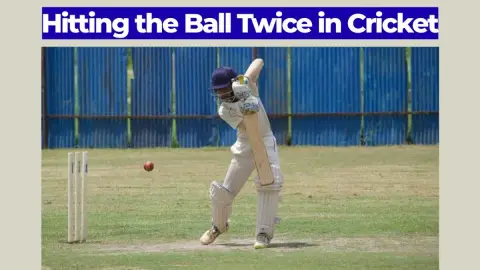
Hitting the Ball Twice in Cricket: Law 34 Explained
Law 34 lets a batter hit the ball twice only to defend the wicket. Do it for any other reason and you are out 'hit the ball twice'. Here is how the rule works.