
Types of Bowling in Cricket: Pace and Spin Explained
On this page5
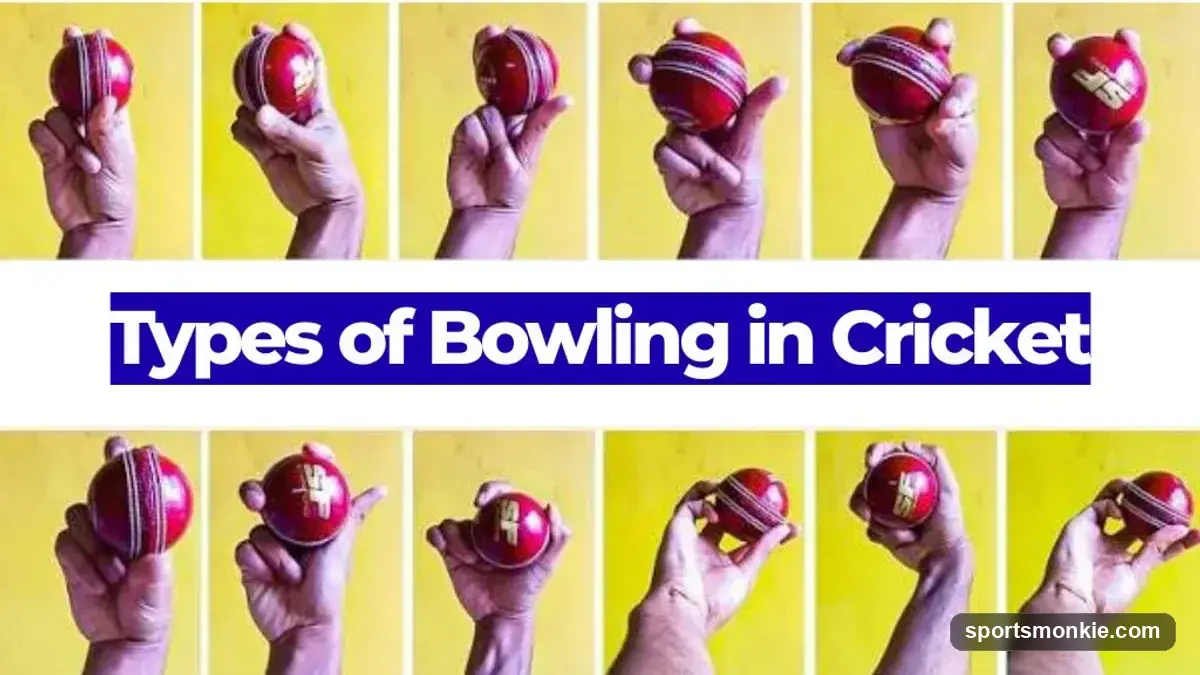
Cricket bowling divides into two families: pace and spin. Pace bowlers use speed, swing, and seam movement to trouble the batter, while spin bowlers use finger or wrist action to turn the ball off the pitch. Within those families sit styles such as fast, medium, off spin, and leg spin, plus signature deliveries like the yorker, googly, and doosra.
The two families of cricket bowling
Watch a Test match and you’ll see a captain rotate through several different plans without changing the rules of the game. The ball is the same and the pitch is the same, but a bowler can attack with raw pace, movement through the air, or trickery off the seam and the surface. Everything a bowler does falls into one of two families, pace or spin, and each splits further into styles with their own names and angles.
Pace bowling
Pace bowlers run in and use the hard new ball, the seam, and whatever shine is left on it to cause trouble. Coaches and commentators usually group them by how fast they actually are.
By speed
- Fast bowling. The quickest category. These bowlers rush the batter and get steep bounce simply because there’s so little time to react.
- Fast-medium. A notch down in raw pace, but often just as effective, trading a few miles per hour for extra control and movement.
- Medium pace. Leans on accuracy, seam position, and changes of pace rather than speed alone.
Swing and seam
Pace bowlers shape the ball two ways. Swing is movement through the air, driven by the ball’s shine, the seam angle, and how the air flows past it: inswing curves in toward a right-handed batter, outswing away from one. Reverse swing shows up later, once the ball is older and one side has roughened up, and it moves opposite to conventional swing.
Seam movement is different: it happens off the pitch. The ball lands on its raised seam and can dart sideways in a way that’s hard to predict, for the batter and sometimes the bowler too.
Spin bowling
Spin bowlers give up pace entirely and rely on revolutions on the ball to make it grip and turn off the surface. The split here comes down to which part of the hand does the work: fingers or wrist.
Finger spin
- Off spin (off break). A right-arm finger-spinner’s stock delivery, turning from off to leg against a right-handed batter.
- Left-arm orthodox. The mirror image, bowled by a left-armer, turning the ball away from a right-handed batter.
Wrist spin
The wrist can generate sharper turn than the fingers, though it’s harder to keep consistent.
- Leg spin (leg break). A right-arm wrist-spinner’s stock ball, turning from leg to off against a right-hander.
- Left-arm wrist spin. Often nicknamed the “chinaman,” bowled by a left-arm wrist-spinner and turning into a right-handed batter.
Signature deliveries every fan should know
Both families build a repertoire of specific deliveries designed to deceive. A few have become famous enough to have their own names.
| Delivery | Type | What it does |
|---|---|---|
| Yorker | Pace | Pitches right at the batter’s feet; very hard to score off or dig out |
| Bouncer | Pace | Short-pitched ball that rises toward the batter’s head or chest |
| Googly | Wrist spin | Looks like a leg break but turns the other way, like an off break |
| Doosra | Finger spin | Looks like an off break but turns the other way, away from the right-hander |
| Carrom ball | Finger spin | Flicked out with a bent middle finger; can turn either way |
The yorker and bouncer are a fast bowler’s go-to weapons, the yorker especially in the closing overs of a limited-overs innings. Among spinners, the googly remains the classic leg-spin trap, while the doosra and carrom ball are newer answers built to turn the ball against what the batter’s eyes expect.
Why captains switch between types
A captain typically opens with swing while the new ball is shiny, turns to seam once the shine goes, and brings on spin once the pitch starts to wear and grip. Format matters too: red-ball cricket rewards patient swing and seam over long spells, while white-ball formats put a premium on the yorker, the slower ball, and wicket-taking wrist spin in the middle overs.
Related bowling terms
A few neighbouring terms round out the vocabulary. A stock ball is a bowler’s most-used, reliable delivery, while a variation is anything bowled to break that pattern. The no-ball law governs where a bowler lands the front foot, and the ICC’s 15-degree limit on elbow extension defines a legal (rather than “chucked”) action. From there, deeper dives into reverse swing and the googly explain how the biggest weapons work.
Frequently asked questions
What are the two main types of bowling in cricket?+
The two main families are pace (fast) bowling and spin bowling. Pace bowlers rely on speed, swing, and seam movement, while spin bowlers rely on slower deliveries that turn off the pitch using finger or wrist action. Almost every bowling style in the game is a variation on one of these two approaches.
What is the difference between off spin and leg spin?+
Off spin is a finger-spin delivery that, for a right-hander bowling to a right-handed batter, turns from off to leg. Leg spin is a wrist-spin delivery that turns the opposite way, from leg to off. Leg spin is generally harder to control but tends to turn more sharply and offers more variations, such as the googly.
What is a googly in cricket?+
A googly is a delivery bowled by a leg-spinner that looks like a leg break but turns the other way, like an off break, because of a hidden change in wrist position. It is designed to deceive the batter into misreading the direction of turn. It is sometimes called a 'wrong 'un'.
What is a yorker in cricket?+
A yorker is a fast delivery aimed to pitch right at the batter's feet, ideally under the bat as it comes down. It is very hard to score off and difficult to dig out, which makes it a prized weapon in the closing overs of limited-overs cricket when batters are trying to hit big.
What is the difference between swing and seam bowling?+
Swing is movement through the air, caused by the ball's shine, seam angle, and airflow, so the ball curves before it bounces. Seam movement happens off the pitch, when the ball lands on its raised seam and darts sideways. Swing is set up before the ball lands; seam happens on contact with the surface.
What is a doosra in cricket?+
A doosra is a variation bowled by an off-spinner that looks like a stock off break but turns the other way, away from a right-handed batter. It is the finger-spin equivalent of a leg-spinner's googly. Bowling it legally is difficult because the arm must stay within the 15-degree limit on elbow extension set by the ICC.
How many types of bowling are there in cricket?+
There is no single fixed number, but bowling is usually grouped into two families and then subdivided by style. Pace splits into fast, fast-medium, and medium; spin splits into finger spin (off spin, left-arm orthodox) and wrist spin (leg spin, left-arm wrist spin). On top of these sit named deliveries like the yorker, bouncer, googly, doosra, and carrom ball.
What is a left-arm wrist spinner called?+
A left-arm wrist-spinner is often called a 'chinaman' bowler, and the stock delivery turns into a right-handed batter, the mirror of a right-arm leg break. The term has fallen out of favour with some commentators, so many now simply say 'left-arm wrist spin'. It remains one of the rarest styles in the game.
Sources
Play & tools
Free browser games and tools — no account, no download.
- Play today's Sports Connections — Today's Sports Connections — daily hints, answers, and play the grid.
- Play Guess the NFL Player — A new mystery NFL player every day. Eight guesses, with a clue on each — plus free unlimited mode.
- Explore all our games →
Related cricket guides
View all →
What Is a No-Ball in Cricket? Types, Rules & the Free Hit
A no-ball is an illegal delivery that costs the bowling side a run and a re-bowl. Learn every type, the free-hit rule and how a batter can be out off one.
Conventional vs Reverse Swing in Cricket: The Difference
Conventional swing moves the new ball toward the shine; reverse swing makes an old ball curve the opposite way at pace. Here's what separates them.
What Is a Dead Ball in Cricket? Rule and Common Situations
A dead ball is a delivery from which no runs score and no batter is out. Learn when the ball goes dead, who decides, and why it matters in a tight finish.
DLS Method in Cricket Explained: How Rain Targets Are Set
The Duckworth-Lewis-Stern (DLS) method resets targets in rain-hit limited-overs cricket using overs and wickets left. Here's the logic, with examples.
What Is LBW in Cricket? Leg Before Wicket Explained
LBW means the ball would have hit the stumps but struck the pad first. Here are the exact conditions umpires check and how DRS decides close calls.
Best Spin Bowlers in Current Cricket: Top Active Spinners Ranked
The best active spin bowlers in cricket right now, ranked across Tests and white-ball — from Rashid Khan's two-format No. 1 to Nathan Lyon's 560-plus Test wickets.