
Cricketers Who Died During Matches: Tragic Stories
On this page8
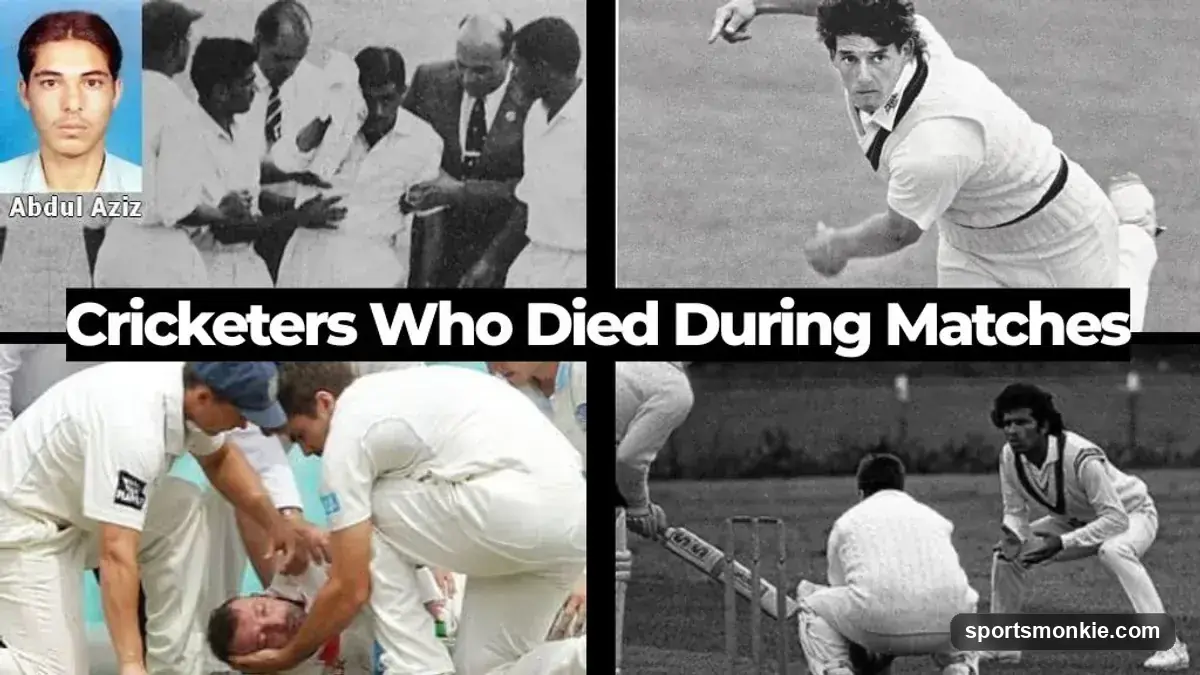
A handful of cricketers have died from injuries sustained in live matches. The best-documented cases are George Summers (1870), Abdul Aziz (1959), Raman Lamba (1998), Darryn Randall (2013), and Phillip Hughes (2014). Every one involved a ball striking the head or chest, and each pushed cricket a step further on protective equipment — usually only after the fact.
On 25 November 2014, Hughes was batting in a routine Sheffield Shield match at the Sydney Cricket Ground when a short ball from Sean Abbott struck him behind the left ear. He collapsed on the pitch and never regained consciousness. Two days later he was dead, and cricket, a sport that likes to think of itself as safe by comparison to contact games, had to confront how little separates a normal delivery from a fatal one.
Phillip Hughes — Australia (2014)
Hughes was 25, an opening batter who had already played Test cricket for Australia, when the injury happened. The grief that followed reached well past Australia; the #PutYourBatOut tribute spread across the cricketing world within days. More concretely, his death pushed Cricket Australia and later the ICC to overhaul helmet standards, with a specific focus on neck and temple protection that existing designs hadn’t covered well.
Raman Lamba — India (1998)
Lamba had represented India through the 1980s as an aggressive top-order batter. In February 1998, playing for Abahani Cricket Club in Dhaka, he was fielding at forward short leg without a helmet when a firmly struck shot hit him on the temple. He died three days later from the head trauma.
His death exposed a gap that had gone largely unaddressed: fielders standing in close catching positions, short leg, silly mid-on, silly mid-off, were routinely unprotected even in serious domestic cricket.
Abdul Aziz — Pakistan (1958-59)
Aziz was still a teenager when he collapsed on the field during a Quaid-e-Azam Trophy match in Karachi, struck near the heart by a delivery that triggered cardiac arrest. His case is one of the earliest well-documented instances of a cricket-related death in a formal match, and it’s a reminder that the danger isn’t new, only better understood now.
George Summers — England (1870)
The earliest well-documented first-class fatality happened at Lord’s on 29 June 1870, when Nottinghamshire’s George Summers was struck on the head by a delivery from John Platts of the MCC. He was 25. Summers travelled home to Nottingham by train rather than resting, and died four days later.
The response was immediate and tells you how long the sport has known about this risk. The MCC re-laid the Lord’s pitch, and Platts, who was devastated, moved away from fast bowling for the rest of his career. Summers’ case sat as cricket’s warning for 144 years before Hughes made the same point again.
Darryn Randall — South Africa (2013)
Randall, a 32-year-old wicketkeeper-batter, was struck on the side of the head attempting a pull shot during a Border Senior Cricket League match at Alice, Eastern Cape, on 27 October 2013. He collapsed at the crease and died shortly afterwards.
His death came thirteen months before Hughes and drew almost none of the same attention, which is the pattern for cricket outside the international game. The mechanism was near-identical: a short ball, a pull shot, a strike to the unprotected area at the side and rear of the head.
Ian Folley — England (1993)
Folley’s death is often miscounted as an on-field one, and the real story matters more. A left-arm spinner who played for Lancashire and Derbyshire, he was hit below the eye attempting a hook while batting for Whitehaven in a Cumbrian club match in August 1993. The injury was a perforated eyeball, serious but survivable.
He died on 30 August at the Cumberland Infirmary in Carlisle, under local anaesthetic during surgery to repair it. He was 30. His father Jim spent five years pressing the hospital to accept responsibility, which it eventually did, issuing a public apology and accepting liability. Folley was killed by what happened after the ball hit him, not by the ball.
What Changed: Cricket Safety Over Time
| Era | Key Safety Development |
|---|---|
| 1870 (Summers) | Lord’s pitch re-laid; no equipment change follows |
| Pre-1970s | Helmets non-existent; minimal formal protective standards |
| 1970s | Protective helmets begin appearing in top-level cricket |
| 1980s-90s | Helmets become standard for batters in professional cricket |
| Post-Lamba (1998) | Increased awareness of fielder protection at close positions |
| Post-Hughes (2014) | BS7928:2013 helmet certification enforced; neck guards mandated |
Professional cricket now requires helmets certified to British Standard BS7928:2013, which tests specifically for the ball squeezing through the gap between grille and peak — the failure mode older helmets allowed. Neck guards clipped to the rear of the helmet are mandatory for professional batters facing pace bowling in Australia and England, and close fielders in short-leg positions are required to wear helmets in most serious competitions.
The honest caveat: a neck guard would not certainly have saved Hughes. The ball hit him below the helmet line on the vertebral artery, an area the guards only partially cover. The reforms reduce the risk rather than remove it.
A Sport’s Obligation
Nearly every rule change in cricket safety traces back to a specific death, which says something uncomfortable about how the sport tends to learn. The improvements are real, but they came late for the players named here, and the responsibility to protect cricketers at every level, not just internationals, hasn’t gone away just because the helmets got better. Cricket is not alone in this pattern — for how football, motorsport, boxing, and other sports have responded to fatalities during competition, see our list of athletes who died on the field.
Frequently asked questions
Which cricketer died after being hit by a ball during a match?+
Phillip Hughes of Australia is the most famous case, dying on 27 November 2014 after a bouncer struck his neck during a Sheffield Shield match in Sydney. He was 25. Raman Lamba, Abdul Aziz, George Summers, and Darryn Randall also died from ball-impact injuries sustained in matches.
How many cricketers have died playing cricket?+
There is no complete count. Documented fatalities in organised cricket number in the dozens across 150 years, but club and recreational cricket worldwide is poorly recorded. First-class deaths are rare enough to name individually: George Summers in 1870 and Phillip Hughes in 2014 bookend the best-known cases.
Which Indian cricketer died while fielding?+
Raman Lamba, who played four Tests and 32 ODIs for India, died on 23 February 1998. He was fielding at forward short leg without a helmet in a club match in Dhaka when a firmly struck shot hit his temple. He died three days later.
Which bowler killed a batsman?+
No bowler has been at fault. Sean Abbott bowled the delivery that killed Phillip Hughes in 2014, and John Platts bowled the one that killed George Summers in 1870. Both were legitimate deliveries, both bowlers were widely supported, and cricket has consistently treated these as accidents rather than blame.
What safety changes did the death of Phillip Hughes lead to?+
Hughes' death accelerated adoption of helmets certified to the stricter British Standard BS7928:2013, which tests against ball penetration through the grille. It also drove neck guards, now mandatory for professional batters facing pace in Australia and England, and sharpened concussion-substitute protocols across the game.
Did cricket have deaths before helmets existed?+
Yes, and they are the reason helmets exist. George Summers died in 1870 after a head strike at Lord's, and Pakistan's Abdul Aziz died in 1959 when a ball hit him over the heart during a Quaid-e-Azam Trophy final. Helmets only entered top-level cricket in the late 1970s.
Sources
Play & tools
Free browser games and tools — no account, no download.
- Play today's Sports Connections — Today's Sports Connections — daily hints, answers, and play the grid.
- Play Guess the NFL Player — A new mystery NFL player every day. Eight guesses, with a clue on each — plus free unlimited mode.
- Explore all our games →
Related cricket guides
View all →
Most Followed Cricketers on Instagram
Virat Kohli leads every other cricketer on Instagram by more than 200 million. Here are the 12 most followed cricketers, ranked by approximate follower count as of 2026.
Most Popular Cricketers in the World: All-Time Fan Favourites
Virat Kohli tops today's popularity charts, but Sachin Tendulkar, MS Dhoni, Babar Azam, and Brian Lara rank among the most popular cricketers ever. Ranked and explained.
Best Women Cricketers of All Time: Legends of the Game
The 14 greatest women cricketers ever, ranked and named — from Belinda Clark and Mithali Raj to Ellyse Perry and Smriti Mandhana — with the records behind each.

Richest Cricketers in the World: Who Tops the List?
The richest cricketers ranked by 2026 net worth, with the endorsement deals, IPL salaries, and business stakes that put Tendulkar, Dhoni, and Kohli on top.
Most Loved Cricketers of All Time: 12 Fan Favourites, Ranked
Sachin Tendulkar leads our ranking of cricket's most loved players, with MS Dhoni, Virat Kohli, Brian Lara, AB de Villiers and 8 more legends named and ranked.
Tallest Cricketers of All Time: Giants of the Game
The tallest cricketers ever, ranked by measured playing height: Mohammad Irfan's 7-foot-1 frame leads, with Marco Jansen the tallest active player at 6-foot-8.