
Tennis Shoes for Teens: What to Look For and Why It Matters
On this page6
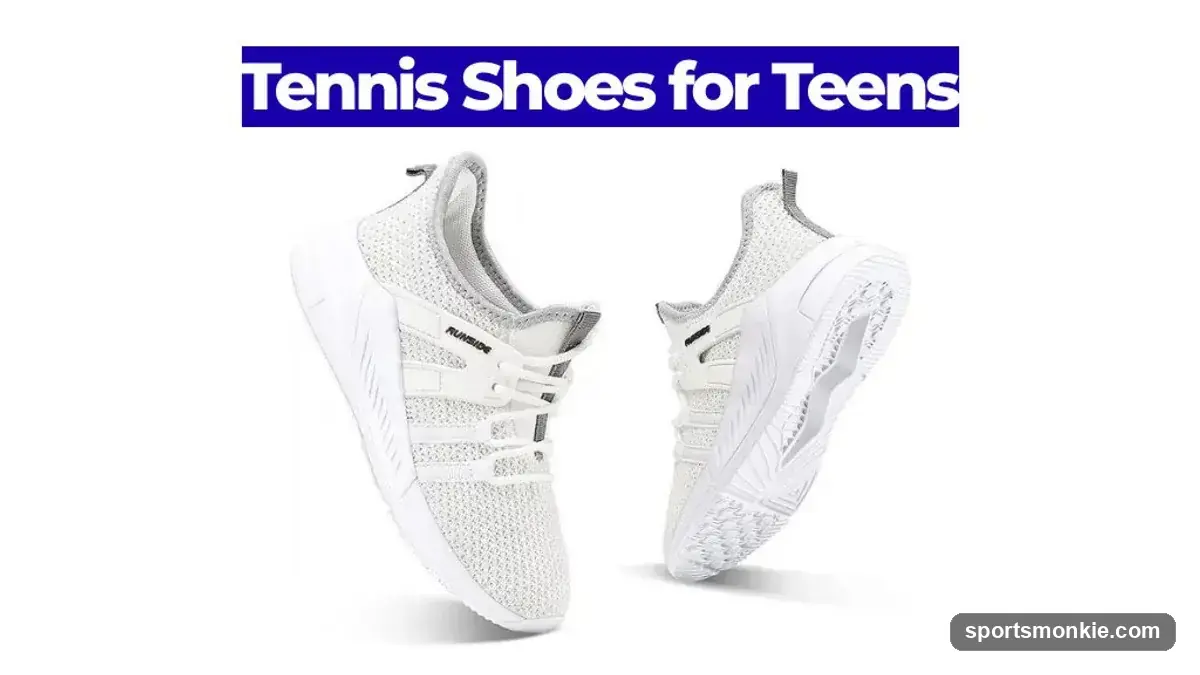
Parents shopping for a teen’s first real tennis shoe often reach for whatever running shoe is already in the closet. That’s a mistake that shows up fast: a rolled ankle on a hard cut, or a sole worn smooth in a matter of weeks. Tennis puts different demands on a shoe than running does, and for a teenager whose feet are still growing, getting the fit and sole type right matters more than the logo on the side.
Why Tennis-Specific Shoes Matter for Teenagers
Tennis asks a lot of a teen’s feet and ankles: hard lateral cuts, sudden stops, then stretches of light shuffling between points. A shoe built for the sport accounts for that in a few concrete ways.
- Lateral support. A reinforced upper and midsole keep the foot from rolling inward on side-to-side movement.
- Outsole durability. Tennis outsoles are thicker than a running shoe’s because players drag their toes and pivot repeatedly on abrasive court surfaces.
- Toe protection. Many models add a reinforced toe cap to survive the drag from serving.
- Surface-matched grip. The tread pattern changes depending on whether the court is hard, clay, or grass.
Court Surface and Outsole Type
This is the decision that matters most. Get the sole wrong and a player either slips or chews up the court.
| Court Surface | Outsole Pattern | Why |
|---|---|---|
| Hard court (acrylic/concrete) | Modified herringbone or multi-directional | Durable against abrasion, good grip on firm surface |
| Clay court | Full herringbone with grooves | Clay clears from the pattern; prevents slipping |
| Grass court | Rubber pimples/small nubs | Grip without tearing turf |
| Multi-court | Hybrid herringbone | Adequate on all surfaces; specialist shoe always better |
If a teen plays mostly on one surface at their club or school, buy for that surface specifically. Playing across several? A hard-court shoe usually holds up reasonably well everywhere else too.
Fit Considerations for Teen Feet
Teen feet are still changing shape, so fit deserves more attention than brand loyalty.
- Length. Leave about a thumb’s width between the longest toe and the shoe’s front edge. Feet swell during play, so a snug toe box at rest becomes painful an hour in.
- Width. Teens with wider feet should look at wide-fit versions or brands known for a roomier last. Too narrow, and blisters or bursitis follow.
- Heel lockdown. The heel should sit secure without pinching. Lacing through the top heel-lock eyelet, which most tennis shoes include, adds ankle stability.
Key Features to Check
| Feature | What to Look For |
|---|---|
| Outsole durability | Thick rubber; some brands offer durability guarantees |
| Midsole cushioning | Firm but not rock-hard — absorbs impact over long sessions |
| Upper material | Synthetic mesh for breathability; reinforced at stress points |
| Toe cap | Essential for teens who serve regularly |
| Weight | Lighter is better for agility; very light shoes often sacrifice durability |
How Long Do Tennis Shoes Last for Active Teens?
A teen training three or more times a week on hard courts usually wears through a pair in three to six months. The outsole under the ball of the foot and the toe-drag area go first. Once that rubber smooths out, grip is gone, and by then the midsole cushioning has typically compressed past the point of being useful.
Top Brands Producing Junior/Teen Sizes
Nike, Adidas, Asics, Babolat, Wilson, and New Balance all make junior and youth sizing in their tennis lines, and most adult models come in sizes that fit older teens too, generally size 4 and up. For younger teens whose feet are still changing shape, a fitting at a specialist tennis retailer before buying online is worth the extra trip.
Frequently asked questions
Can teens wear running shoes to play tennis?+
Running shoes are not recommended for tennis. They are designed for forward motion and lack the lateral support needed for the side-to-side movements of tennis. Using them increases the risk of ankle rolls and provides poor grip on court surfaces.
How often should a teen replace their tennis shoes?+
Active junior players who train multiple times a week often wear through tennis shoes in three to six months. Signs it's time to replace: worn-down outsole, collapsed midsole cushioning, or the upper tearing at the toe area from dragging the foot on serve.
Do different court surfaces require different tennis shoes?+
Yes. Hard court shoes have durable herringbone or modified outsoles. Clay court shoes have a zigzag herringbone pattern that clears clay from the sole. Grass court shoes have small rubber pimples for grip without damaging the turf. Multi-court shoes balance all three but excel at none.
Sources
Play & tools
Free browser games and tools — no account, no download.
- Play today's Sports Connections — Today's Sports Connections — daily hints, answers, and play the grid.
- Play Guess the NFL Player — A new mystery NFL player every day. Eight guesses, with a clue on each — plus free unlimited mode.
- Explore all our games →
Related tennis guides
View all →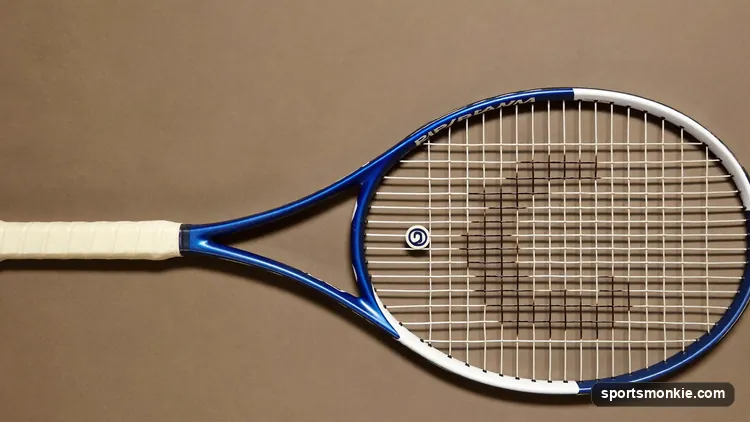
Parts of a Tennis Racket: Every Component and Spec Explained
The parts of a tennis racket are the head, strings, grommets, throat, shaft, beam, handle, grip, butt cap, and bumper guard. Full guide with specs.
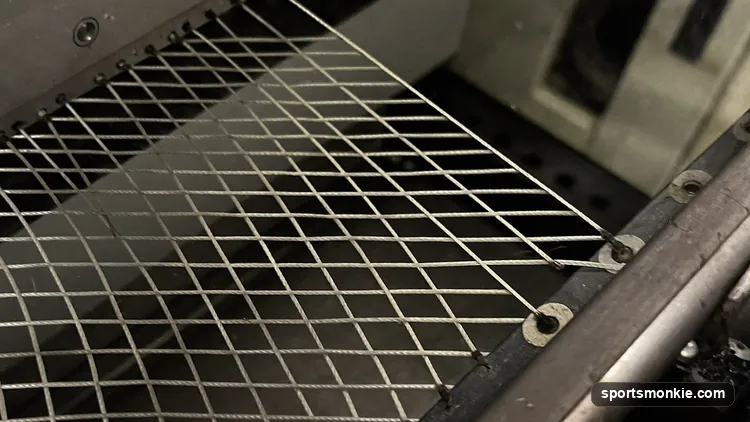
Tennis String Tension: Full Guide to Power, Control, and What to Choose
Tennis string tension typically runs 40-65 lbs (18-30 kg). Lower tension adds power and comfort; higher tension adds control. Full guide by string type.
How to Choose a Tennis Racket: A Buyer's Guide for All Levels
Choosing a tennis racket depends on your skill, style, and build. Beginners want larger heads and lighter frames; pros prefer control and heavier weight.
How Much Do Tennis Courts Cost to Build? (2023 Guide)
Building a private tennis court typically costs $25,000 to $100,000+ depending on surface, site prep, fencing, and lighting. Hard courts are the cheapest.

What Is an Ace in Tennis? Definition and Why It Matters
An ace in tennis is a legal serve that lands in the service box untouched by the receiver, winning the point outright. It is a server's top weapon.
Griekspoor Wins Brussels Title on the Court He Called 'Completely Different'
Tallon Griekspoor fumed at the new court dimensions in Brussels, then won three straight three-set matches on it, beating Jan-Lennard Struff in the final for his first title since 2025.