
Greatest South American Football Clubs
On this page14
- 01Ranked By Copa Libertadores Titles
- 02Independiente (Argentina) — 7 Titles
- 03Boca Juniors (Argentina) — 6 Titles
- 04Peñarol (Uruguay) — 5 Titles
- 05Flamengo (Brazil) — 4 Titles
- 06River Plate (Argentina) — 4 Titles
- 07Estudiantes de La Plata (Argentina) — 4 Titles
- 08São Paulo FC (Brazil) — 3 Titles
- 09Grêmio (Brazil) — 3 Titles
- 10Palmeiras (Brazil) — 3 Titles
- 11Santos (Brazil) — 3 Titles
- 12Olimpia (Paraguay) — 3 Titles
- 13Nacional (Uruguay) — 3 Titles
- 14How We Ranked Them
Argentina’s Primera División kicked off in 1891, before most of Europe’s storied leagues existed, and that head start still shows on the continent’s honours boards. Since the Copa Libertadores began in 1960, only 13 clubs have managed to win it more than once, and that short list is the real measure of who the giants of South American football actually are. Here they are, ranked by continental titles through the 2025 final.
Ranked By Copa Libertadores Titles
| Rank | Club | Country | Libertadores Titles | Years Won |
|---|---|---|---|---|
| 1 | Independiente | Argentina | 7 | 1964, ‘65, ‘72, ‘73, ‘74, ‘75, ‘84 |
| 2 | Boca Juniors | Argentina | 6 | 1977, ‘78, 2000, ‘01, ‘03, ‘07 |
| 3 | Peñarol | Uruguay | 5 | 1960, ‘61, ‘66, ‘82, ‘87 |
| 4 | Flamengo | Brazil | 4 | 1981, 2019, 2022, 2025 |
| 4 | River Plate | Argentina | 4 | 1986, ‘96, 2015, ‘18 |
| 4 | Estudiantes de La Plata | Argentina | 4 | 1968, ‘69, ‘70, 2009 |
| 7 | São Paulo FC | Brazil | 3 | 1992, ‘93, 2005 |
| 7 | Grêmio | Brazil | 3 | 1983, ‘95, 2017 |
| 7 | Palmeiras | Brazil | 3 | 1999, 2020, ‘21 |
| 7 | Santos | Brazil | 3 | 1962, ‘63, 2011 |
| 7 | Olimpia | Paraguay | 3 | 1979, ‘90, 2002 |
| 7 | Nacional | Uruguay | 3 | 1971, ‘80, ‘88 |
Independiente (Argentina) — 7 Titles
No club has ever dominated the Copa Libertadores the way Independiente did from 1964 to 1975: five titles in that stretch, including a run of four straight from 1972 to 1975 that remains unmatched. Nicknamed “El Rey de Copas” (The King of Cups), the Avellaneda club hasn’t lifted the trophy since 1984, but the record of seven stands untouched more than four decades later. Independiente’s continental pedigree is also why the club still gets top billing in any conversation about the greatest soccer players South America has produced, several of whom passed through Avellaneda on the way to global stardom.
Boca Juniors (Argentina) — 6 Titles
Boca is the working-class heart of Argentine football, playing out of La Bombonera in the La Boca neighborhood of Buenos Aires. Their six Libertadores titles came in two distinct waves: back-to-back wins in 1977-78, then a golden run from 2000 to 2007 under Carlos Bianchi that included three titles in four years. Boca’s 74 major trophies make them Argentina’s most decorated club overall, and their derby with River Plate, the Superclásico, is the single biggest fixture in South American club football.
Peñarol (Uruguay) — 5 Titles
Peñarol won the first two editions of the Copa Libertadores in 1960 and 1961, establishing Uruguay as the tournament’s early superpower before Argentina and Brazil caught up. Three more titles followed in 1966, 1982, and 1987, giving Peñarol the most Libertadores wins of any club outside Argentina and Brazil. For a country with fewer than four million people, five continental titles is a staggering return, and it underlines why Uruguayan clubs still punch far above their population weight.
Flamengo (Brazil) — 4 Titles
Flamengo is Brazil’s most-supported club by a wide margin, and its trophy case caught up to that popularity with the 2025 Copa Libertadores win, a 1-0 defeat of Palmeiras in Lima that made Flamengo the first Brazilian club to reach four titles (1981, 2019, 2022, 2025). Heavy investment in the squad since the mid-2010s turned Flamengo into a genuine continental power and a regular at the best football stadiums on the calendar, including deep FIFA Club World Cup runs against European opposition.
River Plate (Argentina) — 4 Titles
Nicknamed “Los Millonarios” since the 1930s for their big-money signings, River Plate plays an elegant, attacking style out of El Monumental in Buenos Aires. Their four Libertadores titles span more than three decades (1986, 1996, 2015, 2018), and the last of those, a 3-1 extra-time win over bitter rival Boca Juniors in the only Superclásico final the tournament has ever produced, was played in Madrid after security concerns forced the second leg out of Argentina entirely.
Estudiantes de La Plata (Argentina) — 4 Titles
Estudiantes’ three straight titles from 1968 to 1970 were built on a tactical revolution, tight man-marking and physical intensity that shocked the continent’s more expressive traditional powers. A fourth title arrived in 2009, nearly four decades later, proving the club’s Libertadores pedigree wasn’t a one-era fluke. Estudiantes remains one of only three clubs to win the competition in three consecutive years.
São Paulo FC (Brazil) — 3 Titles
São Paulo won back-to-back titles in 1992 and 1993 under coach Telê Santana, playing some of the most admired football of that decade, then added a third in 2005. The club has stayed a consistent presence in continental competition ever since, and its academy has produced a steady stream of talent that later moved into Europe’s most competitive leagues.
Grêmio (Brazil) — 3 Titles
Southern Brazil’s biggest power, Grêmio has won the Libertadores in three different decades: 1983, 1995, and 2017. The 2017 title, secured under Renato Portaluppi with a squad built around disciplined defending and set-piece efficiency, confirmed Grêmio as the standard-bearer for Rio Grande do Sul football on the continental stage.
Palmeiras (Brazil) — 3 Titles
Palmeiras won its first Libertadores in 1999, then went 21 years without another before winning back-to-back titles in 2020 and 2021, the first club to repeat since Boca Juniors in 2000-01. Palmeiras reached the final again in 2025, losing 1-0 to Flamengo, and no Brazilian club has won more domestic league titles, giving it a claim to being Brazil’s most consistently well-run modern club.
Santos (Brazil) — 3 Titles
Santos is forever tied to Pelé, who won back-to-back Libertadores titles with the club in 1962 and 1963 before touring Europe and introducing much of the world to Brazilian football. A third title followed in 2011 behind a young Neymar. Santos’s history gives it outsized cultural weight relative to its more recent results.
Olimpia (Paraguay) — 3 Titles
Paraguay’s most successful club, Olimpia won the Libertadores in 1979, 1990, and 2002, and remains the country’s record domestic champion by a wide margin. Olimpia’s 1989 final defeat to Atlético Nacional on penalties, Colombia’s first continental title, remains one of the tournament’s most dramatic finishes.
Nacional (Uruguay) — 3 Titles
Alongside Peñarol, Nacional carried Uruguay’s early football identity, winning the Libertadores in 1971, 1980, and 1988. Nacional is Uruguay’s most successful club domestically and, together with Peñarol, gives the small country more combined continental titles than every nation except Argentina and Brazil.
How We Ranked Them
This list is ordered strictly by Copa Libertadores titles won through the 2025 final, the same benchmark CONMEBOL and most continental record-keepers use to define club greatness in South America. Ties are broken by total finals reached and the years the titles span, which is why Flamengo, River Plate, and Estudiantes de La Plata are grouped level on four. Domestic league titles, fan base size, and current squad value all matter to a club’s overall stature, and they factor into how the richest football clubs in South America are separately ranked, but Libertadores titles remain the clearest, most comparable measure of continental success.
Frequently asked questions
Which South American club has won the most Copa Libertadores titles?+
Independiente of Argentina has won the Copa Libertadores a record seven times (1964, 1965, 1972, 1973, 1974, 1975, 1984). Boca Juniors is second with six, and Peñarol of Uruguay is third with five.
Who is the reigning Copa Libertadores champion?+
Flamengo won the 2025 Copa Libertadores, beating Palmeiras 1-0 in the final in Lima, Peru, on November 29, 2025. It was Flamengo's fourth title, added to their wins in 1981, 2019, and 2022.
What is the Copa Libertadores?+
The Copa Libertadores is South America's top club football competition, run by CONMEBOL since 1960. It is the continental equivalent of the UEFA Champions League and is widely seen as the hardest club trophy in world football to win because of travel, altitude, and hostile away legs.
Which Brazilian club is the most successful in the Copa Libertadores?+
Flamengo leads Brazilian clubs with four Copa Libertadores titles (1981, 2019, 2022, 2025), just ahead of São Paulo FC, Grêmio, Palmeiras, and Santos, who have three each.
How many Copa Libertadores titles have Uruguayan clubs won combined?+
Peñarol (5), Nacional (3), and other Uruguayan sides have combined for eight or more titles, a remarkable haul for a country of under four million people, reflecting Uruguay's outsized early influence on South American football.
Has any club won the Copa Libertadores back-to-back in the modern era?+
Yes. Palmeiras won consecutive titles in 2020 and 2021, becoming the first club to repeat as Libertadores champion since Boca Juniors did it in 2000-2001.
Which is the biggest rivalry among South American football clubs?+
The Superclásico between River Plate and Boca Juniors in Buenos Aires is regarded as South America's fiercest club rivalry, intensified by the 2018 Copa Libertadores final, the only edition of the tournament settled between the two, which River won 3-1 after extra time in Madrid.
Sources
Play & tools
Free browser games and tools — no account, no download.
- Play 38-0 — Sign a 4-4-2 of all-time football legends and chase a perfect 38-0 league season — perfect, not just unbeaten.
- Explore all our games →
Related football guides
View all →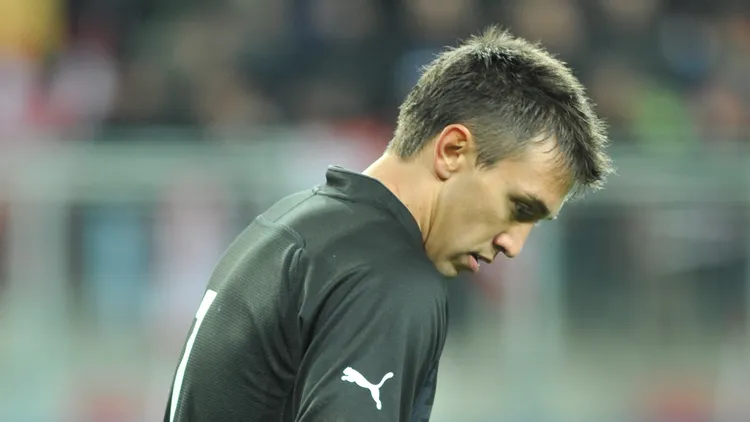
Muslera's Three Penalty Saves Send 10-Man Estudiantes Past Flamengo to Libertadores Final
Fernando Muslera saved three penalties as 10-man Estudiantes beat Flamengo 3-2 in a shootout at the Maracana, ending seven years of Brazilian dominance to reach the Copa Libertadores final.
Most Successful Spanish Football Clubs of All Time
Spain's most successful football clubs ranked by major honours: Real Madrid (36 La Liga, 15 European Cups) and Barcelona (29 La Liga, 32 Copa del Rey) lead the pack.
Most Successful Italian Football Clubs of All Time (Top 10, Ranked)
Juventus, AC Milan, Inter, Roma, Napoli and more, ranked by Serie A titles, Coppa Italia wins, and European trophies, with the numbers behind every club.

Richest Football Clubs in the World: The Full 2026 Ranking
Real Madrid leads the Deloitte Football Money League with over €1.1 billion in revenue, ahead of Barcelona, Bayern Munich, PSG, and Liverpool. Here are the 12 richest clubs, ranked.

The Worst Transfers in Football History, Ranked
Ousmane Dembele, Philippe Coutinho, Antoine Griezmann, Paul Pogba and more — the biggest-money football transfer flops ever, with the fees and the reasons they failed.

Best Football Trios: The Most Devastating Attacking Thirds
Barcelona's MSN, Real Madrid's BBC and Liverpool's front three — the best football trios ranked by combined output, trophies and years spent dominating.