
Hitting the Ball Twice in Cricket: Law 34 Explained
On this page4
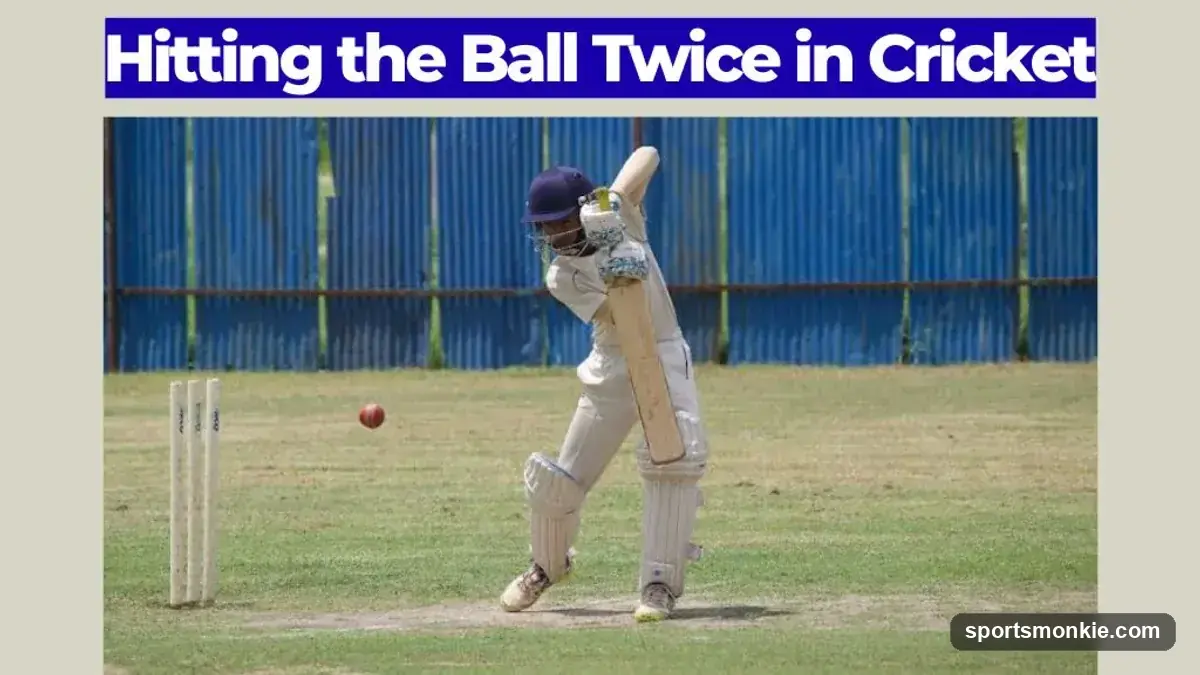
A batter jams his bat down to keep the ball off his stumps, then instinctively taps it away toward the covers for a single. That second tap is where Law 34 gets involved. Hit the ball twice for any reason other than protecting your wicket, and the umpire can send you back to the pavilion. Most players never see it called in an entire career, which is exactly why it trips people up when it does happen.
When a second hit is legal
Law 34 allows one legitimate reason to strike the ball twice: stopping it from rolling onto your stumps. After playing or missing a delivery, if the ball is trickling back toward the wicket, the batter can use the bat, or any part of the body under the hand-on-bat rules, to knock it clear.
That’s it. The intent has to be defensive. A batter who clears the ball away from the stumps is following the Laws and faces no penalty for it.
When it’s a dismissal
The batter is out “hit the ball twice” if he wilfully strikes the ball a second time for any reason other than protecting the wicket, most commonly to flick it away for a run. It goes down as a batter dismissal, not against the bowler’s figures.
The first contact still has to be a genuine stroke. And there’s a carve-out: a batter isn’t out under this Law if the second contact is simply returning the ball to a fielder, as long as the fielding side has agreed to it.
Can you score runs?
Almost never. Runs don’t count off a deliberate second strike, even when that second strike was a legal defensive one. The Law exists specifically to remove any reason to play the ball twice.
The exception sits with the boundary or the fielders: if runs come from an overthrow, or from something a fielder does after a lawful second strike, those runs can stand. Outside those cases, the ball is dead for scoring purposes the moment it’s struck twice.
| Scenario | Legal? | Outcome |
|---|---|---|
| Hits ball a second time to stop it hitting stumps | Yes | No dismissal, no runs |
| Hits ball a second time to push it away for a run | No | Out “hit the ball twice” |
| Second contact to return ball to fielder (with consent) | Yes | Not out, play continues |
| Runs from an overthrow after a lawful second strike | Yes | Those runs may stand |
How common is it
Rare enough to sit next to “obstructing the field” and “timed out” on the list of dismissals nobody expects to see. Umpires generally give batters the benefit of the doubt on wicket protection, so most disputed cases never even reach the point of a decision. At the professional level, a genuine “hit the ball twice” dismissal is a story you tell for years, not something you scroll past in a highlights reel.
Frequently asked questions
Can a batter ever legally hit the ball twice?+
Yes. Under Law 34 a batter may lawfully strike the ball a second time only to guard or protect their wicket, never to score runs.
Can you score runs after hitting the ball twice?+
Generally no. Runs cannot be scored off a deliberate second strike. The main exception is when the ball reaches the boundary or runs result from an overthrow or a fielder's act.
How is 'hit the ball twice' different from a 'double hit'?+
They describe the same situation. 'Double hit' is the informal name; 'hit the ball twice' is the official dismissal under Law 34 of the MCC Laws of Cricket.
Sources
Play & tools
Free browser games and tools — no account, no download.
- Play today's Sports Connections — Today's Sports Connections — daily hints, answers, and play the grid.
- Play Guess the NFL Player — A new mystery NFL player every day. Eight guesses, with a clue on each — plus free unlimited mode.
- Explore all our games →
Related cricket guides
View all →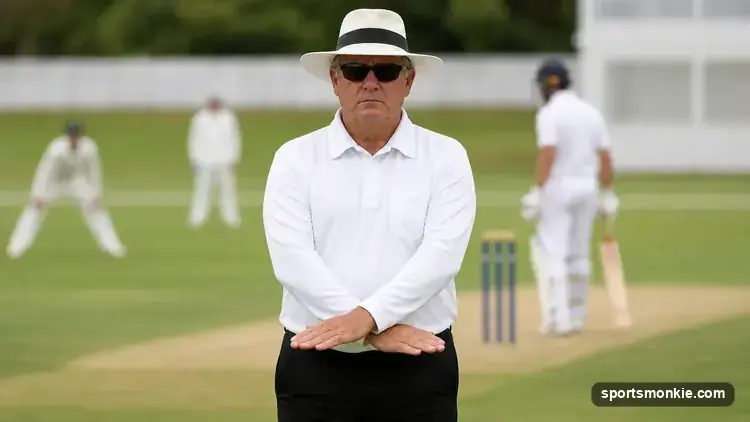
What Is a Dead Ball in Cricket? Rule and Common Situations
A dead ball is a delivery from which no runs score and no batter is out. Learn when the ball goes dead, who decides, and why it matters in a tight finish.
What Is a No-Ball in Cricket? Types, Rules & the Free Hit
A no-ball is an illegal delivery that costs the bowling side a run and a re-bowl. Learn every type, the free-hit rule and how a batter can be out off one.
DLS Method in Cricket Explained: How Rain Targets Are Set
The Duckworth-Lewis-Stern (DLS) method resets targets in rain-hit limited-overs cricket using overs and wickets left. Here's the logic, with examples.
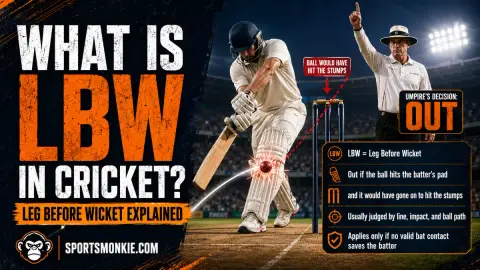
What Is LBW in Cricket? Leg Before Wicket Explained
LBW means the ball would have hit the stumps but struck the pad first. Here are the exact conditions umpires check and how DRS decides close calls.
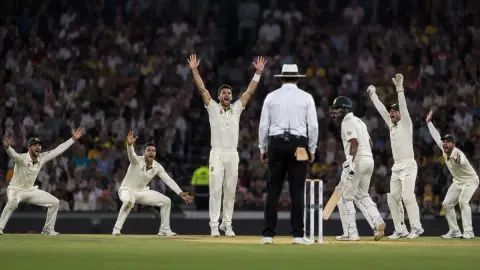
Appealing in Cricket: What It Is and How It Works
An appeal in cricket is the fielding side's formal request for a dismissal. Without one, an umpire cannot give a batter out, even one who clearly is.
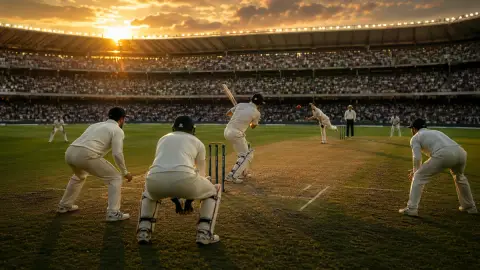
15 Basic Rules of Cricket Every Fan Should Know
Cricket has a detailed rulebook, but these 15 core rules cover how the game is played, how batters are dismissed, and how runs are scored.