
Popping Crease in Cricket: The Batting Line Explained
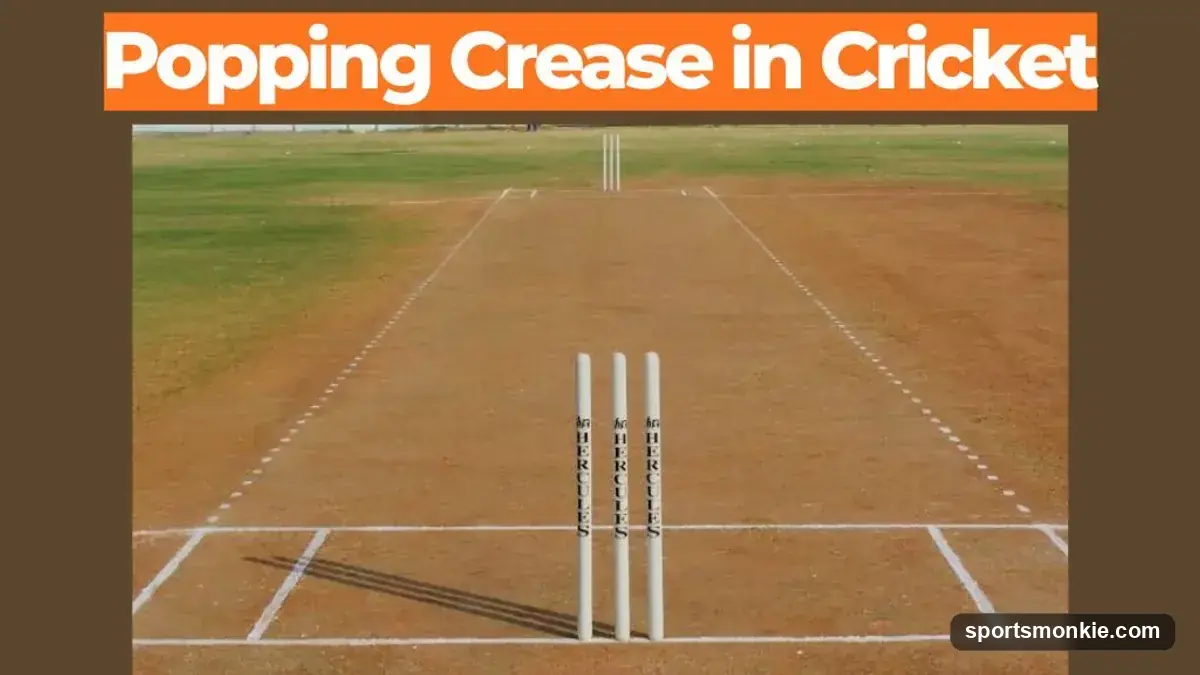
Replay a tight run-out and the whole verdict comes down to a few centimetres of white paint. That line is the popping crease, marked 4 feet (1.22 m) in front of the stumps at each end of the pitch. It’s the batter’s safe ground for run-outs and stumpings, and it’s also the line a bowler’s front foot can’t fully cross without the umpire calling a no-ball.
Umpires and third umpires refer back to this line more than any other marking on the field. A run-out review, a front-foot no-ball check, a stumping appeal: all of it hinges on exactly where a foot, bat, or body landed relative to the popping crease.
The creases explained
Every pitch has three sets of lines painted at both ends, defined under MCC Law 7.
- Bowling crease: runs through the middle of the three stumps, marking the back edge of the play area. The stumps sit directly on it.
- Popping crease: the line in front of the bowling crease that gives the batter their safe ground. It runs parallel to the bowling crease, and umpires treat it as extending the full width of the pitch even though it isn’t painted that wide.
- Return creases: two lines at right angles to the other two, one on each side, that box in where the bowler is allowed to deliver from.
Together, these three lines form the rectangle the bowler works within and the zone the batter defends.
Measurements
The MCC figures are fixed and identical at both ends of the pitch.
| Crease | Measurement |
|---|---|
| Bowling crease | 8 ft 8 in (2.64 m) wide, with the stumps centred on it |
| Popping crease | 4 ft (1.22 m) in front of the bowling crease, marked unlimited in length |
| Return crease | 4 ft 4 in (1.32 m) either side of the middle stump, at right angles |
Do the conversion and it checks out: 8 feet 8 inches is 2.64 m, so each return crease sits exactly half that, 4 feet 4 inches (1.32 m), from the middle stump. The popping crease’s 4 feet works out to 1.22 m. Same numbers at both ends, so neither batter nor bowler gets a different geometry depending on which way play is going.
Why the popping crease matters
This isn’t decorative paint. It settles three of the most argued calls in the sport.
No-ball (front-foot rule): when a bowler delivers, some part of the front foot needs to stay behind the popping crease, whether it’s grounded or still in the air. If the entire foot lands past the line with nothing behind it, that’s a front-foot no-ball. In international cricket the third umpire now checks this frame by frame.
Stumping: if a batter steps out of the crease to play a shot and misses, the wicketkeeper can whip the bails off. The batter is out unless part of the bat or body is grounded behind the popping crease at that exact moment.
Run-out: while running, a batter has to reach the ground behind the popping crease at the end they’re running to. Break the wicket before they get there and it’s a run-out. Crucially, the bat has to be grounded behind the line, not just hovering over it, for the batter to be safe.
The rule behind all three situations is the same: ground behind the popping crease counts as safe, ground in front of it doesn’t.
If you found this useful, our breakdown of 15 Basic Rules of Cricket Every Fan Should Know covers related ground.
For the wider context, we break down Cricket Pitch Length in Feet separately.
Frequently asked questions
What is the popping crease in cricket?+
The popping crease is the white line drawn 4 feet (1.22 m) in front of the stumps at each end of the pitch. It marks the batter's safe ground and is the line bowlers must not overstep when delivering the ball.
How far is the popping crease from the stumps?+
The popping crease sits 4 feet (1.22 m) in front of the middle of the bowling crease, where the three stumps stand. It runs parallel to the bowling crease and is considered unlimited in length.
Why does the popping crease matter for a run-out?+
A batter is safe only when part of the bat or body is grounded behind the popping crease line. If the batter is short of the crease when the bails are removed, they are run out or stumped.
Sources
Play & tools
Free browser games and tools — no account, no download.
- Play today's Sports Connections — Today's Sports Connections — daily hints, answers, and play the grid.
- Play Guess the NFL Player — A new mystery NFL player every day. Eight guesses, with a clue on each — plus free unlimited mode.
- Explore all our games →
Related cricket guides
View all →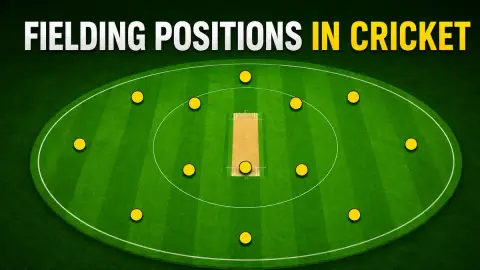
Fielding Positions in Cricket: A Clear Guide to Every Spot
Learn every cricket fielding position, from slips and gully to long-on and fine leg, grouped by close catchers, infield and boundary riders.
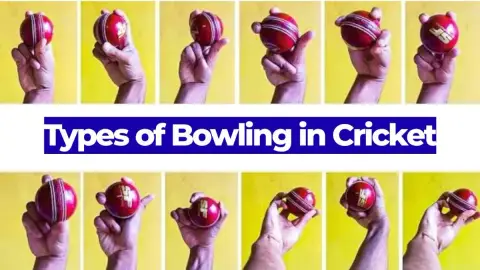
Types of Bowling in Cricket: Pace and Spin Explained
A clear guide to the types of bowling in cricket, from fast and swing bowling to off spin, leg spin, and deliveries like the yorker, googly, and doosra.
Pickleball Line Call Rules: What's In, What's Out, Who Calls
Every line is in except the kitchen line on a serve. Players call their own end and give the benefit of the doubt. Here's how line calls work.
Conventional vs Reverse Swing in Cricket: The Difference
Conventional swing moves the new ball toward the shine; reverse swing makes an old ball curve the opposite way at pace. Here's what separates them.
Why Cricket Is Not in the Olympics: The Full Story
Cricket has never been a permanent Olympic sport due to governance disputes, calendar conflicts and ICC reluctance to cede control to the IOC. Here is why.
Dropped Third Strike Rule in Baseball, Explained
On an uncaught third strike, the batter can try to reach first base if it's unoccupied or there are two outs — the strikeout doesn't automatically end the at-bat.