
The Most Insane Sports Riots in History, Ranked
On this page16
- 01Deadliest and most infamous sports riots at a glance
- 02Nika Riots (532 AD) — Constantinople
- 03Estadio Nacional Disaster (1964) — Lima, Peru
- 04Kanjuruhan Stadium Disaster (2022) — Malang, Indonesia
- 05Accra Sports Stadium Disaster (2001) — Accra, Ghana
- 06Hillsborough Disaster (1989) — Sheffield, England
- 07Port Said Stadium Riot (2012) — Port Said, Egypt
- 08Kayseri Atatürk Stadium Riot (1967) — Kayseri, Turkey
- 09Heysel Stadium Disaster (1985) — Brussels, Belgium
- 10The Football War (1969) — El Salvador vs. Honduras
- 11Vancouver Stanley Cup Riot (2011) — Vancouver, Canada
- 12How We Ranked This List
- 13Crush vs. Riot: The Distinction That Matters
- 14The Recurring Killer: Tear Gas and Locked Exits
- 15At a Glance: Toll and Primary Cause
- 16Why Football Dominates This List
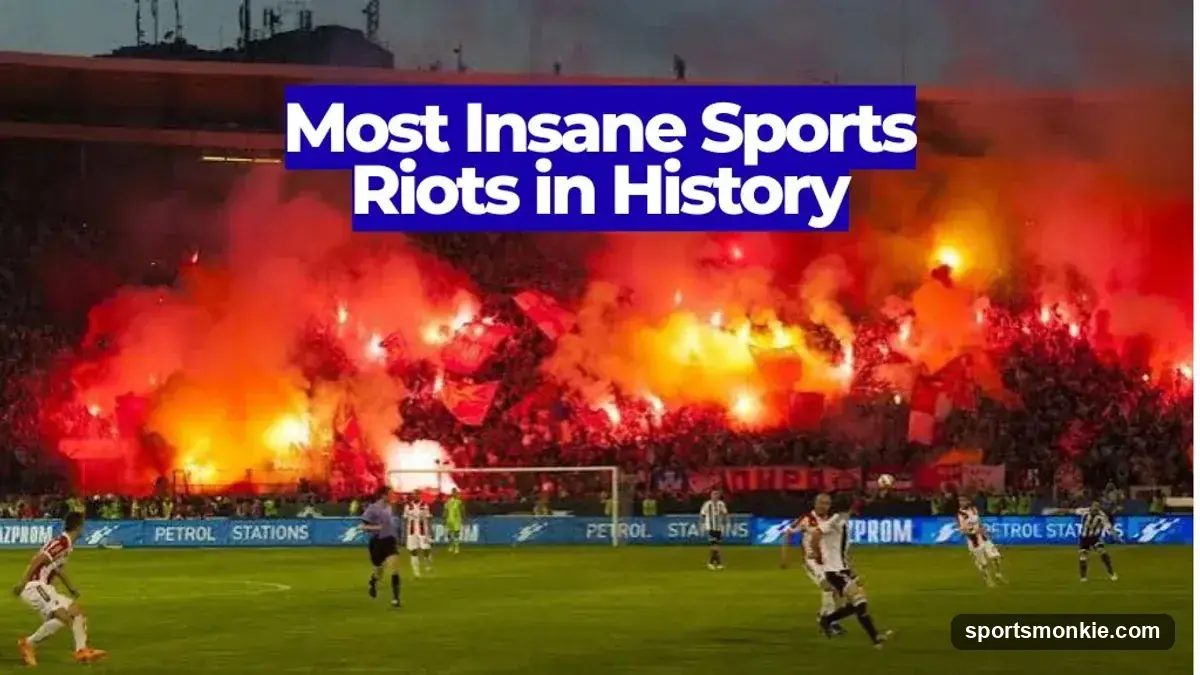
Ranked strictly by confirmed or widely cited death toll, from the Nika Riots down through the deadliest modern stadium crushes. Two entries deliberately break that order: the Football War's dead came from a four-day military conflict, not a stadium, and the Vancouver riot killed no one but is kept for its scale of destruction and its status as the defining modern celebration riot.
Deadliest and most infamous sports riots at a glance
| Rank | Event | Year and place | Widely cited deaths |
|---|---|---|---|
| 1 | Nika Riots | 532, Constantinople | About 30,000 |
| 2 | Estadio Nacional disaster | 1964, Lima | 328 |
| 3 | Kanjuruhan Stadium disaster | 2022, Malang | 135 |
| 4 | Accra Sports Stadium disaster | 2001, Accra | About 126 |
| 5 | Hillsborough disaster | 1989, Sheffield | 97 |
| 6 | Port Said Stadium riot | 2012, Port Said | 74 |
- Deadliest on record
Nika Riots (532 AD) — Constantinople
No sports-linked event has ever killed on this scale. Constantinople's two chariot-racing factions, the Blues and the Greens, normally hated each other; in January 532 they united against Emperor Justinian I after members of both were sentenced to hang, and the rioting swallowed the city for roughly a week. Crowds torched much of Constantinople — including the original Hagia Sophia — and tried to crown a rival emperor, Hypatius.
It ranks first by a margin nothing modern approaches. Justinian kept his throne only because his generals Belisarius and Mundus sealed the exits of the Hippodrome and cut down the crowd trapped inside; contemporary accounts put the dead at about 30,000. Every entry below is a stadium-scale tragedy — this one nearly ended an empire.
Sport: Chariot racing · Year: 532 AD · Deaths: ~30,000 · Trigger: rival factions unite against Justinian · Aftermath: Hagia Sophia burned, then rebuilt
- Worst stadium toll
Estadio Nacional Disaster (1964) — Lima, Peru
This is the deadliest single-stadium disaster in football history. During a Tokyo Olympic qualifier between Peru and Argentina on May 24, 1964, Uruguayan referee Ángel Eduardo Pazos disallowed a late Peru equalizer. Fans invaded the pitch, police fired tear gas into the packed stands, and the crowd stampeded toward exits locked to keep ticketless fans out. The crush killed an estimated 328 people and injured around 500.
It sits above the newer disasters below it because its toll has never been surpassed and its cause became the textbook case: locked emergency exits turn a panic into a mass-casualty event. It is cited routinely in stadium-safety literature alongside the region's history of building the biggest soccer stadiums in the world.
Sport: Football · Year: 1964 · Deaths: ~328 · Trigger: disallowed goal, tear gas · Cause: crush at locked exits
- Deadliest modern crush
Kanjuruhan Stadium Disaster (2022) — Malang, Indonesia
The most recent entry is also the second-deadliest stadium disaster ever. After Arema FC lost a home derby 3-2 to Persebaya Surabaya on October 1, 2022, fans poured onto the pitch and police fired tear gas into the enclosed stands — a tactic FIFA's stadium-safety rules explicitly prohibit. Spectators surged toward exits that were too narrow and, in places, locked. The finalized toll reached 135 deaths.
Nearly six decades after Lima, the fatal chain was identical — tear gas, panic, blocked exits — which is why it ranks just below Estadio Nacional rather than as an outlier. It forced a nationwide review of Indonesian stadium licensing and crowd-control tactics.
Sport: Football · Year: 2022 · Deaths: 135 · Trigger: pitch invasion after 3-2 loss · Cause: tear gas, crush at narrow exits
- Worst in Africa
Accra Sports Stadium Disaster (2001) — Accra, Ghana
Ghana's fiercest derby turned lethal on May 9, 2001. Hearts of Oak led Asante Kotoko 2-1 with late goals when Kotoko fans tore out plastic seats and hurled bottles onto the pitch; police answered with tear gas fired into overcrowded stands. As in Lima, the crush formed at exits that couldn't absorb the surge, and about 126 people died.
It remains the worst stadium disaster in African football history and ranks above the English and European tragedies below it purely on toll. The inquiry that followed prompted continent-wide reviews of policing and exit design, echoing debates that also shape rankings of the best football stadiums in the world.
Sport: Football · Year: 2001 · Deaths: ~126 · Trigger: thrown seats, tear gas · Cause: crush at overwhelmed exits
- Reform catalyst
Hillsborough Disaster (1989) — Sheffield, England
Hillsborough was a crush caused by crowd mismanagement, not fan violence — which sets it apart from most of this list. Overcrowding in fenced standing pens at the April 15, 1989 FA Cup semi-final between Liverpool and Nottingham Forest killed Liverpool supporters penned against the barriers. The toll stands at 97 after Andrew Devine died in 2021 from injuries suffered that day, and a coroner ruled all 97 unlawfully killed.
It ranks here on toll but matters most for consequence: the Taylor Report mandated all-seater stadiums across England's top two divisions and ended fenced terracing, permanently reshaping how English football is watched.
Sport: Football · Year: 1989 · Deaths: 97 · Cause: crush in fenced standing pens · Legacy: Taylor Report, all-seater rule
- Post-revolution bloodshed
Port Said Stadium Riot (2012) — Port Said, Egypt
Unlike the crush disasters above it, Port Said was a deliberate attack. After Al-Masry beat Al-Ahly 3-1 on February 1, 2012, home fans stormed the pitch and set on Al-Ahly supporters with knives, machetes, and fireworks. Many of the 74 dead died when police failed to open an exit, trapping fans trying to flee the violence.
It ranks below the larger crushes on raw toll, but the intent behind it — and the political charge of the moment, a year after the 2011 Egyptian revolution — set it apart. The trials dragged on for years and ended in death sentences for several defendants.
Sport: Football · Year: 2012 · Deaths: 74 · Trigger: pitch invasion, armed attack · Cause: violence plus a sealed exit
- Turkey's deadliest
Kayseri Atatürk Stadium Riot (1967) — Kayseri, Turkey
One of the earliest well-documented stadium riots of the modern era. On September 17, 1967, a clash between Kayserispor and Sivasspor fans erupted in the stands, spread into street fighting around the ground, and set off a stampede toward blocked exits. Roughly 43 people were killed and several hundred injured.
It edges Heysel just below it on toll, and it holds a specific place in Turkish football history: the moment authorities began treating derby security as a life-and-death policing problem rather than routine crowd control.
Sport: Football · Year: 1967 · Deaths: ~43 · Trigger: rival-fan clash in the stands · Cause: street fighting, stampede at blocked exits
- European ban
Heysel Stadium Disaster (1985) — Brussels, Belgium
Before the May 29, 1985 European Cup Final between Liverpool and Juventus, Liverpool supporters charged a section holding Juventus fans. The crowd fleeing the charge crushed against a decaying retaining wall, which collapsed and killed 39 people, most of them Italian.
Its toll places it here, but its consequence outweighs the number: English clubs were banned from European competition for five years, a punishment that reshaped a generation of English club football and still surfaces in any discussion of how far stadium design has come, from Heysel to the modern best football stadiums in the world.
Sport: Football · Year: 1985 · Deaths: 39 · Cause: charge, then collapse of a retaining wall · Legacy: 5-year ban on English clubs
- Sport as the spark
The Football War (1969) — El Salvador vs. Honduras
This entry breaks the death-toll order because its casualties came from combat, not a stadium. Riots surrounded three 1969 World Cup qualifiers between El Salvador and Honduras, inflamed by real disputes over land, migration, and inequality. Weeks after the deciding playoff, El Salvador launched a military offensive; the roughly 100-hour war that July killed an estimated 2,000 to 6,000 people, mostly civilians, and shut the border for over a decade.
Football didn't cause the war — the tension predated it — but it was the trigger that lit an already-primed fuse, the same volatile dynamic behind the rivalries covered in what is a derby in football.
Sport: Football (trigger) · Year: 1969 · Deaths: ~2,000-6,000 (war) · Duration: ~100 hours · Root cause: land and migration disputes
- Zero deaths, total chaos
Vancouver Stanley Cup Riot (2011) — Vancouver, Canada
The one entry with no death toll, kept for scale. After the Vancouver Canucks lost Game 7 of the 2011 Stanley Cup Final to the Boston Bruins on June 15, thousands massed downtown, torched cars, smashed storefronts, and looted businesses. No one was killed, but around 140 people were injured, more than 100 were arrested, and damage ran into the millions.
It ranks last precisely because it caused no deaths, yet it earns a place as the modern reference point for the celebration-turned-destruction riot: proof that a result alone — even one that should have been a party — is trigger enough.
Sport: Ice hockey · Year: 2011 · Deaths: 0 · Injured: ~140 · Trigger: Game 7 loss · Damage: millions in looting and arson
Reader interaction
Build your ranking
Drag the entries into the order you think is right — or use the arrows — then submit to see how your list compares with everyone else's.
- Nika Riots (532 AD) — Constantinople
- Estadio Nacional Disaster (1964) — Lima, Peru
- Kanjuruhan Stadium Disaster (2022) — Malang, Indonesia
- Accra Sports Stadium Disaster (2001) — Accra, Ghana
- Hillsborough Disaster (1989) — Sheffield, England
- Port Said Stadium Riot (2012) — Port Said, Egypt
- Kayseri Atatürk Stadium Riot (1967) — Kayseri, Turkey
- Heysel Stadium Disaster (1985) — Brussels, Belgium
- The Football War (1969) — El Salvador vs. Honduras
- Vancouver Stanley Cup Riot (2011) — Vancouver, Canada
Audience ranking
How everyone ranked them
Built from reader rankings using position-based points.
Two countries went to actual war over a set of World Cup qualifiers in 1969 — tanks, air raids, a four-day military conflict between El Salvador and Honduras. That is the far edge of what happens when sport meets tension that was already there, waiting for a spark. The gap between loud support and a genuine riot is thinner than most fans admit, and it has been crossed in stadiums, on championship-night streets, and once, in the sixth century, at a chariot race.
How We Ranked This List
The order above is set mainly by confirmed or widely cited death toll, from the Nika Riots down through the deadliest modern stadium crushes. Figures come from official inquiries, court findings, and contemporaneous reporting. Older tolls — Nika and Estadio Nacional especially — vary by source, so they are given as estimates.
Two entries deliberately break the death-toll order. The Football War sits at nine despite thousands of casualties because those deaths came from a military conflict, not a stadium crush; ranking it purely on toll would put a war above every disaster here and distort the point. The Vancouver riot sits at ten with zero deaths because it is the clearest modern example of destruction without a body count. Both are flagged where they appear so the ranking stays honest.
Crush vs. Riot: The Distinction That Matters
Most people file all of these under “riot,” but the deadliest ones are crushes. A riot is people choosing violence — throwing punches, looting, setting fires. A crush is a mechanical failure: a dense crowd forced through space that cannot clear it fast enough, where the pressure alone can stop a person breathing while they are still standing.
The lethal events here almost always start as one and become the other. Anger or panic sends a crowd moving in one direction; a bottleneck — a locked gate, a narrow tunnel, a collapsed wall — does the killing. Understanding that difference is why modern safety work focuses less on stopping fans from fighting and more on making sure a moving crowd always has somewhere to go.
The Recurring Killer: Tear Gas and Locked Exits
Read the top of this list closely and the same two words keep appearing: gas, exits. Lima in 1964, Accra in 2001, and Malang in 2022 are separated by continents and decades, yet the fatal sequence is nearly copy-pasted. Police fire tear gas into a packed, enclosed stand. Thousands panic and surge as one. The exits are too few, too narrow, or chained shut. Within minutes the death toll is in the dozens or hundreds.
That is why FIFA’s stadium-safety guidance now bans tear gas and firearms inside enclosed grounds, and why exit design — unlocked gates, adequate width, clear routes — is treated as a core safety standard rather than an afterthought.
At a Glance: Toll and Primary Cause
| Event | Year | Sport | Deaths | Primary cause |
|---|---|---|---|---|
| Nika Riots | 532 AD | Chariot racing | ~30,000 | Uprising crushed inside the Hippodrome |
| Estadio Nacional | 1964 | Football | ~328 | Tear gas, crush at locked exits |
| Kanjuruhan Stadium | 2022 | Football | 135 | Tear gas, crush at narrow exits |
| Accra Sports Stadium | 2001 | Football | ~126 | Tear gas, crush at overwhelmed exits |
| Hillsborough | 1989 | Football | 97 | Crush in fenced standing pens |
| Port Said | 2012 | Football | 74 | Armed attack, sealed exit |
| Kayseri Atatürk | 1967 | Football | ~43 | Fan clash, stampede at blocked exits |
| Heysel | 1985 | Football | 39 | Charge, then wall collapse |
| Football War | 1969 | Football (trigger) | ~2,000-6,000 | Military conflict |
| Vancouver | 2011 | Ice hockey | 0 | Celebration riot, arson and looting |
Why Football Dominates This List
Eight of the ten entries are football, and that is not a coincidence. Football pulls the largest routine crowds of any sport, and it wraps them in the most intense local and national rivalries — the kind of tribal loyalty that turns a disputed goal into a flashpoint. For decades those crowds stood on packed terraces with poor exit design and little crowd-management planning, a combination that made a small spark catastrophic.
Tension imported from outside the sport made it worse. Class, ethnicity, and politics run under many of these events; the Football War is only the extreme case of sport carrying a conflict that was already there. The encouraging trend is that all-seater stadiums, tear-gas restrictions, and better exit design have made this scale of disaster far rarer in countries that adopted them — while Kanjuruhan is a stark reminder of what still happens where they haven’t.
Frequently asked questions
Is a sports riot the same as a stadium crush or stampede?+
Not quite, and the difference matters for this ranking. A riot involves crowds deliberately fighting, looting, or destroying — Port Said and Vancouver fit that. A crush is a physics problem: too many people forced through too little space, as at Estadio Nacional and Hillsborough. Most of the deadliest events here are crushes triggered by a riot or a panic, which is why locked exits, not fists, do most of the killing.
Which sport appears in the most deadly crowd disasters?+
Football, by a wide margin. Eight of the ten entries here are football, and the sport dominates global disaster lists overall. The reasons are structural: football draws the largest regular crowds, carries the most intense local and national rivalries, and historically packed fans into standing terraces with poor exit design. The two non-football entries — chariot racing and ice hockey — are the exceptions that prove how football-specific this problem has been.
Why does tear gas turn up in so many of these disasters?+
Because it converts anger into panic inside a confined space. In Lima, Accra, and Kanjuruhan, police fired tear gas into packed, enclosed stands, and thousands of people bolted for the exits at once. When those exits are narrow or locked, the surge becomes a fatal crush within minutes. FIFA's stadium-safety guidance now prohibits tear gas and firearms in enclosed grounds specifically because of this repeating pattern.
Have people actually been convicted over these disasters?+
Yes, though outcomes vary widely. The Port Said riot led to years of trials and death sentences for several defendants. Kanjuruhan produced convictions of officials and officers, criticized by many as too lenient. Hillsborough, by contrast, saw decades of legal battles that exposed a police cover-up yet ended without a successful criminal conviction of senior officers — a source of lasting anger for the victims' families.
Why were English clubs banned after Heysel, and what ended the ban?+
After 39 fans died at the 1985 European Cup Final, UEFA held English clubs collectively responsible for the Liverpool supporters' charge and barred all English clubs from European competition. The ban ran five years, with Liverpool serving an additional season. It ended in 1990-91 once English authorities demonstrated reformed crowd control, though the episode set English club football back a full generation on the continental stage.
What stadium safety changes came out of these tragedies?+
The biggest was all-seater stadiums. England's Taylor Report, written after Hillsborough, banned fenced standing terraces in the top two divisions and required seats for every fan. Elsewhere the lessons centered on exits: keeping emergency gates unlocked, widening them, and restricting tear gas in enclosed grounds. Estadio Nacional, Kanjuruhan, and Accra each triggered regional reviews of exit design and policing that reshaped how full stadiums are managed.
Sources
Play & tools
Free browser games and tools — no account, no download.
- Play today's Sports Connections — Today's Sports Connections — daily hints, answers, and play the grid.
- Play Guess the NFL Player — A new mystery NFL player every day. Eight guesses, with a clue on each — plus free unlimited mode.
- Explore all our games →
Related records & rankings guides
View all →
Best Fielders in Cricket History: Ranked
Jonty Rhodes still tops most lists of cricket's greatest fielders. Here is the full ranking, what the catching records actually prove, and how much a great fielder is worth in runs.

Most Controversial Athletes in Sports History: Infamous Figures
Ranked: the athletes whose scandals reshaped their sports — Armstrong's doping, Ben Johnson's 1988 test, Tyson's ear bite, Maradona and Sharapova, weighed on evidence.

Olympic Heptathlon History, Records and Legends
A concise history of the Olympic heptathlon, from the pentathlon switch in 1984 to Joyner-Kersee, Thiam, Klüft, Ennis-Hill, Hall and records.

Best VNL Players: The Top Stars of the Nations League
The best VNL players, named and ranked: Wilfredo León, Yuji Nishida, Paola Egonu, Tijana Bošković, Gabi and more — with why each one made the list.
Most Marketable Athletes: Who Earns Most Off the Field
Shohei Ohtani earned $125m off the field in 2026, per Forbes. The most marketable athletes ranked by endorsement income, and why marketability differs from pay.

Highest-Paid WWE Women Wrestlers: What We Actually Know
The highest-paid WWE women wrestlers earn a reported $1m-$3m a year. Here are the figures that trace to real reporting, and how WWE contracts pay.