
8 Least Popular Sports in the World, Ranked

On this page12
We rank by global invisibility: how small a sport's audience becomes once you leave its home region. Worldwide TV reach and cross-border following count most; raw participation counts least, because millions can play a game almost nobody watches.
The least globally followed sports at a glance
| Rank | Sport | Core region | Why global reach is limited |
|---|---|---|---|
| 1 | Fistball | Central Europe and Brazil | Tiny broadcast footprint |
| 2 | Sepak takraw | Southeast Asia | Little reach outside its core |
| 3 | Modern pentathlon | Olympic circuit | Complex multi-event format |
| 4 | Race walking | Global athletics | Limited standalone audience |
| 5 | Roller derby | North America and Europe | Mostly amateur coverage |
| 6 | Pétanque | France and former territories | High play, low broadcast |
| 7 | Curling | Canada and northern Europe | Olympic-cycle interest |
| 8 | Kabaddi | South Asia | Huge regional but limited global reach |
- Championship but unseen
Fistball
Fistball has everything a major sport has except an audience: a Men's World Championship every four years, continental circuits, and a spot at the World Games — yet outside Germany, Austria, Brazil, Switzerland, and Argentina almost nobody can describe the rules. It plays like volleyball, but players strike the ball with a closed fist and it may bounce once before returning over the net. Germany won its fourth straight world title in 2023, beating Austria 4-0 in Mannheim. It ranks first because no other sport here pairs a full global calendar with such total absence from mainstream broadcast.
The 2025 World Games in Chengdu showed both the ceiling and the obscurity: Brazil beat Germany 3-0 for men's gold, its first since 2009 — a genuine upset that drew almost no coverage outside federation channels.
Home: Germany, Austria, Brazil · Format: fist-struck, one bounce allowed · Showcase: World Championship every 4 years
- Regional giant
Sepak takraw
Sepak takraw fills stadiums in Thailand, Malaysia, Indonesia, and the Philippines — Malaysia treats it as a national game — but its global footprint is close to nothing. Teams of two to four volley a woven rattan ball over a badminton-height net using only feet, knees, chest, and head, producing bicycle-kick spikes that look closer to martial arts than volleyball. It ranks just below fistball because it has a far larger core audience: tens of millions across Southeast Asia, versus fistball's scattered pockets.
The gap between spectacle and recognition is the whole story. Overhead-kick clips routinely pull millions of views online from people who cannot name the sport, yet no Western broadcaster has ever given it a sustained slot.
Governing body: ISTAF (founded 1988) · Core region: Southeast Asia · Contact allowed: feet, knees, chest, head
- Olympic-only
Modern pentathlon
Modern pentathlon crams fencing, swimming, show jumping, and a combined pistol-shooting-and-running finish into a single day — a format invented to simulate a 19th-century cavalry officer's escape behind enemy lines. Its guaranteed Olympic slot is essentially its only source of visibility; between Games it is almost never televised anywhere. It ranks above race walking because even its Olympic audience is smaller, split across five disciplines most viewers never follow on their own.
The sport is mid-overhaul. After a coaching scandal at the Tokyo Games, its federation voted to drop horse riding and add an obstacle-course race from the 2028 Olympics — a bid to look less like a military drill and more like something a streaming audience might actually watch.
Disciplines: 5 in one day · Origin: military-training simulation · 2028 change: riding replaced by obstacle course
- Technique-gated
Race walking
Race walking is an Olympic athletics event that most people cannot watch without wanting to correct the athletes' form — and that is exactly its problem. The rules require one foot to appear in contact with the ground at all times and the lead leg to straighten on landing, so judges can disqualify leaders on technique alone, which makes the result hard to read as a spectacle. Its worldwide TV audience is tiny even by Olympic standards.
Organizers know it. For Paris 2024 they cut the men's 50km walk and launched a mixed marathon race walk relay, won by Spain's Álvaro Martín and María Pérez — an openly modernizing move for a discipline that regularly lands on lists of the most boring sports to watch.
Event type: Olympic athletics · Key rule: constant ground contact, straight lead leg · Paris 2024: added mixed relay
- Grassroots global
Roller derby
Roller derby is the rare obscure sport that is genuinely global and still barely covered. Largely women-led, it grew from a US revival into flat-track leagues across dozens of countries, with a jammer scoring points by lapping opposing blockers on an oval. It ranks below the Olympic entries because it has more grassroots reach than modern pentathlon or race walking, but almost no broadcast or sponsorship structure to turn that reach into visibility.
Its subculture — skater pseudonyms, DIY leagues, volunteer officiating — is both the appeal and the ceiling. The amateur, community-run model that lets the sport spread cheaply is the same thing that keeps it off television.
Structure: mostly women-led, amateur · Spread: dozens of countries · Coverage: minimal mainstream TV
- National pastime
Pétanque
Pétanque is where "invisible globally" and "beloved locally" collide most sharply. In France it has millions of casual players and a real competitive federation; players toss metal boules toward a small target ball on gravel courts in nearly every town square. It ranks above curling because, despite that enormous participation base, it has almost no spectator or broadcast identity even at home — it is played far more than it is watched.
Outside the Francophone world it reads as a garden or holiday pastime rather than a sport, and it has never landed meaningful international television. That is how a game millions play still counts as niche.
Home: France and former territories · Surface: gravel or hard dirt · Status: huge participation, minimal broadcast
- Every four years
Curling
Curling is the least invisible of the precision sports because it gets a guaranteed spotlight every Winter Olympics, when tense end-game situations briefly turn casual viewers into experts. The rules of curling — sliding roughly 40-pound granite stones toward a target while sweepers alter the ice — reward patience over athleticism, which helps its Olympic moment and hurts its year-round pull. It ranks near the bottom of this list because its audience, while seasonal, is real and recurring.
Between Games, the following concentrates in Canada, Scotland, and Scandinavia, where the World Curling Federation's annual championships draw steady but modest crowds. Elsewhere the sport effectively disappears for three and a half years at a time.
Core nations: Canada, Scotland, Scandinavia · Stone: ~40 lb granite · Pattern: Olympic-cycle spikes
- Huge at home
Kabaddi
Kabaddi lands last because, by global standards, it is barely unpopular at all — it just is not watched outside one country. A raider crosses into the opposing half, tags as many defenders as possible, and returns across the midline on a single breath; the full rules reward nerve as much as speed. India's Pro Kabaddi League is a serious commercial property: Season 10 drew 226 million viewers across its opening matches, and the 2024 season again cleared 200 million as the country's most-watched non-cricket league.
Haryana Steelers won their first title that season, beating Patna Pirates 32-23. Cross the subcontinent's borders, though, and the sport nearly vanishes from screens — which is exactly why a game with a nine-figure audience keeps landing on "least popular" lists.
Core market: India (200M+ TV viewers) · 2024 champions: Haryana Steelers · Format: single-breath raids
Reader interaction
Build your ranking
Drag the entries into the order you think is right — or use the arrows — then submit to see how your list compares with everyone else's.
- Fistball
- Sepak takraw
- Modern pentathlon
- Race walking
- Roller derby
- Pétanque
- Curling
- Kabaddi
Audience ranking
How everyone ranked them
Built from reader rankings using position-based points.
No credible global dataset identifies one definitive least popular sport. Audience measurement is uneven, especially for events without major broadcast contracts, so any ranking that claims an exact worldwide winner is overstating the evidence.
This list instead compares established sports using the same practical signals: reach outside their strongest region, television coverage, media attention, sponsorship, and participation. On that basis, fistball is our pick for the least globally followed sport. It has an international championship structure but remains largely unknown beyond a handful of countries. Every entry here has committed competitors and supporters; this is a ranking of reach, not sporting merit.
How we ranked these sports
Popularity in sport has no single scoreboard, so we ranked by global invisibility: how sharply a sport’s audience falls outside its strongest region. Worldwide TV viewership and cross-border reach carried the most weight, followed by media coverage and sponsorship. Participation counted least because a sport can be widely played without attracting a large spectator audience.
The signals we weighed:
- Global TV viewership: worldwide rather than home-market reach
- Reach outside the home region: the heaviest factor
- Media and social coverage: sustained reporting and video interest
- Sponsorship and prize money: evidence of commercial support
- Participation: weighted lightly because it does not equal spectatorship
A sport climbs toward rank 1 as its worldwide following nears zero despite having a formal competitive structure. Some obscure events are better known for their strange rules than their audience size; those belong in our guide to the most absurd sports that people really compete in. For the opposite end of every metric, see our lists of the most popular sports and the most-followed sports worldwide.
Why some sports never spread
| Barrier | Explanation |
|---|---|
| Cultural specificity | Deep roots in one region with no diaspora or tourism bridge |
| Broadcast difficulty | Rules are hard to explain quickly or judge visibly on television |
| Facility and equipment cost | Unusual courts, ice, or gear limit grassroots growth |
| Limited federation resources | Smaller governing bodies cannot fund development in new markets |
| Competition from mega-sports | Football, basketball, and cricket absorb the sponsorship and attention |
What changed in 2025 and 2026
The list is not fixed. Race walking overhauled its Olympic program for Paris 2024, cutting the individual 50km walk and adding a mixed marathon race walk relay in an effort to modernize a discipline long criticized as unwatchable. Fistball earned a fresh global showcase at the 2025 World Games in Chengdu, where Brazil upset Germany for men’s gold. Kabaddi kept climbing on Indian television, again clearing 200 million viewers.
Discovery increasingly happens through social video rather than a television contract. Acrobatic sepak takraw and roller derby clips can reach viewers who would never encounter either sport on a traditional network. That attention does not automatically create a stable audience, sponsorship market, or media-rights deal, but it gives niche sports a route to viewers they did not have before.
Frequently asked questions
Is there a single least popular sport in the world?+
No global metric crowns one loser. Popularity splits by geography: fistball, sepak takraw outside Asia, and pétanque outside France all post near-zero worldwide TV numbers, yet each runs a real championship circuit. Because participation, viewership, and media coverage rarely bottom out in the same country, the honest answer is that 'least popular' describes a cluster of regional sports rather than one title holder.
Which Olympic sports draw the smallest audiences?+
Modern pentathlon, race walking, and rhythmic gymnastics consistently pull tiny worldwide viewership despite guaranteed Olympic slots. The pressure shows in the rules: race walking scrapped its 50km event for Paris 2024, and modern pentathlon is replacing horse riding with an obstacle-course race from the 2028 Games after a coaching scandal in Tokyo. Olympic inclusion protects a sport's status far more than its ratings ever do.
Do athletes in these sports actually get paid?+
Rarely at a living-wage level. Pétanque, fistball, and roller derby run largely on amateur or semi-pro footing, with athletes often covering their own travel to world championships. Kabaddi is the clear exception: Pro Kabaddi League franchises pay auction salaries, and top raiders earn substantial sums. Prize money tracks broadcast revenue, so sports without television deals seldom fund full-time professional careers for their competitors.
Which niche sport is growing the fastest?+
Short-video platforms, not broadcasters, are driving the gains. Acrobatic sepak takraw spikes and roller-derby footage travel far past their home markets on YouTube and TikTok, pulling millions of views from people who cannot name the sport. Kabaddi keeps climbing on Indian TV too. Rising clip views, though, seldom convert into the mainstream sponsorship or broadcast deals that would actually end a sport's niche status.
Do least popular sports have real world championships?+
Most do. Fistball stages a Men's World Championship every four years and featured at the 2025 World Games; sepak takraw runs the ISTAF World Cup; and pétanque, modern pentathlon, and curling all crown world champions through recognized international federations. Limited fame is not the same as limited structure — these calendars are formal, refereed, and in several cases decades old, with continental qualifying beneath them.
Is curling actually unpopular, or just seasonal?+
Mostly seasonal. Curling draws large audiences every Winter Olympics, then fades to a year-round following concentrated in Canada, Scotland, and Scandinavia. The World Curling Federation runs annual world championships, but outside those core nations most fans engage only during the Games. That four-year attention spike is typical of winter and precision sports that never build a permanent broadcast home between Olympics.
Sources
Play & tools
Free browser games and tools — no account, no download.
- Play today's Sports Connections — Today's Sports Connections — daily hints, answers, and play the grid.
- Play Guess the NFL Player — A new mystery NFL player every day. Eight guesses, with a clue on each — plus free unlimited mode.
- Explore all our games →
Related records & rankings guides
View all →
Most Popular Sports in India, Ranked
Cricket leads by a mile, but kabaddi, field hockey, football, badminton, wrestling, and more all draw huge followings. Here are India's 10 most popular sports, ranked and named.

The Most Absurd Sports in the World (They're Real)
From cheese-rolling to wife-carrying, these absurd sports have real rules, world championships, and records. Here are the most bizarre real competitions, ranked.
Kabaddi Rules Explained: How the Game Works
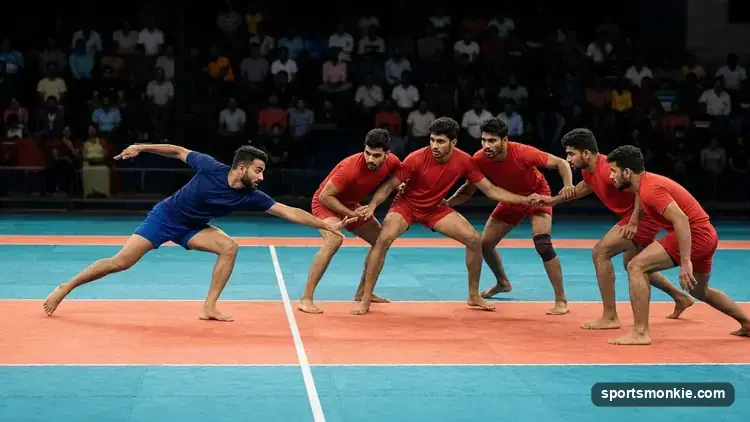
Kabaddi pits a raider against seven defenders. Learn the raid, the cant, the bonus line, out and revival rules, and how points are scored in Pro Kabaddi.
Most Popular Sportsmen in Pakistan: 11 Legends & Stars Ranked
Babar Azam, Arshad Nadeem, Jahangir Khan, Imran Khan and more — the 11 sportsmen who matter most in Pakistan, ranked by what each one actually did.

Most Popular Sports in England: Football, Cricket & More
Football is England's most popular sport, ahead of cricket, rugby union, tennis, and golf. See the top sports ranked by participation and spectator following.

Most Popular Sports in New Zealand: The Definitive List
Rugby union tops New Zealand's most popular sports, ahead of cricket, netball, football, and golf. A ranked breakdown of what Kiwis watch and what they play.