
Brennan Johnson's Goal at Hull Is Ruled Out by a Subjective Offside Everton Have Seen Before
On this page5
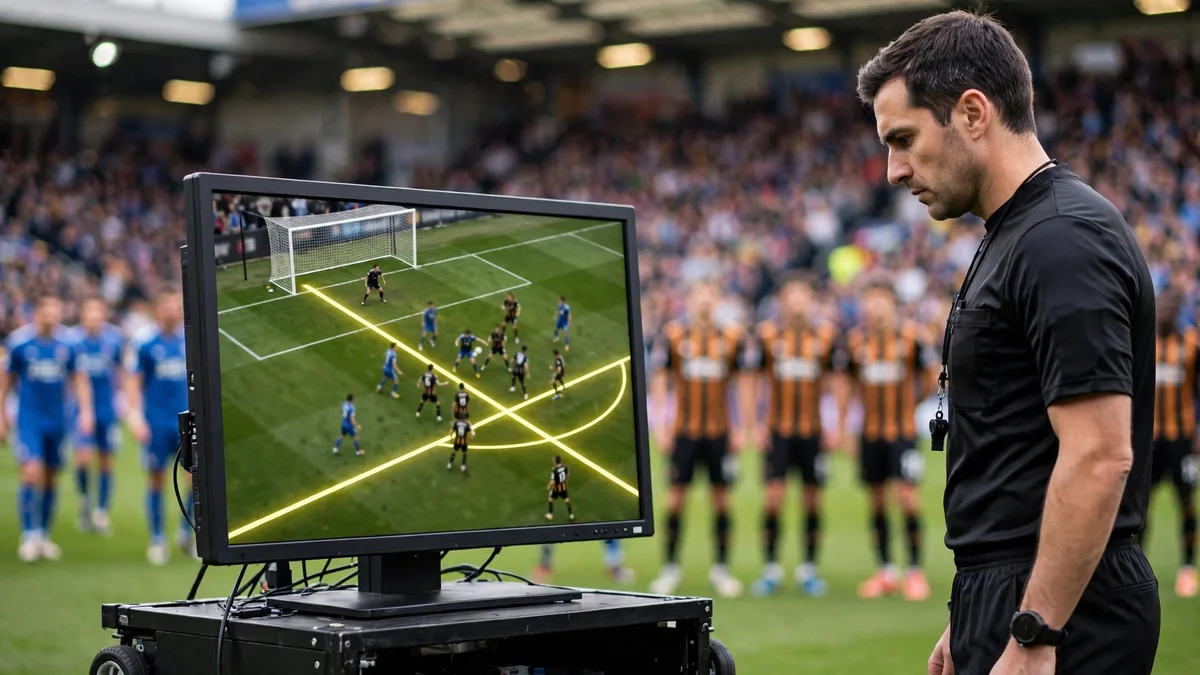
Brennan Johnson wheeled away at the MKM Stadium on Sunday believing he had scored his first Premier League goal for Everton, and then watched the same thing happen to him for the second league game running. His 35th-minute goal against Hull City was overturned after a VAR review, not for a measured offside but for a judgment: Johnson, standing in an offside position, was ruled to have challenged Hull’s Ryan Giles for the ball before it reached him. The Premier League Match Centre published the explanation, a former top-flight official called the process excellent, and Everton drew 2-2.
What exactly did Johnson do wrong?
He competed for a ball he was not entitled to compete for. Jarrad Branthwaite’s cross sparked a scramble: goalkeeper Konstantinos Tzolakis fumbled under pressure from Thierno Barry, Harrison Armstrong’s shot was blocked by Nobel Mendy, and Giles’s attempt to clear struck Johnson’s leg and crossed the line, Sports Mole reports. The offence was earlier in the sequence. Johnson had been in front of Tzolakis when Armstrong’s shot came in, in an offside position, and then challenged Giles, the Hull No. 3, as the clearance was made. Challenging an opponent for the ball from an offside position is interference under the laws, whatever happens to the ball afterwards.
Why did this offside need the referee at a monitor?
Because it was the subjective kind, and subjective offsides are the ones VAR cannot settle with software. Most offside arguments end with calibrated lines: a player is beyond the defence or he is not. This one turned on a reading of Johnson’s behaviour, whether his challenge on Giles counted as interfering with an opponent. That is a judgment, so VAR Tim Wood sent referee Michael Salisbury to the pitchside screen to make it himself, and Salisbury then announced the overturn to the stadium, naming Johnson’s challenge on Giles as the reason. Former Premier League assistant referee Darren Cann told BBC Sport the intervention was excellent and correct precisely because the decision was subjective rather than factual, Sports Mole reports. It is the opposite failure mode from the Championship row the desk covered this month, where Soucek won the ball outside the box and QPR still got a penalty in a division with no VAR to intervene at all.
Why does this keep happening to Johnson?
Twice in two league games, the same player’s positioning has cost Everton a goal without him being the scorer either time in the first case. Before the international break, Barry’s header against Ipswich Town was disallowed because Johnson was judged to be interfering with the goalkeeper from an offside position, Sports Mole reports. At Hull, Johnson was the scorer, but the mechanism was a cousin of the Ipswich offence: an offside player affecting an opponent, the goalkeeper then, a defender now. David Moyes largely accepted Sunday’s version, telling BBC Sport he could accept the offside from the blocked shot, although he questioned whether the goalkeeper’s heel had played Johnson on and said he hoped the lines had been drawn correctly, Everton News reports.
What did the decision leave behind in the match?
A first half with one talking point and a second half with four goals. Hull led through Joe Gelhardt three minutes after the break, Dewsbury-Hall and Barry put Everton ahead, and Mohamed Belloumi’s 74th-minute equaliser kept Everton’s unbeaten start intact at 2-2. A match in a weekend that also produced a red card handed back to a referee in Split, a split-verdict red card at Anfield, where the first yellow was called harsh and the second correct and a homecoming abandoned by a paper-plane protest will be remembered in Everton’s season for something quieter: the afternoon the Premier League had to explain, in public, the difference between an offside you measure and an offside you judge.
What happens next for Everton and Johnson?
Scrutiny of a pattern, not a single call. Because the Ipswich and Hull decisions share a mechanism, Johnson’s positioning at set pieces and in second-ball scrambles is now a known refereeing focus, and any similar incident in Everton’s next league match will be read against these two. Moyes’s public position, acceptance with a question about the lines, leaves the club little room to escalate formally, and Cann’s endorsement gives the officials cover. The useful follow-up is the one the desk tracks in cases like this, as with Southampton’s Spygate ban, where the punishment arrived months after the offence: whether the league’s own review channels say anything further about a call its own announcement had to explain twice in a month of Johnson offsides. Everton’s next league match, at home to Chelsea on October 17, produced a refereeing grievance of the opposite kind: the officials gave too little rather than too much, as three former referees said Morgan Rogers should have been punished for a tackle VAR had no power to correct in a 2-0 defeat that ended Everton’s unbeaten start.
Frequently asked questions
Why was Brennan Johnson's goal against Hull disallowed?+
Because of what Johnson did before the ball reached him, not where he stood when it went in. The Premier League Match Centre said Johnson was in an offside position and was deemed to be challenging an opponent, Hull's Ryan Giles, for the ball. Referee Michael Salisbury overturned the goal after a VAR review at the pitchside monitor, Sports Mole reports.
What is a subjective offside decision?+
One that cannot be settled by lines alone. A factual offside is a measurement: was the player beyond the second-last opponent when the ball was played. A subjective offside asks whether an offside player interfered with an opponent, a judgment call, which is why VAR Tim Wood sent Salisbury to look for himself rather than ruling from the booth, Darren Cann told BBC Sport.
How did the disallowed goal actually happen?+
In a scramble. Jarrad Branthwaite's cross caused problems in the Hull box, goalkeeper Konstantinos Tzolakis fumbled under pressure, Harrison Armstrong's shot was blocked by Nobel Mendy, and Ryan Giles's attempted clearance struck Johnson's leg and went in, Sports Mole reports. Johnson had been in front of the goalkeeper when Armstrong's shot came in.
Has this happened to Johnson and Everton before?+
In their previous league game, yes. Against Ipswich Town before the international break, Thierno Barry's goal was disallowed because Johnson was judged to be interfering with the goalkeeper from an offside position, Sports Mole reports. Two Everton goals in two league games have now been lost to Johnson offsides of the interference kind.
What did David Moyes say about the decision?+
He mostly accepted it, with one doubt about the geometry. Moyes told BBC Sport, via Everton News, that he accepted Johnson could be offside from the blocked shot, but questioned whether the goalkeeper's heel was playing him onside and said he hoped the lines had been drawn correctly.
Did a former official agree with the Hull decision?+
Yes, completely. Darren Cann, a former Premier League assistant referee, told BBC Sport that Johnson was offside when Armstrong's shot came in and then challenged Giles, which in law is interfering with an opponent. Cann called the VAR intervention excellent and correct, Sports Mole reports.
What was the final score between Hull City and Everton?+
Two-all, after a goalless first half that the disallowed goal dominated. Joe Gelhardt put Hull ahead after the break, Kiernan Dewsbury-Hall and Thierno Barry turned it around for Everton, and substitute Mohamed Belloumi equalised for Hull in the 74th minute, Sports Mole and Everton News report. Everton's unbeaten start to the season survived.
Sources
Play & tools
Free browser games and tools — no account, no download.
- Play 38-0 — Sign a 4-4-2 of all-time football legends and chase a perfect 38-0 league season — perfect, not just unbeaten.
- Explore all our games →
Related football guides
View all →
Why Could VAR Not Send Off Morgan Rogers at Everton?
Three former referees said Morgan Rogers should have been punished for his tackle on James Garner at Everton. VAR could not give him a second yellow. Here is why.

Botman Escapes a Red Card at Newcastle as Jackson Says He Nearly Broke His Leg
Sven Botman stayed on after a VAR check for serious foul play against Aston Villa, with the referee's own published words calling the challenge reckless.

Yarmolyuk's Headbutt Earns a Red Card but No Penalty as Liverpool Beat Brentford 2-1
Yehor Yarmolyuk was sent off for a headbutting action on Jeremy Jacquet before a corner at Brentford, and Liverpool got no penalty because the ball was dead.
Why Did Marmoush's Goal Stand After He Caught Van Ewijk With an Elbow?
Omar Marmoush's first Tottenham goal survived a VAR check for an elbow on Milan van Ewijk. Lampard thought it would go; Hackett says doubt means it stands.

Lisandro Martinez Says He Spoke Out of Anger After Questioning United's Ambition in Madrid
Lisandro Martinez used an Instagram statement to take the heat out of his Madrid outburst, saying he spoke out of anger while keeping the ambition demand.
Maresca Says Man City Fans Have Suffered Most Over the 115 Charges Case
Enzo Maresca said Manchester City's supporters have had it toughest since the guilty verdict, admitting rival fans calling them cheats is hard to argue with.