
How to Read Cricket Scores: A Complete Beginner's Guide
On this page6
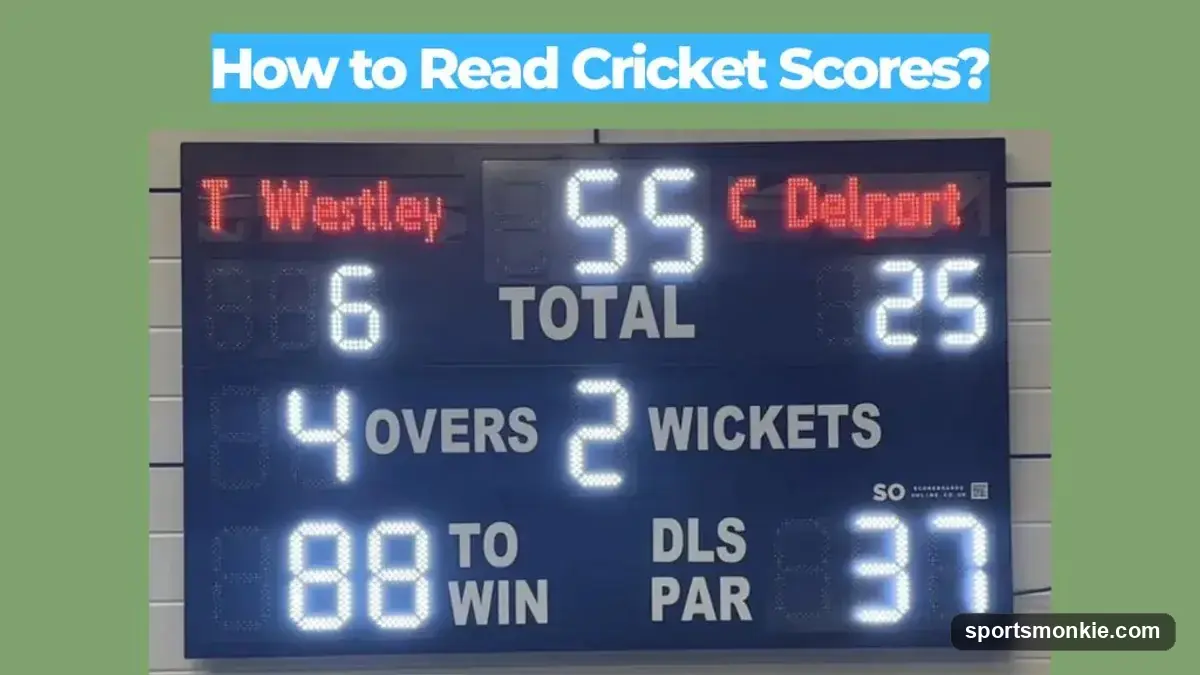
Glance at a TV graphic that reads “312/7” and you can tell a lot about a match without knowing another thing: how many runs are on the board, how many batters are gone, and roughly how much batting is left. That’s the whole trick to cricket scores. Learn the notation and a dozen abbreviations, and any scorecard stops looking like code.
The Core Notation: Runs/Wickets
Cricket shows scores in the format R/W, where:
- R = total runs scored by the batting team so far
- W = number of batters dismissed (wickets fallen)
A team fields 11 players, and an innings ends once 10 wickets fall (the 11th batter has no partner left to bat with). A score of 10/0 means 10 runs, nobody out yet. A score of 300/10 means the innings is finished, all out for 300.
Some regions flip the order to W/R, so you’ll occasionally see 7/312 instead of 312/7, particularly in parts of South Asia. Context usually makes it obvious which number is which.
Reading a Live Score
When you see a live score like this:
England 187/4 (38.2 ov)
It means:
- England has scored 187 runs
- They have lost 4 wickets
- They have faced 38.2 overs (38 complete overs plus 2 balls of the 39th)
Format Differences
| Format | Innings | Overs per side | Max duration |
|---|---|---|---|
| Test match | 2 per team | Unlimited | 5 days |
| One Day International (ODI) | 1 per team | 50 | ~8 hours |
| T20 | 1 per team | 20 | ~3 hours |
In Test cricket, a team trailing by a large margin after the first innings can be forced to follow on and bat again immediately. When that happens, the score gets shown across both innings combined.
Reading a Scorecard
A full scorecard has two halves: batting and bowling.
Batting Scorecard
| Batter | Dismissal | Bowler | Runs | Balls | 4s | 6s | SR |
|---|---|---|---|---|---|---|---|
| A. Smith | c sub b Jones | Jones | 74 | 98 | 8 | 1 | 75.5 |
| B. Kumar | b Ahmed | Ahmed | 3 | 9 | 0 | 0 | 33.3 |
| C. Ali | not out | — | 51 | 60 | 4 | 2 | 85.0 |
- c sub b Jones = caught by the substitute fielder, bowled (credited) to Jones
- b Ahmed = bowled by Ahmed
- not out = still batting when the innings ended
- SR = strike rate (runs per 100 balls faced)
Common Dismissal Abbreviations
| Abbreviation | Meaning |
|---|---|
| b | Bowled |
| c | Caught |
| lbw | Leg before wicket |
| run out | Run out |
| st | Stumped |
| hit wicket | Hit wicket |
| DNB | Did not bat |
| ret hurt | Retired hurt |
Bowling Scorecard
| Bowler | O | M | R | W | Econ |
|---|---|---|---|---|---|
| Jones | 10 | 2 | 42 | 3 | 4.20 |
| Ahmed | 8 | 0 | 55 | 1 | 6.87 |
- O = overs bowled
- M = maiden overs (overs where no runs were scored)
- R = runs conceded
- W = wickets taken
- Econ = economy rate (runs per over)
Multi-Innings Scores in Tests
In a Test, you may see something like:
Australia 1st innings: 456 | England 1st innings: 281 | Australia 2nd innings: 203/5 declared
That “declared” means Australia’s captain closed the second innings voluntarily at 203 for 5, rather than batting on, to leave enough time to bowl England out.
Target and Required Run Rate
In limited-overs cricket, you’ll often see a target alongside the required run rate (RRR):
Target: 287 | Required: 68 off 42 balls | RRR: 9.71
Here, the chasing team needs 68 more runs from 42 balls, which works out to nearly 10 runs an over.
Frequently asked questions
What does 245/6 mean in cricket?+
245/6 means the batting team has scored 245 runs and lost 6 wickets. The remaining 4 batters are still yet to bat (a team has 11 players, with 10 wickets to fall).
How do you read a cricket scorecard?+
A cricket scorecard lists each batter's name, how they were dismissed, who dismissed them, and how many runs they scored. It also shows each bowler's figures: overs bowled, maidens, runs conceded, and wickets taken.
What does 'DNB' mean on a cricket scorecard?+
DNB stands for Did Not Bat — meaning that batter was in the squad but did not come out to bat because the innings ended before they were needed.
Sources
Play & tools
Free browser games and tools — no account, no download.
- Play today's Sports Connections — Today's Sports Connections — daily hints, answers, and play the grid.
- Play Guess the NFL Player — A new mystery NFL player every day. Eight guesses, with a clue on each — plus free unlimited mode.
- Explore all our games →
Related cricket guides
View all →
15 Basic Rules of Cricket Every Fan Should Know
Cricket has a detailed rulebook, but these 15 core rules cover how the game is played, how batters are dismissed, and how runs are scored.
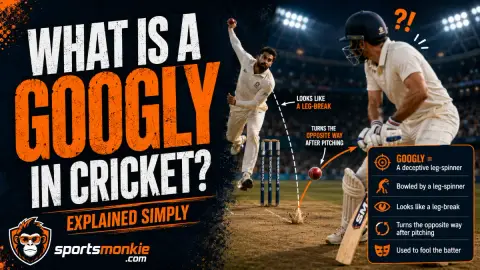
What Is a Googly in Cricket?
A googly is a leg-spinner's disguised delivery that turns the opposite way to a leg break, spinning into a right-hander. See how it's bowled and deceives.
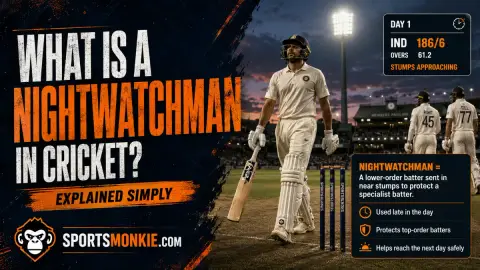
What Is a Nightwatchman in Cricket?
A nightwatchman is a lower-order batter sent in late to shield a specialist from tricky conditions. See why teams use one and when the tactic pays off.
Why Cricket Is Not in the Olympics: The Full Story
Cricket has never been a permanent Olympic sport due to governance disputes, calendar conflicts and ICC reluctance to cede control to the IOC. Here is why.

Most Popular Cricket Tournaments in the World (2026 Rankings)
The IPL is cricket's most popular tournament in 2026, valued at $18.5 billion with 1B+ combined viewers. See how the ICC World Cup, T20 World Cup, BBL, PSL, and 6 more rank.
Good vs Bad Batting Average in Cricket and Baseball Explained
Batting average means very different things in cricket and baseball. Learn what a good, average and poor average looks like in each and why they differ.