
How to Play the Switch Hit in Cricket
On this page6
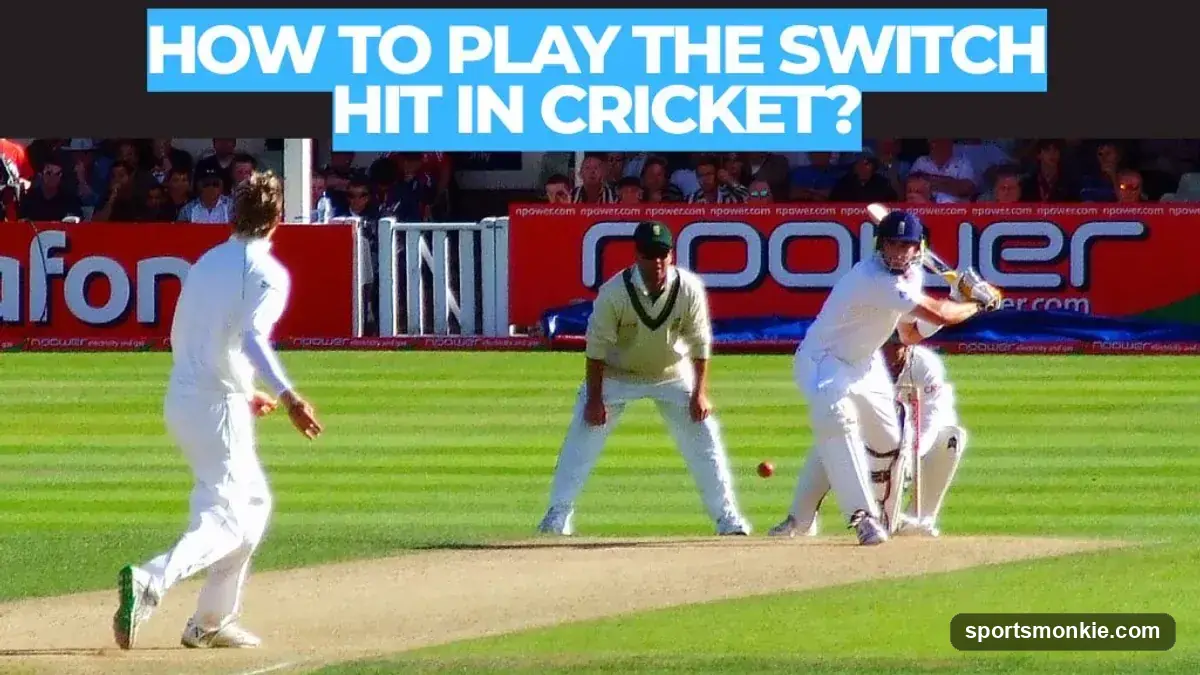
Scott Styris still gets asked about the ball Kevin Pietersen hit for six against him in 2008, not because it went far, but because Pietersen was standing like a left-hander when he did it. The switch hit is exactly that: reverse the stance mid-run-up, and a field set for a right-hander suddenly has nobody standing where the ball’s going.
Understanding the Shot
The switch hit works by exploiting field placement. A right-handed batter facing an off-spinner usually has a lightly guarded leg side. Switch to a left-handed stance and that same area becomes the off side from the bowler’s perspective, open for a drive or a slog into a gap the fielding captain never planned for.
Stance and Grip Change
The whole transformation has to happen before the ball’s released:
- Start in your natural stance, watching the bowler’s approach as normal.
- Reverse your grip as the bowler enters the delivery stride, top hand to bottom and vice versa. The bat face now points the other way.
- Step across so the opposite foot moves forward. A right-hander steps the right foot across toward the off side.
- Keep your head still. Moving it before the grip change is the most common way to lose sight of the ball.
Execution: Step-by-Step
| Phase | What to Do |
|---|---|
| Pre-delivery | Read the bowler’s line; decide early this is the ball to switch on |
| Grip change | Reverse hands as the arm comes over — not earlier, not later |
| Footwork | Cross-step into position; weight onto front foot for the drive |
| Contact | Hit through the line with a full swing; don’t scoop or flick |
| Follow-through | Complete the swing to your opposite shoulder |
When to Use It
- Against slow left-arm or off-spin, once you’ve spotted a gap at deep midwicket or long-on from the new angle.
- When the fielding captain has stacked the leg side expecting a sweep or a slog.
- During T20 powerplays, when the bowling plan is set and you’ve read it.
Common Mistakes to Avoid
- Switching too early. The bowler sees it and changes the line.
- Gripping too loosely. The bat twists on contact and the shot miscues.
- Half-committing. A partial switch produces an awkward mis-hit; go fully through it or don’t attempt it.
- Trying it against pace. Reaction time is too short. Save it for spin.
Practice Drill
In the nets, have a spinner bowl a full over of good-length balls on off stump. On alternate deliveries, commit to the switch hit. Get the grip change and foot movement locked in before the ball leaves the bowler’s hand, then worry about placement.
Frequently asked questions
Is the switch hit legal in cricket?+
Yes. MCC confirmed in 2008 that the switch hit is legal because the batter may change their grip and stance before the ball is delivered. The fielding side cannot be penalised for the fielding restrictions that existed when the ball was bowled.
Who invented the switch hit in cricket?+
Kevin Pietersen is widely credited with popularising the switch hit at international level, most memorably against Scott Styris (New Zealand) in 2008.
Against which bowlers does the switch hit work best?+
It is most effective against spin bowlers, particularly off-spinners, because switching stance turns their natural spin into a delivery that drifts away from the new position — helping the batter clear the leg side.
Sources
Play & tools
Free browser games and tools — no account, no download.
- Play today's Sports Connections — Today's Sports Connections — daily hints, answers, and play the grid.
- Play Guess the NFL Player — A new mystery NFL player every day. Eight guesses, with a clue on each — plus free unlimited mode.
- Explore all our games →
Related cricket guides
View all →
How to Play a Perfect Square Cut in Cricket: Step-by-Step
The square cut is played to a short, wide delivery outside off stump. Learn the grip, back-foot movement, and bat swing to send the ball through point.
How to Play the Leg Glance Shot in Cricket
The leg glance redirects a ball angled into the body toward fine leg with a subtle deflection. One of cricket's most elegant, effective scoring shots.
How to Play a Hook Shot in Cricket: Technique and Timing
The hook shot punishes short-pitched deliveries, hitting them fine behind square on the leg side. Learn the grip, footwork, and head position to play it.
How to Play the Periscope Shot in Cricket
The periscope shot is a vertical-bat stroke to short balls at the body, holding the bat upright to deflect it over the leg-side fielders. Learn the method.
How to Play a Straight Drive in Cricket: Technique and Timing
The straight drive is cricket's classic front-foot shot, played to a full ball on off stump and hit past the bowler. Learn the stance, grip, and swing.
How to Play a Pull Shot in Cricket: Grip, Stance, and Timing
The pull shot is a back-foot attacking stroke to short deliveries at waist to chest height, hit square on the leg side. Here is how to play it correctly.