
How to Play a Straight Drive in Cricket: Technique and Timing
On this page7
There’s a reason coaches still show clips of Sachin Tendulkar’s straight drive to teach this shot: the bowler never even sees it coming back. Full ball, straight bat, and the ball is past the stumps at the non-striker’s end before anyone can react. No fielder stands directly behind the bowler, so a clean straight drive is often four runs before the fielding side has adjusted.
The Right Ball to Drive Straight
This is a front-foot shot for a specific delivery:
- Full pitched to a half-volley — the ball lands well up, giving you room to play it on the full or just after it pitches.
- Aimed at or just outside off stump — close enough to the stumps that hitting straight makes sense.
A ball that’s too short will see your bat swing over it. A yorker is too full and too fast to drive safely. The shot exists to punish over-pitching.
Grip
A standard V-grip works, both thumbs and index fingers forming a V along the back of the handle. The top hand (left hand for a right-hander) leads, steering the bat face. The bottom hand adds power at impact but shouldn’t roll over early, or the ball drags to the on side.
Stance and Initial Movement
- Front foot forward, to the pitch of the ball. Step toward the delivery, aiming to reach where it bounces. Your foot should point roughly toward the bowler, not across toward off stump.
- Head over the ball at contact. This keeps you balanced and keeps the ball down.
- Front knee bends slightly as you lean in. Don’t lock it, or you lose the forward momentum.
The Swing
| Phase | Key Point |
|---|---|
| Backswing | High backlift — bat comes up straight and close to the body |
| Downswing | Bat comes down in a straight vertical plane, following the ball’s line |
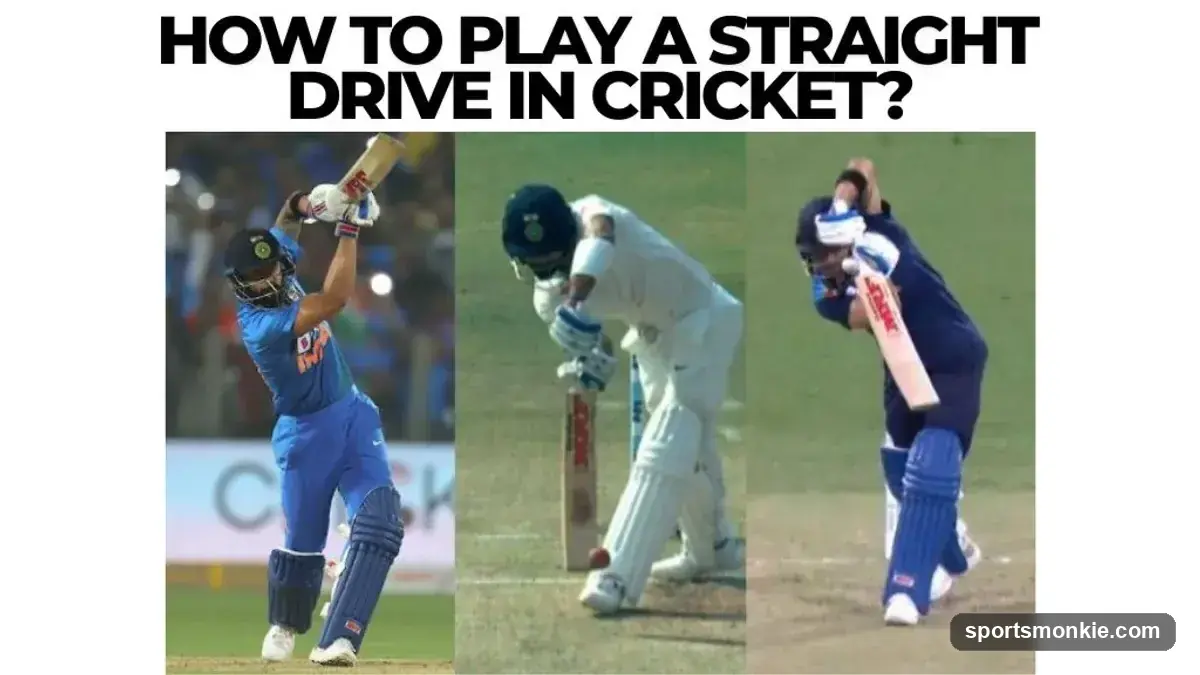
| Contact | Bat face straight at impact, meeting the ball just in front of the front pad |
| Follow-through | High follow-through — bat finishes pointing toward the bowler or slightly left of straight |
The follow-through tells you almost everything. A bat finishing high and straight means a proper straight drive. One finishing low or across the body means the shot got pulled around toward the on side.
High Elbow — Why It Matters
A high front elbow (left elbow for a right-hander) at contact does three things:
- Keeps the bat face straight through the ball’s line.
- Lets the bat follow through high and straight.
- Stops the ball from lifting into the air or dragging to the on side.
If your drives keep ending up at mid-on instead of straight, check the elbow. It’s almost always dropping at impact.
Common Mistakes
- Driving a short ball. The bat passes over it, or you get a top edge.
- Head falling back at impact. Weight shifts to the back foot, the face opens, the ball lifts.
- Front foot planting too far across toward off stump. The drive angles toward cover instead of straight.
- Rolling the wrists too early. Closes the face, sends the ball to mid-on or midwicket.
- Muscling the shot. Trying to hit hard rather than time it produces a mis-hit almost every time.
Practice Drill
Set a target, a cone or marker just to the right of the stumps at the bowler’s end, for a right-handed batter. Drive full deliveries from a throw-down partner or bowling machine and aim to hit it consistently. This keeps your focus on hitting straight rather than hitting hard.
Frequently asked questions
What delivery is the straight drive played to?+
The straight drive is played to a full-pitched delivery — ideally a half-volley — on or very close to the stumps. The ball is hit back along the ground past the bowler, between the stumps and mid-on.
How is the straight drive different from the cover drive?+
The cover drive is played to a full delivery outside off stump and hits the ball through the cover or extra cover region. The straight drive is played to a ball aimed at or just outside the stumps and is hit straight back down the pitch, past the bowler.
Why is the straight drive so hard to defend against?+
When played correctly, the ball travels along the ground directly back down the pitch in a narrow corridor. The bowler must turn around quickly to stop it, and there is no fielder positioned directly behind the stumps — making it very difficult to cut off before the boundary.
Sources
Play & tools
Free browser games and tools — no account, no download.
- Play today's Sports Connections — Today's Sports Connections — daily hints, answers, and play the grid.
- Play Guess the NFL Player — A new mystery NFL player every day. Eight guesses, with a clue on each — plus free unlimited mode.
- Explore all our games →
Related cricket guides
View all →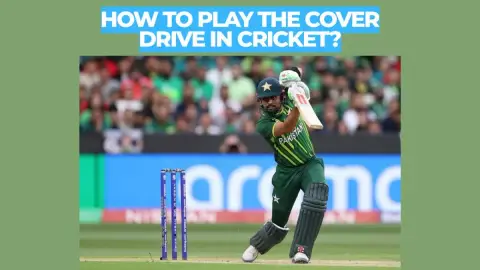
How to Play the Cover Drive in Cricket: Technique & Timing
The cover drive is cricket's most celebrated stroke, a front-foot drive through the off side. Master the footwork, head position, and timing here.
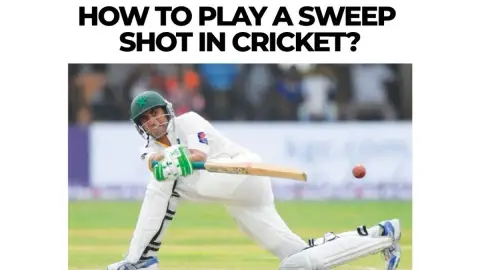
How to Play a Sweep Shot in Cricket: Complete Technique Guide
The sweep shot is a front-foot stroke to full-length spin, hitting the leg side with a horizontal bat. Learn the kneeling position, grip, and placement.
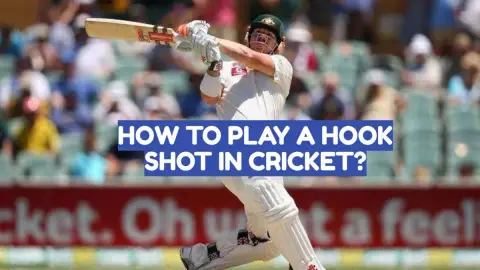
How to Play a Hook Shot in Cricket: Technique and Timing
The hook shot punishes short-pitched deliveries, hitting them fine behind square on the leg side. Learn the grip, footwork, and head position to play it.
How to Play a Pull Shot in Cricket: Grip, Stance, and Timing
The pull shot is a back-foot attacking stroke to short deliveries at waist to chest height, hit square on the leg side. Here is how to play it correctly.
How to Play the Ramp Shot in Cricket: Technique Guide
The ramp shot deflects a full or back-of-length ball over the keeper toward fine leg or third man. Master the wrist angle and head position for T20.
How to Play the Periscope Shot in Cricket
The periscope shot is a vertical-bat stroke to short balls at the body, holding the bat upright to deflect it over the leg-side fielders. Learn the method.