
How to Play a Hook Shot in Cricket: Technique and Timing
On this page7
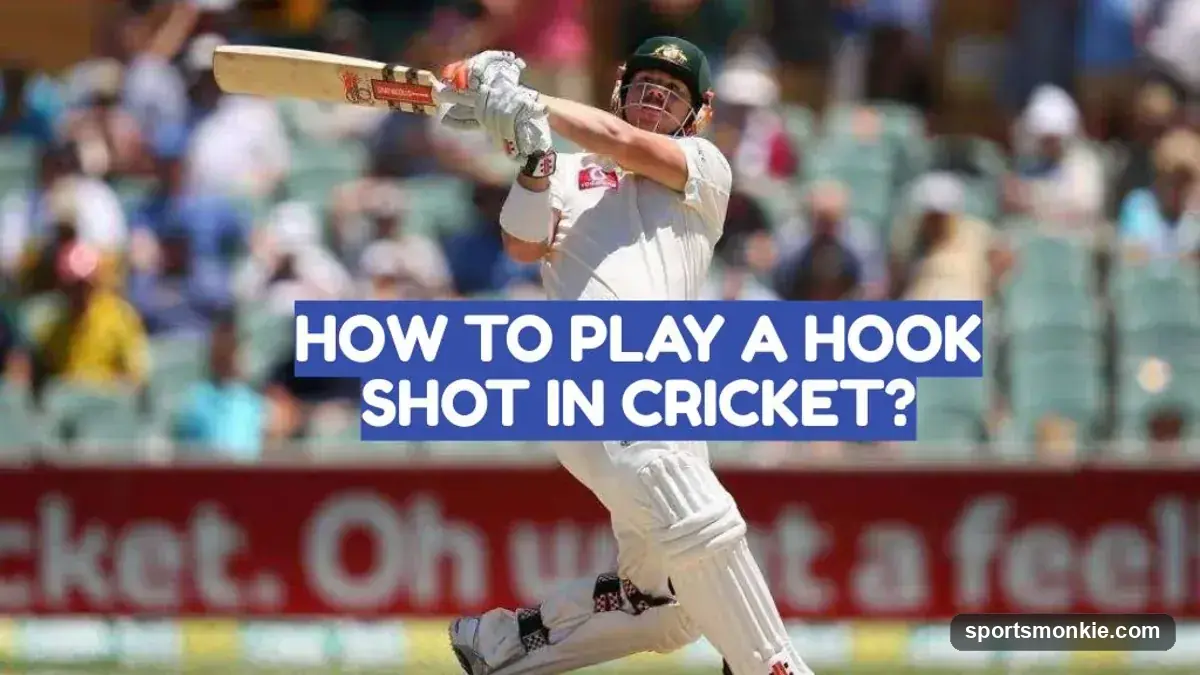
A fast bowler drops one short, and a batter has maybe half a second to decide: duck, sway, or go after it. The hook is what happens when the answer is go after it. Played to a ball rearing up above chest or head height, it turns the bowler’s aggression back on them, whipped fine or square on the leg side while the bowler is still finishing their follow-through. Get it right and it’s one of the most demoralising shots you can play against pace. Get the head position wrong and it’s how batters end up hit or caught off a top edge.
When to Play the Hook Shot
The hook belongs to a specific kind of ball: short of a length and rising to chest height or above, bouncer territory, angled into the body or outside leg stump. Anything on or outside off stump is a much riskier proposition to hook. It also depends on pace, since you need enough time to swivel and actually track the ball before committing.
Against real pace, or on a pitch that’s doing unpredictable things, plenty of top-order batters choose to duck or sway instead. Knowing when not to hook is as much a skill as the shot itself.
Grip
Your standard batting grip works fine here; nothing needs to change. Keep it firm but relaxed through impact. Squeezing too hard chokes the follow-through and costs you power.
Footwork and Positioning
Read the length early. The moment you spot a short ball, start moving your back foot across toward off stump. That’s what gets your head inside the line and gives you room to swing. Your weight shifts back and across onto that foot, with the front foot lifting slightly so you can swivel freely through the crease. Then your hips and torso rotate fast, almost as if you’re turning to face the leg-side boundary as you play the shot.
Head Position: The Critical Element
| Common Mistake | Correct Position |
|---|---|
| Head outside the line of the ball | Head inside (leg side) of the ball’s trajectory |
| Eyes level at impact | Eyes level, watching the ball onto the bat |
| Chest facing the bowler at impact | Chest rotated through to face square leg |
| Pulling away from a short ball | Committed, swivelling into the shot |
Keeping the head inside the line separates a controlled hook from a dangerous top edge. Let your head drift to the off side and you’re hooking across your body; the top edge that results flies behind square leg or fine leg, often straight to a fielder posted there for exactly that reason.
The Swing
Bring the bat through on a horizontal plane, making contact around head height, with the face angled slightly downward at impact so the ball stays low rather than ballooning up. Follow through across your body, hands finishing down and to the left for a right-handed batter. A high follow-through is usually the reason a hook shot skies instead of finding the gap; keep it compact.
Where to Hit It
Connect slightly late, or face a very quick ball, and the shot naturally goes to fine leg, behind square. Get on top of the ball early and it tends to go squarer, toward square leg. Either way, resist the urge to steer it deliberately. Let the bat’s own swing find the gap rather than fighting it.
Practising the Hook Shot
A throw-down partner or a bowling machine set for short deliveries is the best way to build this shot. Start at reduced pace to groove the swivel and head position, then work up in speed. Mix in balls just outside off stump that you should leave, along with ones aimed at the body or leg stump that you should hook. Learning to tell the two apart matters just as much as the mechanics.
Frequently asked questions
What is the difference between a hook shot and a pull shot in cricket?+
Both shots attack short-pitched deliveries, but the hook is played to a ball that rises above chest or head height — often a bouncer — and is hit fine behind square on the leg side. The pull is played to a ball that rises to around waist or chest height and is hit in front of or square of the wicket.
Is the hook shot risky?+
Yes — the hook shot is one of the higher-risk shots in batting because the ball is travelling fast and rising toward your face. Poor execution can result in top edges or misses that lead to serious injury. Head position and early reading of length are critical.
Should I keep my eye on the ball throughout the hook shot?+
Yes. Your eyes must track the ball from the moment it leaves the bowler's hand. Losing the ball even briefly when it is rising sharply toward your head increases both the risk of being hit and the chance of a top edge.
Sources
Play & tools
Free browser games and tools — no account, no download.
- Play today's Sports Connections — Today's Sports Connections — daily hints, answers, and play the grid.
- Play Guess the NFL Player — A new mystery NFL player every day. Eight guesses, with a clue on each — plus free unlimited mode.
- Explore all our games →
Related cricket guides
View all →
How to Play a Pull Shot in Cricket: Grip, Stance, and Timing
The pull shot is a back-foot attacking stroke to short deliveries at waist to chest height, hit square on the leg side. Here is how to play it correctly.
How to Play a Perfect Square Cut in Cricket: Step-by-Step
The square cut is played to a short, wide delivery outside off stump. Learn the grip, back-foot movement, and bat swing to send the ball through point.
How to Play a Straight Drive in Cricket: Technique and Timing
The straight drive is cricket's classic front-foot shot, played to a full ball on off stump and hit past the bowler. Learn the stance, grip, and swing.
How to Play a Sweep Shot in Cricket: Complete Technique Guide
The sweep shot is a front-foot stroke to full-length spin, hitting the leg side with a horizontal bat. Learn the kneeling position, grip, and placement.
How to Play the Ramp Shot in Cricket: Technique Guide
The ramp shot deflects a full or back-of-length ball over the keeper toward fine leg or third man. Master the wrist angle and head position for T20.
How to Play the Periscope Shot in Cricket
The periscope shot is a vertical-bat stroke to short balls at the body, holding the bat upright to deflect it over the leg-side fielders. Learn the method.