
How to Choose a Tennis Racket: A Buyer's Guide for All Levels
On this page6
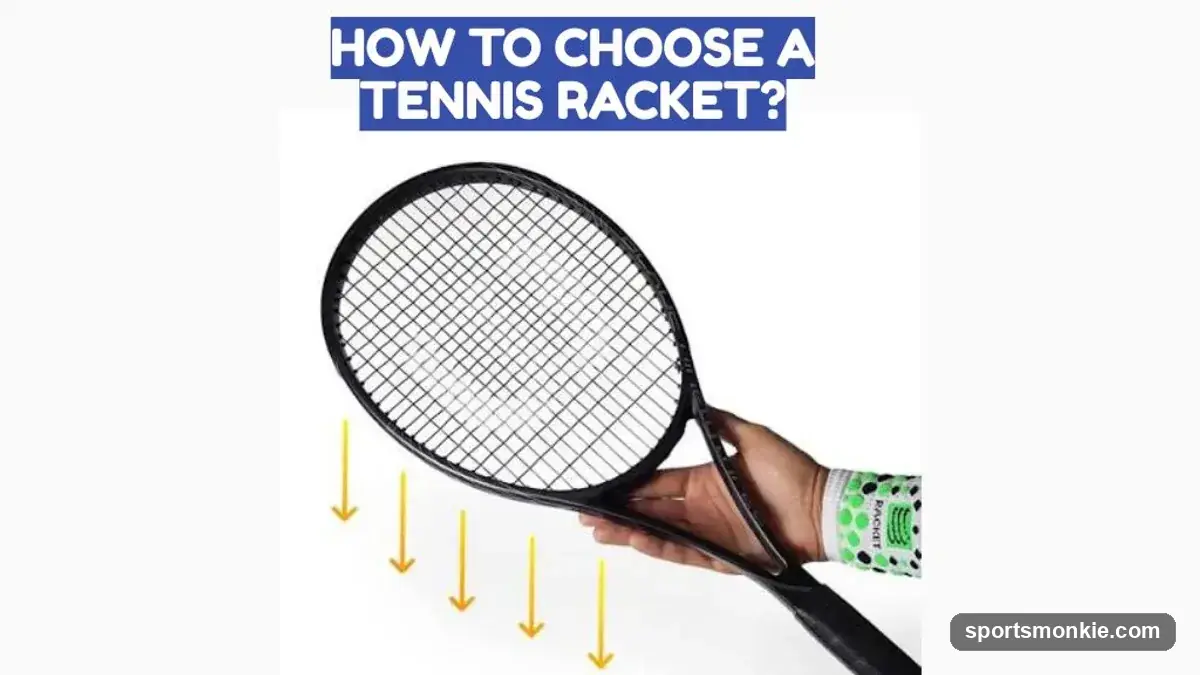
Walk into any tennis shop and you’ll find forty rackets that all look roughly the same, priced anywhere from $50 to $300. The difference between them isn’t marketing. It’s four measurable specs: head size, weight, balance, and grip size. Get those wrong and you’ll fight the racket instead of the ball. Get them right and the racket disappears from your attention, which is exactly what you want.
Key Racket Specifications Explained
| Spec | Beginner | Intermediate | Advanced |
|---|---|---|---|
| Head size | 105–115 sq in (oversized) | 98–105 sq in (mid-plus) | 85–98 sq in (mid) |
| Strung weight | 250–280 g (9–10 oz) | 275–300 g (10–10.5 oz) | 295–340 g (10.5–12 oz) |
| Balance | Head-heavy | Even / slight head-heavy | Even / head-light |
| String pattern | Open (16×18 or 16×19) | Open or dense | Dense (18×20) |
| Grip size | Match to hand (see below) | Match to hand | Match to hand |
Head Size: The Starting Point
Larger heads (100–115 sq in) carry a bigger sweet spot, so mishits still land with reasonable pace and direction. That forgiveness is why beginners and club players lean on them.
Mid-plus heads (98–104 sq in) split the difference between forgiveness and control. Most players who’ve been on court a season or two settle here.
Mid heads (below 98 sq in) reward players who already find the sweet spot consistently, because anything off-center gets punished hard. That’s why they show up almost exclusively in advanced and pro hands.
Weight and Balance
Weight and balance work as a pair. A heavier racket absorbs pace better when an opponent hits hard at you, but it asks more of your arm and shoulder over a long match. A lighter racket swings faster and tires you out less, though it can feel skittish against a hard hitter.
Balance comes in three flavors:
- Head-heavy: more mass above the grip. Adds pop on groundstrokes but feels sluggish moving to the net.
- Head-light: mass concentrated in the handle. Swings faster, which is why serve-and-volley players and anyone using a heavier frame tend to prefer it.
Most rackets marketed as “power” frames are light and head-heavy on purpose — that combination compensates for a slower swing speed.
String Pattern: Open vs. Dense
- Open patterns (16×18, for example) space the crosses further apart so strings move and snap back, generating more topspin. If you’re building a heavy-spin game, our guide to hitting topspin in tennis explains how racket and technique work together. Baseliners tend to favor this.
- Dense patterns (18×20) pack the strings tighter, producing a flatter, more controlled response. Flat hitters and aggressive net players usually pick this.
Grip Size
The wrong grip size is a real contributor to tennis elbow and other arm strain. European sizing runs 1–5 (or L1–L5); US sizing uses inches: 4”, 4⅛”, 4¼”, 4⅜”, 4½”, 4⅝”. Once you have the frame, how you hold a tennis racket determines how much of its potential you actually use.
Grip size tracks loosely with hand size, and most adults land between 4¼” and 4⅜” (L2–L3). When you’re unsure, size down. An overgrip can build up a handle that’s too small, but there’s no easy way to shrink a grip that’s too big. For the index-finger test, the full US size chart, and how overgrips shift your effective size, see our tennis grip size guide.
A Simple Decision Path
- New to the game? Start with a light racket (under 280g), a large head (105+ sq in), and an open string pattern.
- Hitting consistently and improving? Move to a mid-plus head (100–105 sq in) at moderate weight (280–300g).
- Playing at an advanced level? Work with a coach to trial mid-size heads in the weight range and string setup that suit your game.
Demo before you buy if you can. Most specialty tennis stores stock demo rackets for exactly this reason, and a week on court tells you more than any spec sheet.
Frequently asked questions
What racket head size should a beginner choose?+
Beginners generally benefit from an oversized or mid-plus head (100–115 sq in). The larger sweet spot makes off-centre hits more forgiving, which helps while technique is still developing.
How do I know my tennis racket grip size?+
A simple method: hold the racket in your dominant hand with an Eastern forehand grip and slide your index finger from your other hand between your palm and ring finger. It should fit snugly — if it's too tight or too loose, try a different grip size.
Should I choose a heavy or light tennis racket?+
Heavier rackets (around 300g+) provide more stability and power transfer but require more strength. Lighter rackets are easier to swing fast and manoeuvre, making them better for beginners and players with arm issues.
Sources
Play & tools
Free browser games and tools — no account, no download.
- Play today's Sports Connections — Today's Sports Connections — daily hints, answers, and play the grid.
- Play Guess the NFL Player — A new mystery NFL player every day. Eight guesses, with a clue on each — plus free unlimited mode.
- Explore all our games →
Related tennis guides
View all →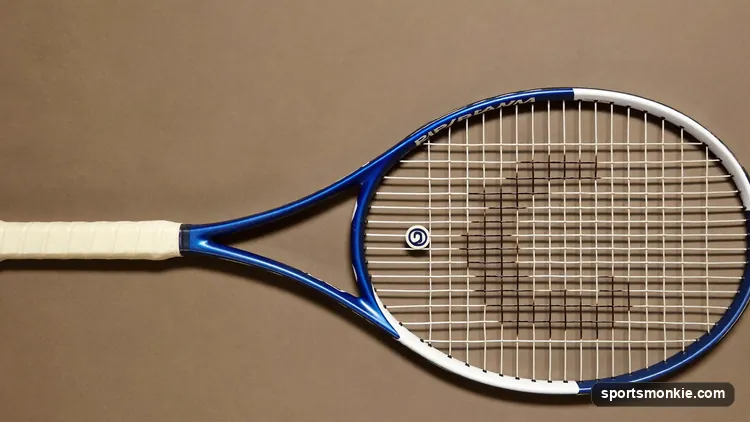
Parts of a Tennis Racket: Every Component and Spec Explained
The parts of a tennis racket are the head, strings, grommets, throat, shaft, beam, handle, grip, butt cap, and bumper guard. Full guide with specs.
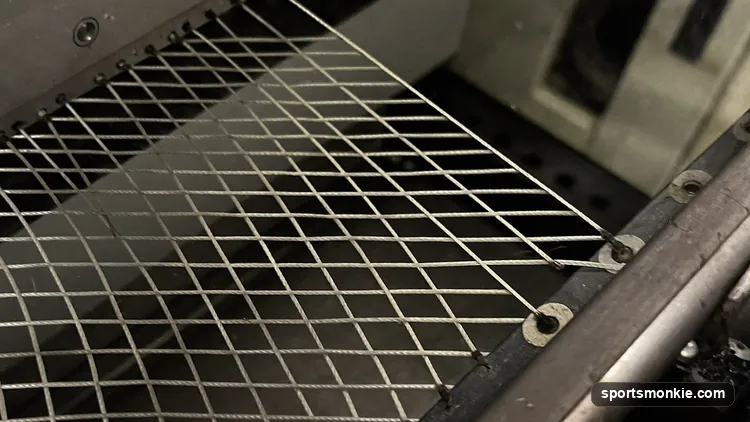
Tennis String Tension: Full Guide to Power, Control, and What to Choose
Tennis string tension typically runs 40-65 lbs (18-30 kg). Lower tension adds power and comfort; higher tension adds control. Full guide by string type.
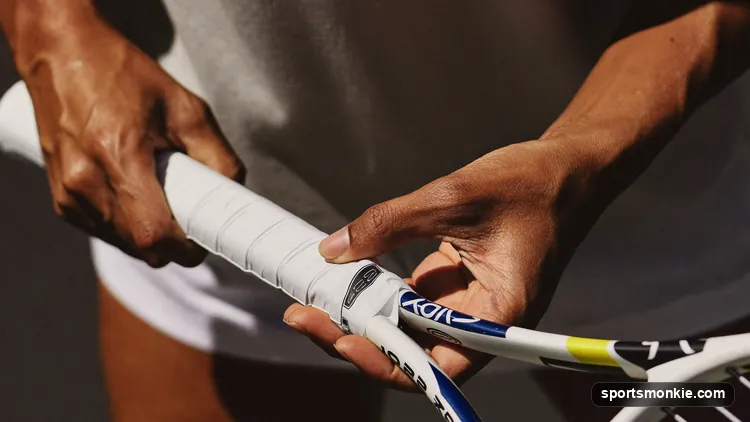
How to Regrip a Tennis Racket: A Step-by-Step Guide
How to regrip a tennis racket: peel the old grip, start at the butt cap, wrap upward at a slight angle with a small overlap, and finish with the tape. Full steps for both replacement grips and overgrips.
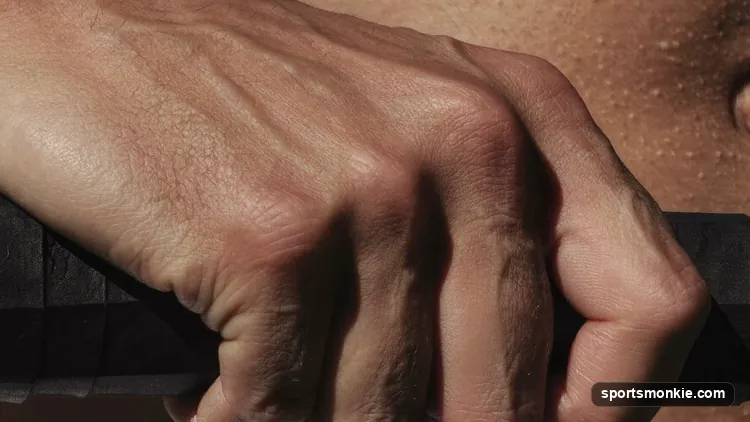
Tennis Grip Size Guide: How to Measure and Choose (US Sizes)
A tennis grip size guide: measure with the index-finger test or a ruler, match it to the US L0–L5 scale (4 to 4-5/8 in), and size down when you plan to add an overgrip.
How Much Do Tennis Courts Cost to Build? (2023 Guide)
Building a private tennis court typically costs $25,000 to $100,000+ depending on surface, site prep, fencing, and lighting. Hard courts are the cheapest.
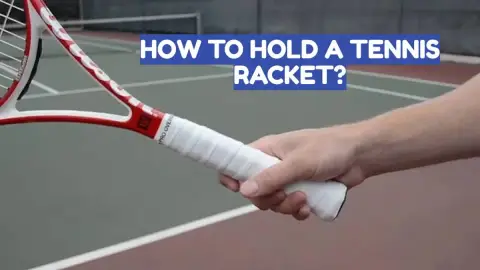
How to Hold a Tennis Racket: 5 Grips Every Player Should Know
How you hold a tennis racket shapes your swing, spin, and reach. The five main grips are Continental, Eastern, Semi-Western, Western, and two-handed.