
How to Bowl Faster in Cricket: Tips to Gain Real Pace
On this page5
Most club bowlers trying to add pace do the same thing: run in harder and throw more effort into the release. It rarely works, and it’s a fast track to a side strain or a stress fracture in the back. Real pace comes from mechanics, not muscle, from moving momentum efficiently through your run-up, into your body, and out through the ball in one connected sequence.
Why Technique Comes Before Raw Effort
Trying to bowl faster by sheer force treats the body like it’s throwing, not transferring energy through a chain. Bowlers who add genuine pace almost always do it by fixing how the run-up, load-up, front leg, and arm connect, not by trying harder in the same broken sequence.
The Four Pillars of Fast Bowling
1. The Run-Up
Your run-up is the engine. A good one starts from a consistent, measured mark, accelerates through the crease rather than holding flat pace, and stays relaxed in the early strides so momentum builds smoothly. A tense run-up bleeds energy before you even load up. Tight shoulders and arms slow the kinetic chain before it has a chance to work.
2. The Load-Up (Bound and Side-On Position)
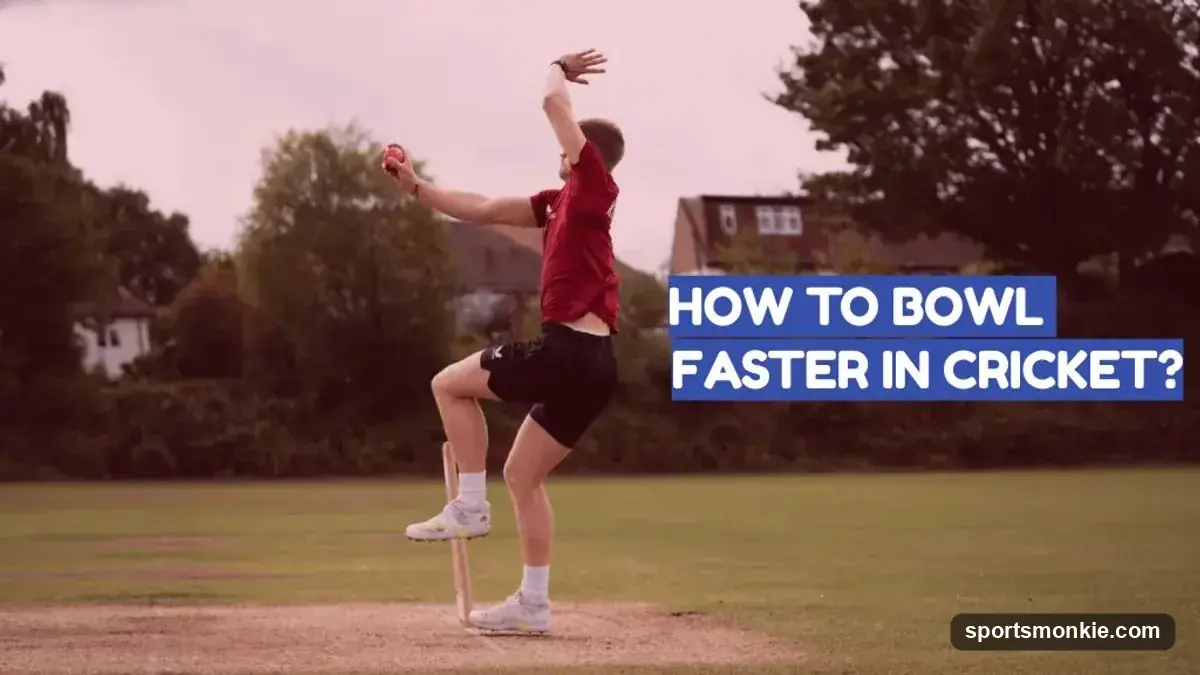
The bound is the explosive jump right before your delivery stride.
| Phase | What to Achieve |
|---|---|
| Pre-bound | Drive off your back foot, generating upward and forward momentum |
| Bound | Land side-on: chest and hips facing cover or point, not the batter |
| Back foot landing | Plant firmly, angled parallel or close to it |
| Front arm high | Non-bowling arm pulls high toward the batter’s end |
A strong side-on position coils the body, storing energy that releases through the bowling arm. Open up too early (chest-on) and that energy leaks out before it’s useful.
3. The Front-Leg Brace
This is where pace gets transferred or lost. When your front foot lands, the knee should stay straight or only slightly bent, not collapse. A braced front leg acts as a pivot, whipping the bowling arm through at full speed; a leg that buckles just absorbs the energy instead. Practise landing on a marked target in the nets until it’s automatic.
4. The Bowling Arm and Release
Arm height matters most: keep it as high as possible at release, since a low arm costs both pace and accuracy. The wrist should stay upright and firm behind the ball, not droop. And the follow-through needs to finish across your body; a follow-through that cuts short usually means you’d already decelerated before the ball left your hand.
Conditioning for Pace
Technique alone has a ceiling. Physical capacity is what lets you actually execute it at speed, over after over.
| Area | Why It Matters | Example Exercises |
|---|---|---|
| Core strength | Transfers force through the body | Deadlifts, rotational medicine ball throws |
| Hip flexors and glutes | Drive the bound and front-leg brace | Hip thrusts, lunges, sprint drills |
| Shoulder mobility | High arm action requires range | Band rotations, thoracic mobility work |
| Leg strength | Powers the run-up and bound | Squats, single-leg jumps |
National cricket academies run dedicated bowling conditioning programs, and working with a strength and conditioning coach is worth it just to avoid injury while you build load.
Common Technique Mistakes That Reduce Pace
- Opening the chest too early, which kills the coil before the arm comes through.
- Short-arming the release: bending the elbow too much slows arm speed right when it should be fastest.
- Over-striding, which forces the front leg to collapse on landing instead of bracing.
- Running in off a tight, curved mark, which bleeds momentum before it reaches the crease.
Tracking Your Progress
A radar gun or a cricket speed app in the nets will tell you more than feel alone. Record your pace at the start of each session and again after any deliberate technique change. Gains from technique and conditioning build slowly over weeks, so don’t expect a jump from one session to the next.
Frequently asked questions
How long does it take to bowl faster?+
Measurable pace improvement from deliberate training typically takes several weeks to months of consistent work. Technique changes can produce small gains quickly, while strength and conditioning improvements compound over a season or longer.
Does strength training help you bowl faster?+
Yes. Core strength, hip strength, and posterior chain power are all associated with higher bowling speeds. Weighted exercises targeting these areas — combined with bowling-specific drills — are widely used by fast bowlers at all levels.
What is the most important factor for bowling pace?+
Coaches and biomechanics experts generally agree that a strong, side-on loading position and a high, braced front-leg landing are the most critical mechanical factors for pace. Without these, even a fast run-up produces limited speed.
Sources
Play & tools
Free browser games and tools — no account, no download.
- Play today's Sports Connections — Today's Sports Connections — daily hints, answers, and play the grid.
- Play Guess the NFL Player — A new mystery NFL player every day. Eight guesses, with a clue on each — plus free unlimited mode.
- Explore all our games →
Related cricket guides
View all →
How to Bowl a Yorker in Cricket: Step-by-Step Guide
A yorker pitches at the batter's feet, making it nearly impossible to hit cleanly. Aim a full delivery at the base of the stumps, in the block hole.
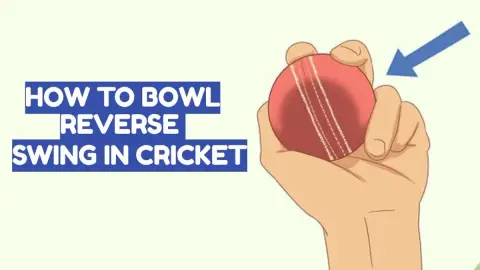
How to Bowl Reverse Swing in Cricket: Technique Explained
Reverse swing makes an old, scuffed ball curve opposite to normal swing. Keep the shiny side toward your target, angle the seam, and bowl at high pace.
How to Bowl a Teesra in Cricket: Grip and Action
The teesra is an off-spinner's mystery ball that goes straight on instead of turning. A pronated wrist and altered fingers deceive batters expecting spin.
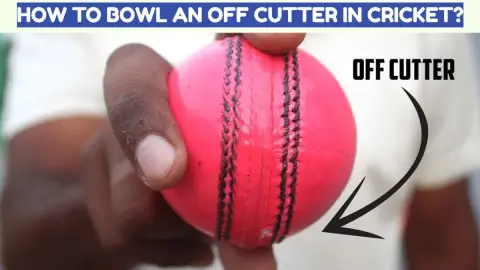
How to Bowl an Off Cutter in Cricket: Grip & Technique
An off cutter is a seam ball that cuts from off to leg into a right-hander. Grip across the seam and drag the middle finger down at release for movement.
How to Bowl a Leg Cutter in Cricket: Grip & Technique
A leg cutter is a fast bowler's delivery that cuts from leg to off. Grip fingers across the seam, then drag the index finger down at release for movement.
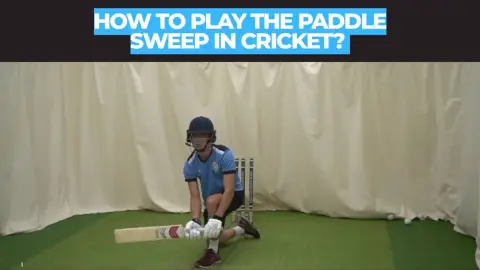
How to Play the Paddle Sweep in Cricket: Technique & Tips
The paddle sweep is a delicate deflection to spin or medium pace, guiding the ball fine down the leg side. Learn the technique, footwork, and its best use.