
How to Bowl Reverse Swing in Cricket: Technique Explained
On this page6
Sarfraz Nawaz worked it out first, in county cricket in the 1970s, and Pakistan turned it into a weapon few batting lineups could read. Wasim Akram and Waqar Younis took it to World Cups. Then, in 2005, Simon Jones and a scuffed old Duke ball helped England win an Ashes series that had looked out of reach. None of that happens without a bowler figuring out how to make an old ball do something a new one can’t.
What Makes Reverse Swing Different
In conventional swing, the ball moves toward the shiny side. In reverse swing, it moves toward the rough side instead, and the switch isn’t a trick of grip alone. It’s aerodynamics.
At high speed, airflow over the rough side separates from the ball’s surface earlier and turns turbulent, while the smooth side keeps a longer stretch of attached, laminar flow. That imbalance creates a pressure difference, and it pulls the ball toward the rough side. Slow the ball down and the effect disappears.
Ball Condition Comes First
No technique produces reverse swing with a new ball. You need:
| Condition | Requirement |
|---|---|
| Age | Roughly 35–50 overs, depending on surface |
| One side | Heavily scuffed, rough, with lacquer worn off |
| Other side | Kept shiny with saliva or sweat |
| Seam | Reasonably upright, even if worn |
Fielding sides maintain that contrast by assigning the shining job to one or two players and sticking to it for the whole innings. Nothing about this breaks the rules.
The Grip
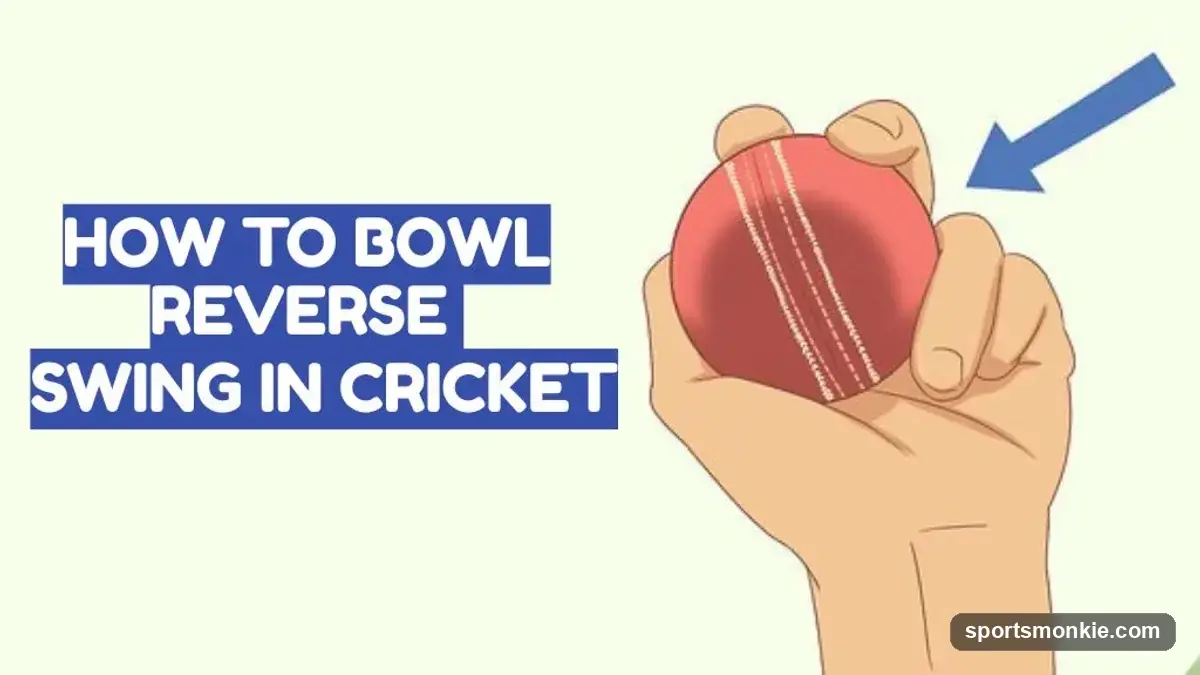
The grip is the main adjustment from a conventional outswing delivery.
For a right-arm bowler going for reverse inswing (into a right-hander):
- Hold the ball with the shiny side facing leg, toward the side you want it to swing.
- Keep the seam upright, angled very slightly toward fine leg.
- Rest the index and middle fingers on top of the seam, close together.
- Support the seam from underneath with the thumb.
It looks like a standard inswing grip at first glance. The difference is the ball itself: rough side out, shiny side in.
Step-by-Step Technique
Step 1: Check the ball. Before you try anything, look at which side is rough and which is shiny. If the contrast is faint, reverse swing won’t show up no matter how well you bowl.
Step 2: Set the grip for your intended direction. Shiny side toward leg for reverse in-swing to a right-hander, shiny side toward off if you want it to move away.
Step 3: Bowl fast. Reverse swing needs pace, generally above 135 kph (84 mph). Below that, the airflow conditions that cause the reversal stop being reliable.
Step 4: Pitch it fuller. A fuller length gives the ball time to swing before the batter has to commit. Drop it short and the swing has nowhere to go.
Step 5: Stay side-on through the crease. A chest-on action bleeds pace, and pace is the one thing reverse swing can’t do without.
Common Mistakes
- Bowling too slow. Medium pace rarely produces genuine reversal.
- Letting both sides go rough. Without contrast there’s no asymmetry, and without asymmetry there’s no swing.
- A seam that’s fallen over. A tilted seam cuts down swing in any direction, conventional or reverse.
Reading the Conditions
Reverse swing shows up earlier and more often on abrasive, dry subcontinental pitches, where the outfield and square wear one side of the ball down fast. Heat speeds that process up too. English conditions tend to keep the ball in better shape for longer, which is one reason reverse swing there often waits until much later in an innings, if it arrives at all.
Frequently asked questions
How old does the ball need to be for reverse swing?+
Reverse swing typically becomes available after roughly 35–45 overs, once one side of the ball is sufficiently roughed up while the other remains relatively smooth. The exact timing depends on pitch conditions and how aggressively the fielding side has maintained the ball.
Is reverse swing legal in cricket?+
Yes — using the natural wear of the ball and saliva or sweat to maintain one side is legal. What is illegal is artificially altering the ball (scratching, lifting the seam, applying foreign substances), which is ball-tampering and carries serious penalties.
Why does reverse swing happen?+
At high speeds, airflow over the rough side becomes turbulent and detaches earlier, while the smooth side maintains laminar flow for longer. This asymmetry creates a pressure differential that pushes the ball toward the rough side — the opposite direction from conventional swing.
Sources
Play & tools
Free browser games and tools — no account, no download.
- Play today's Sports Connections — Today's Sports Connections — daily hints, answers, and play the grid.
- Play Guess the NFL Player — A new mystery NFL player every day. Eight guesses, with a clue on each — plus free unlimited mode.
- Explore all our games →
Related cricket guides
View all →
Conventional vs Reverse Swing in Cricket: The Difference
Conventional swing moves the new ball toward the shine; reverse swing makes an old ball curve the opposite way at pace. Here's what separates them.
How to Bowl an Off Cutter in Cricket: Grip & Technique
An off cutter is a seam ball that cuts from off to leg into a right-hander. Grip across the seam and drag the middle finger down at release for movement.
How to Bowl a Leg Cutter in Cricket: Grip & Technique
A leg cutter is a fast bowler's delivery that cuts from leg to off. Grip fingers across the seam, then drag the index finger down at release for movement.
How to Bowl the Doosra: Grip, Action, and Technique
The doosra is an off-spinner's secret weapon, a ball that turns away from a right-handed batter instead of into them. Learn to bowl it safely and well.
How to Bowl a Yorker in Cricket: Step-by-Step Guide
A yorker pitches at the batter's feet, making it nearly impossible to hit cleanly. Aim a full delivery at the base of the stumps, in the block hole.
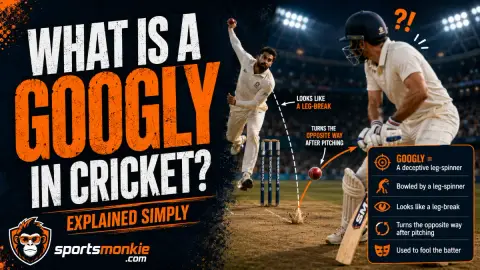
What Is a Googly in Cricket?
A googly is a leg-spinner's disguised delivery that turns the opposite way to a leg break, spinning into a right-hander. See how it's bowled and deceives.