
How Much Does a Tennis Ball Weigh? Official Specs Explained

On this page5
A regulation tennis ball weighs between 56.0 g and 59.4 g (about 1.975 to 2.095 oz) under the ITF Rules of Tennis. That entire legal range spans less than 3.5 grams, and the ball must also meet strict diameter, bounce, and deformation limits before it is cleared for tour-level play. As of 2026, these figures are unchanged.
What the rules actually specify
The weight limit is only one of several requirements a ball must satisfy. The International Tennis Federation (ITF) defines the full envelope, and manufacturers must submit balls for laboratory testing before they can carry approval. Roger Federer once said he could tell a used ball from a new one just by the sound off his strings — a claim that makes more sense once you see how tightly the specs are controlled.
| Property | Minimum | Maximum |
|---|---|---|
| Weight | 56.0 g (1.975 oz) | 59.4 g (2.095 oz) |
| Diameter | 6.54 cm (2.57 in) | 6.86 cm (2.70 in) |
| Bounce (dropped from 254 cm) | 135 cm | 147 cm |
| Deformation (forward) | 0.56 cm | 0.74 cm |
| Deformation (return) | 0.74 cm | 0.97 cm |
The bounce test is run at sea level, 20 °C, and 60% relative humidity so results are comparable across labs.
Types of approved tennis balls
The ITF classifies approved balls by speed, which is set through internal pressure, felt, and size. Matching ball type to surface keeps rally speed roughly consistent whether the court is slow clay or fast grass.
| Type | Speed | Common use |
|---|---|---|
| Type 1 | Fast | Slow surfaces (clay) |
| Type 2 | Medium | Medium-pace hard courts |
| Type 3 | Slow | Fast surfaces (grass, indoor) |
| High Altitude | Slightly larger | Venues above ~1,219 m / 4,000 ft |
High-altitude balls exist because thinner air at elevation lets a standard ball travel and bounce faster. High-altitude balls are a separate ITF type, made slightly larger than standard to compensate. Events in Mexico City, Bogotá, or Johannesburg typically use them.
Why the weight matters
Weight changes the game in concrete ways. A heavier ball within the legal range carries more mass into the string bed, which affects both pace and the load on a player’s arm over a long match. Weight and internal pressure together decide how the ball comes off the surface, so two legal balls at opposite ends of the range can bounce noticeably differently. Even small mass differences show up in spin, especially on heavy topspin.
Recreational players rarely notice any of this. Tour pros do, and several have described feeling the difference between brands or even batches mid-match.
How balls change during a match
New balls come out of the can harder and faster. As a match wears on, the felt flattens and absorbs moisture, which adds a little weight and slows the ball through the air because of extra drag. That wear is why Grand Slam tournaments swap in new balls after the first seven games and every nine games thereafter — the odd first interval accounts for warm-up.
Pressurised vs. pressureless balls
Pressurised balls are the competition standard. They start losing internal pressure the moment they leave the sealed can, which is why they ship in pressurised tubes. Pressureless balls skip that problem because the rubber shell itself supplies the bounce, so they never go flat. That makes them ideal for ball machines and casual hitting, but the heavier feel and slower response keep them out of sanctioned play.
Related terms
- Deformation: how much a ball compresses under a standard load; the ITF sets both forward and return limits.
- Felt: the woven cloth covering that controls drag, spin grip, and how quickly a ball wears.
- Type 1/2/3: the ITF speed classes used to match ball behaviour to court surface.
Frequently asked questions
What is the official weight of a tennis ball?+
According to the ITF Rules of Tennis, a tennis ball must weigh between 56.0 g and 59.4 g, which is roughly 1.975 to 2.095 ounces. Any ball outside that narrow band cannot be approved for sanctioned competition. As of 2026 this range is unchanged and applies to every ITF-approved ball type.
What is the diameter of a standard tennis ball?+
A standard ITF-approved tennis ball measures between 6.54 cm and 6.86 cm in diameter, or about 2.57 to 2.70 inches. High-altitude balls are the exception and are permitted to be larger, up to roughly 7.30 cm. The diameter is checked with a ring gauge during approval testing.
How high should a tennis ball bounce?+
When dropped from 254 cm (100 inches) onto concrete, a regulation ball must rebound between 135 cm and 147 cm. The test is standardised at sea level, 20 °C, and 60% relative humidity. Balls that bounce too high or too low fail ITF approval.
Why are there different types of tennis balls?+
The ITF approves Type 1 (fast), Type 2 (medium), and Type 3 (slow) balls so that play speed can be balanced against court surface. A faster ball is used on slow clay, while a slower, slightly larger ball suits fast grass or indoor courts. This keeps rallies competitive across very different surfaces.
What are high-altitude tennis balls?+
High-altitude balls are a distinct ITF-approved ball type specified for play above about 1,219 m (4,000 ft). Thinner air at elevation lets a standard ball fly and bounce faster, so high-altitude balls are made slightly larger to compensate. Tournaments in cities like Mexico City or Bogotá typically use them.
Do tennis balls get heavier during a match?+
Yes, slightly. As the felt wears and absorbs moisture, a used ball picks up a small amount of weight and slows through the air because of increased drag. This is one reason Grand Slam events change balls on a fixed schedule rather than playing a full match with one set of balls.
What is the difference between pressurised and pressureless balls?+
Pressurised balls contain compressed gas inside and are the standard for competition, but they slowly lose pressure once the can is opened. Pressureless balls rely on a thicker rubber shell for bounce, so they last far longer and never go flat. Pressureless balls feel heavier and are not used in sanctioned play.
How often are tennis balls changed in professional matches?+
At Grand Slam and most tour events, balls are changed after the first seven games and then every nine games thereafter. The odd first interval accounts for the warm-up, during which the initial set of balls is already partly worn. New balls play faster and give servers a slight edge.
Sources
Play & tools
Free browser games and tools — no account, no download.
- Play today's Sports Connections — Today's Sports Connections — daily hints, answers, and play the grid.
- Play Guess the NFL Player — A new mystery NFL player every day. Eight guesses, with a clue on each — plus free unlimited mode.
- Explore all our games →
Related tennis guides
View all →
How Does a Tiebreak Work in Tennis?
A tennis tiebreak decides a set locked at 6-6. First to 7 points wins, but you must lead by two. Here's scoring, serving order, and when tiebreaks happen.
How Does Tennis Scoring Work? Points, Games, Sets Explained
Tennis scoring runs 15, 30, 40, game; games build into sets and sets into a match. See a clear breakdown of how tennis scoring works at every level.
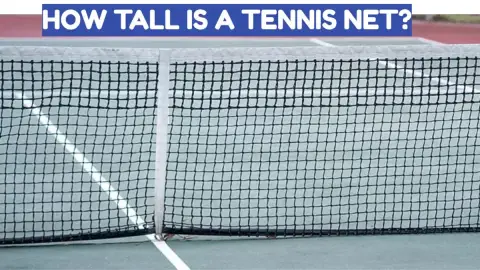
How Tall Is a Tennis Net? Official Height and Dimensions
A tennis net is 91.4 cm (3 ft) tall at the centre and 107 cm (3 ft 6 in) at the posts. These ITF measurements apply to all sanctioned tennis play.
Soccer Ball Weight and Pressure: Official FIFA Standards
A FIFA-approved match ball must weigh 410 to 450 grams and be inflated to 0.6-1.1 atmospheres (8.5-16 psi) at sea level under the Laws of the Game.
Why Do Tennis Players Change Ends?
Tennis players change ends to keep conditions fair when sun, wind, court wear and other environmental factors affect play.
Tennis Net Height: Official ITF Measurements at Centre and Posts
A tennis net is 3 ft (0.914 m) high at the centre and 3 ft 6 in (1.07 m) at the posts, per the ITF Rules of Tennis. Full specs, measuring trick, and singles sticks.