
Greatest Test Matches Ever Played in Cricket
On this page5
A Test can be dead by lunch on day three. Most are. That’s what makes the handful of games below worth returning to: something happened in each of them that shouldn’t have been possible given the position one side was in, and five days gave it room to actually unfold.
What makes a Test match truly great
- Multiple shifts in momentum, not a one-sided contest
- Individual performances that defined careers or reputations
- An outcome that was genuinely uncertain until the final session or final day
- Historical stakes — a series, a record, a milestone on the line
- The sense, among those watching, that something exceptional was happening
Matches that appear on almost every list
The Tied Tests
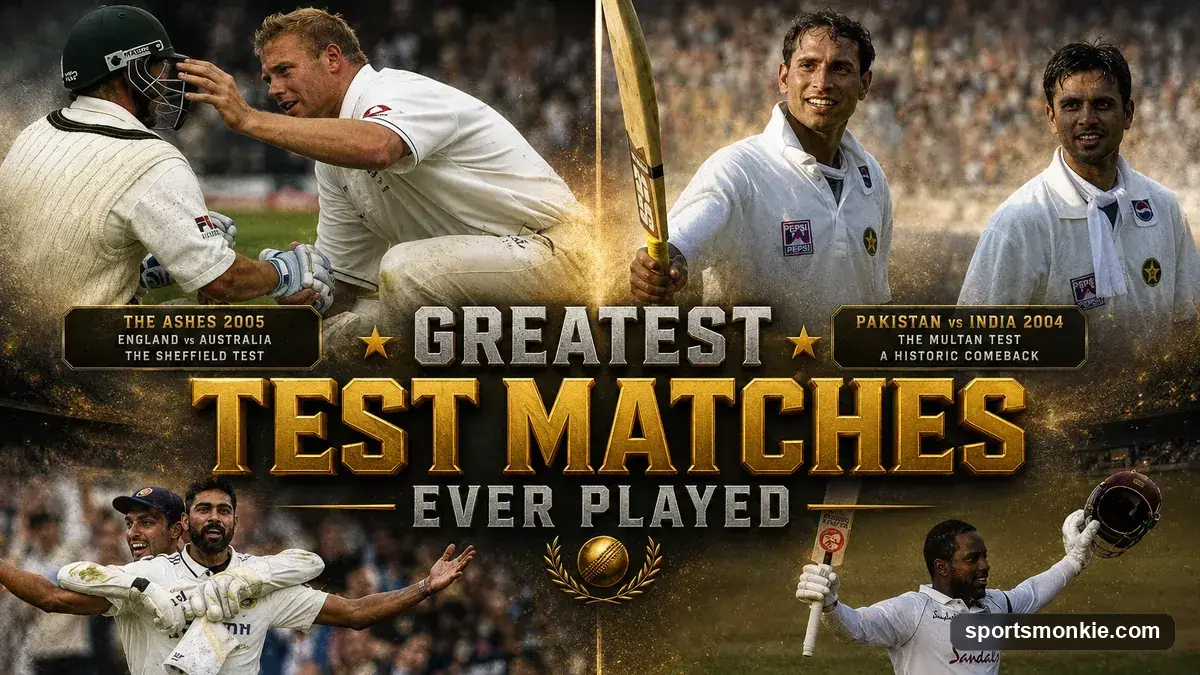
Cricket has produced only two tied Tests in its history, matches where both sides end on identical totals across their combined innings. The first, between Australia and the West Indies in 1960, gets ranked among the greatest ever played not just for that freak result but for the standard of cricket in the days leading up to it and the tension of the last few overs.
Botham’s Ashes, 1981
The 1981 Ashes produced a Test still cited as the sport’s benchmark for a single match turned on its head by one player. England, following on and staring at defeat, won after Ian Botham’s batting and Bob Willis’s bowling flipped the game in the space of two days. Nothing since has quite matched it for sheer improbability.
Kolkata 2001: India vs Australia
Australia arrived on a long unbeaten run in Test cricket. India, following on and by most readings out of the game, clawed back through a partnership between VVS Laxman and Rahul Dravid that ran for most of the next day and turned the match into a win nobody had predicted at the start of it. It remains one of the defining results in Indian cricket and one of the sharpest reversals Test cricket has produced.
A summary of common features
| Match | Era | Defining feature |
|---|---|---|
| Australia vs West Indies (1st Tied Test) | 1960 | One of only two tied Tests in history |
| England vs Australia (Headingley 1981) | 1981 | England followed on; won; Botham match-winning innings |
| India vs Australia (Kolkata 2001) | 2001 | India followed on and won after famous partnership |
| West Indies vs England (Port of Spain 1994) | 1994 | Dramatic last-wicket partnerships and final-day tension |
| Australia vs South Africa (Adelaide 2012) | 2012 | Three-figure target, final-day chase, razor-thin result |
The role of conditions
A flat pitch that gives bowlers nothing for five days rarely produces a classic. The games above tend to happen on surfaces that change character, offering pace and bounce early and turn later, so different skills get tested at different points in the match. That kind of pitch punishes teams that can’t adapt and rewards the ones that can.
Modern classics
Test cricket kept producing matches of similar drama into the twenty-first century: in the England-Australia rivalry, as India grew into a genuine Test force, and through the long stretch of close competition between Australia, South Africa, and England that ran through the 2000s and 2010s. The format still delivers its best cricket when the two sides are close in ability and the pitch gives both bat and ball something to work with.
Frequently asked questions
What is considered the greatest Test match ever played?+
There is no definitive answer, but several Tests appear on almost every list — including matches from famous Ashes series, the tied Tests between Australia and the West Indies, and dramatic modern contests between India and Australia.
How many Test matches have ended in a tie?+
Very few Tests in history have ended in a tie — a result where both teams finish with the same total runs in their completed innings. It is one of the rarest outcomes in cricket.
Which Ashes series is considered the most dramatic?+
Several Ashes series are cited as classics. The 1981 series in England — often called Botham's Ashes — is among the most frequently mentioned for the individual performances and match reversals it produced.
What was the 2019 Headingley Test?+
The 2019 Headingley Ashes Test saw England chase down 359 to win by one wicket, with Ben Stokes scoring an unbeaten 135 and sharing a last-wicket stand with Jack Leach. Widely regarded as one of the greatest Tests ever, it kept the Ashes series alive against Australia.
What are the famous tied Test matches?+
Only two Tests have ever ended in a tie: Australia v West Indies at Brisbane in 1960, the first tied Test and one of the most dramatic finishes in history, and Australia v India at Chennai in 1986. Both remain among the most celebrated matches the format has produced.
Why is the 2001 Kolkata Test considered a classic?+
In the 2001 Kolkata Test, India followed on against Australia but, thanks to VVS Laxman's 281 and Rahul Dravid's 180, batted their way back to set up an extraordinary win. It ended Australia's record 16-Test winning streak and is regarded as one of cricket's greatest comebacks.
What makes a Test match great?+
The greatest Test matches combine fluctuating fortunes, tension that builds over days, standout individual performances, and a dramatic, often narrow finish. Because Tests unfold over five days, the best of them build a slow-burning drama that shorter formats simply cannot replicate.
Sources
Play & tools
Free browser games and tools — no account, no download.
- Play today's Sports Connections — Today's Sports Connections — daily hints, answers, and play the grid.
- Play Guess the NFL Player — A new mystery NFL player every day. Eight guesses, with a clue on each — plus free unlimited mode.
- Explore all our games →
Related cricket guides
View all →
Most Double Centuries in Test Cricket: Top 20 Scorers of All Time
Don Bradman leads all batters with the most double centuries in Test cricket. See the top scorers, the feats defining greatness, and what 200 demands.
C.K. Nayudu: India's First Test Cricket Captain
C.K. Nayudu captained India in its first Test in 1932 and became the first cricketer to win the Padma Bhushan. Meet the tiger of Indian cricket.
Longest Six in Cricket History: Shahid Afridi's Disputed 153m Claim, Ranked
Shahid Afridi's 153–160m six at the Wanderers in 2013 is the most-cited longest six in cricket history, but independent remeasurement puts it closer to 100–120m. Every major claim from 1856 to 2026, ranked and fact-checked.
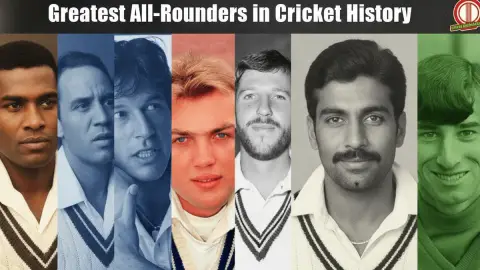
Greatest All-Rounders in Cricket History, Ranked
The 12 greatest all-rounders in cricket history, ranked from Garfield Sobers to Ben Stokes, each with the Test batting and bowling numbers that back the case.
Best Cricket Coaches Ever: 12 Greatest Ranked (2026)
John Buchanan leads our best cricket coaches ranking. See the all-time top 12 plus the 2026 cases for Gautam Gambhir, Andrew McDonald and Gary Kirsten.
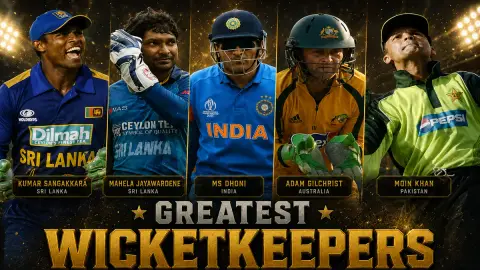
Greatest Wicketkeepers in Cricket History, Ranked
The 13 greatest wicketkeepers in cricket history, ranked and named — Gilchrist, Dhoni, Sangakkara, Boucher, Healy, Knott and more, with their dismissal records.