
Balogun Rule Change Is Put Off to December 16 After the Council Meets Without a Vote
On this page6
Update, October 15: The Council met in Zurich on Thursday without voting on the amendment. Belgian FA chair Pascale Van Damme said the specific circumstances of the Balogun case would be communicated by FIFA on December 16, and the Article 27 amendment would be submitted for approval on the same date, the Press Association reports. The meeting itself was dominated by the FIFA Forward Enterprise fight, covered in full in our report on Infantino’s apology and the not-fit-to-lead charge. A new section is added below.
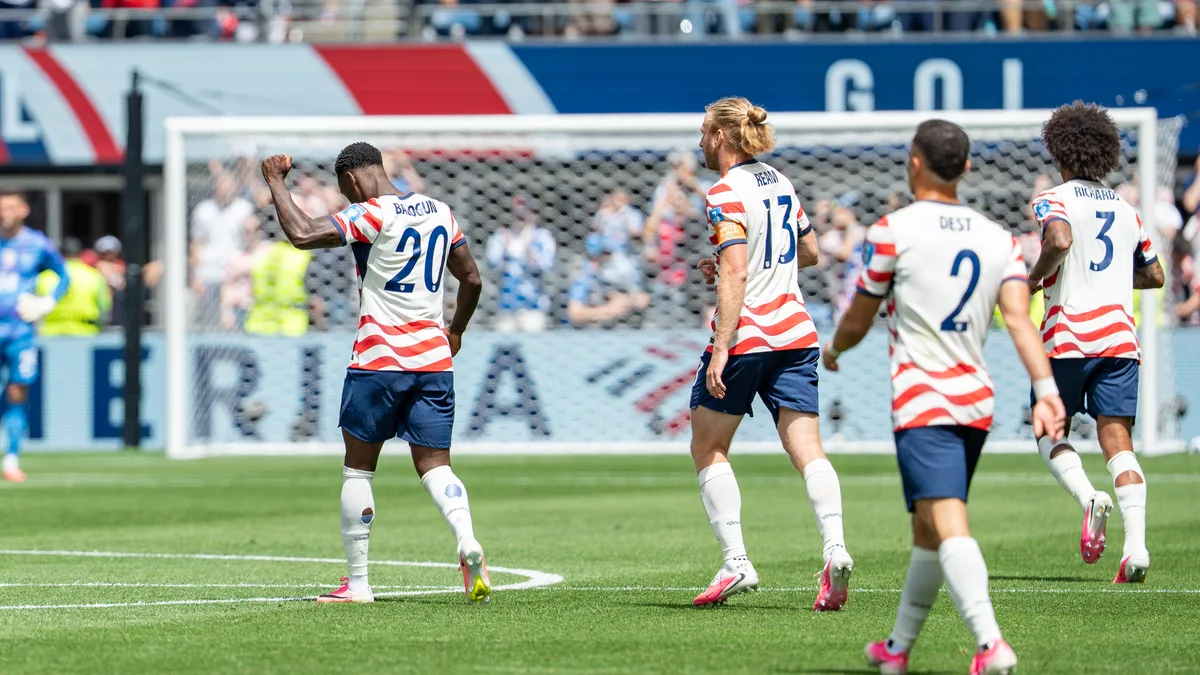
FIFA spent Tuesday night rewriting the rule its own committee bent in July. A draft amendment to Article 27 of the disciplinary code, circulated late on Tuesday, would forbid FIFA’s legal panels from suspending automatic one-game bans for red cards, the New York Post reports, and the Council votes on it in Switzerland on Thursday. The case the amendment answers has a name: Folarin Balogun, the United States striker whose World Cup ban was suspended in July after President Donald Trump called Gianni Infantino about it, a call Trump himself has admitted making.
What exactly is FIFA proposing to change?
The suspension power. Malta Sport reports the amendment would clarify when disciplinary sanctions can be suspended, making certain bans that follow a dismissal automatic and not open to appeal or temporary suspension. It would apply only from the date it is introduced. Nothing in it touches the World Cup, the Belgium match, or Balogun’s record. What it changes is whether a future panel can do what the disciplinary committee did on July 6, when it explained that Balogun’s sending-off had not been rescinded but his one-match ban had been suspended, with a $40,000 fine and a year of probation attached, Cadena SER reports via AllFootball.
Why is the Balogun case still live three months later?
Because the explanation never closed it. Balogun was sent off against Bosnia and Herzegovina for a challenge on Muharemovic, then played the round of 16 against Belgium, who won 4-1, while federations and European lawmakers asked how a ban the rulebook calls automatic had been paused. This desk covered the aftershock in October, when Jesse Marsch said the reversal showed why everyone hates America. Last week Norway’s Lise Klaveness filed an ethics complaint accusing Infantino of breaking political neutrality rules, the Post reports, citing the reprieve among her grounds. A case a governing body has finished with does not usually need its rulebook amended 36 hours before a crisis summit.
What did the Post’s investigation add on Wednesday?
A claim about who decided. The Post, citing four sources briefed on the matter, reported that Infantino agreed on the July 1 call with Trump to quash the suspension, and that the draft amendment reached officials late Tuesday, 36 hours before Thursday’s meeting. A FIFA spokesman told the Post the organisation’s position has not changed and did not address what Infantino told Trump on the call. That reporting is attributed here as the Post’s; FIFA’s on-record position remains the committee’s July one, that there was no interference in its decision-making. Both things now sit in front of the same Council that votes on Thursday.
How is FIFA defending the original decision?
By blaming the drafting. Cadena SER reports FIFA will argue at Thursday’s meeting that the disciplinary rules were unclear when the Balogun case was decided, and that the amendment is a clarification. Council sources in the same reporting read the move the other way, as adjusting Article 27’s wording so the July handling looks justified in hindsight. The tension is visible in the record: circulars over two decades treated an automatic ban as challengeable only for mistaken identity or an obvious refereeing error, Cadena SER reports, neither of which was claimed for a challenge even sympathetic observers called a foul. It is the same family of argument football argues every week at club level, where Vinicius Junior’s ban still waits on a committee reading a referee’s report and a seven-minute pause for a racism allegation at Millwall split two managers over what the process is for.
What happens if the amendment passes on Thursday?
The loophole closes prospectively, and the case stays open politically. A passed amendment concedes, in FIFA’s own code, that the suspension route used in July should not exist, which is the strongest sentence in the critics’ file and one FIFA will have written itself. The ethics complaint still runs its own track, and Infantino faces a presidential election in March, the Post reports. For players, the practical effect is simpler and lands everywhere the code applies, from World Cup knockouts down: a red card means the ban, served, with no phone call able to pause it. Football has watched discretionary discipline bend before, in the Southampton spygate case where club and manager were punished on separate tracks, but Thursday’s vote is FIFA deciding whether its most powerful exception survives its most embarrassing use.
What did the Council do on Thursday instead?
It fought about a different file, and put this one in a drawer marked December. The Zurich meeting was the Council’s first since the FIFA Forward Enterprise plan emerged, and it consumed the sitting: Infantino apologised for how the project was conducted, provided no documents on it or on the Balogun case, and asked members to submit their questions in writing, the Associated Press reports. On Balogun specifically, the only dated commitment came from Belgium. Pascale Van Damme, whose federation’s team beat the United States 4-1 in the match Balogun was cleared to play, said the case’s specific circumstances would be communicated by FIFA on December 16 and the Article 27 amendment submitted for approval the same date, the Press Association reports. Her terms were broader than the rule text: the rules amended, and clarity on how they are applied, with transparency and legal certainty as the foundation. The vote this article was written ahead of now belongs to the December 16 Council in Doha, and the loophole the amendment would close stays open, in the code and in practice, for two more months.
Frequently asked questions
What is FIFA voting on this Thursday?+
Nothing, as it turned out. The Council met in Zurich on Thursday, October 15, but no vote on the Article 27 amendment was taken. Belgian FA chair Pascale Van Damme said the amendment would be submitted for approval on December 16, when FIFA will also communicate the specific circumstances of the Balogun case, the Press Association reports. The amendment itself would make certain suspensions following a dismissal automatic and not subject to appeal or temporary suspension, Malta Sport reports.
Why was the Balogun decision deferred to December 16?+
The Council's first meeting since the summer was dominated by the FIFA Forward Enterprise fight, in which president Gianni Infantino apologised but provided no documents on the sell-off plan or the Balogun case and asked for questions in writing. Van Damme said Belgium wants the rules amended and clarity on how they are applied, and that December 16 is when FIFA will communicate the case's specific circumstances, the Press Association reports.
What happened in the Balogun case at the World Cup?+
Balogun was shown a straight red card against Bosnia and Herzegovina for a challenge on Muharemovic, Malta Sport reports. FIFA's disciplinary committee fined him $40,000, imposed a one-match ban, then suspended the ban with a one-year probation period, Cadena SER reports via AllFootball, so he played the round of 16 against Belgium. The United States lost that match 4-1. Balogun later said he thought the news he could play was a joke.
Did FIFA rescind the red card?+
No, and the distinction is the heart of the case. On July 6 the disciplinary committee said it had not rescinded the sending-off of July 1; it had suspended the sanction and placed Balogun on probation, and it denied any interference in its decision-making, Cadena SER reports. The proposed amendment targets exactly that suspension power.
What has the New York Post reported about Infantino and Trump?+
The Post reported on Wednesday, citing four sources briefed on the matter, that Infantino agreed during a July 1 phone call with President Trump to quash the suspension, and that leaked documents show the draft code change was sent late Tuesday, 36 hours before the Council summit. Trump had already admitted publicly that he called Infantino about the incident. A FIFA spokesman told the Post the organisation's position has not changed and did not address what Infantino told Trump.
How has FIFA defended its handling of the case?+
By pointing at its own rulebook. Cadena SER reports FIFA will argue at Thursday's meeting that the disciplinary rules were unclear at the time of the Balogun decision. Council sources cited in the same reporting describe the amendment differently: as an attempt to adjust the wording of Article 27 in a way that justifies the handling after the fact. The amendment, if passed, applies only from its introduction and changes nothing about the World Cup decision itself.
Who else has challenged the Balogun decision?+
Belgium, UEFA and members of the European Parliament all called for an investigation at the time, Cadena SER reports. Last week Norway's federation president Lise Klaveness filed an ethics complaint accusing Infantino of breaking political neutrality rules, citing both the Balogun reprieve and a FIFA peace prize created for Trump, the New York Post reports. Thursday's vote lands in the middle of that pressure, not after it.
Sources
- New York Post: Infantino fixed Balogun's red card after Trump call, FIFA sources say (the four-source account of the July 1 call, the leaked draft sent late Tuesday, the FIFA spokesman's response, the Klaveness ethics complaint)
- Cadena SER via AllFootball: FIFA defends Balogun decision, citing unclear disciplinary rules (the Article 27 amendment plan, the July 6 committee explanation, the $40,000 fine and probation, the investigation calls)
- Malta Sport: FIFA proposes rule change following controversial Balogun suspension reversal (the Thursday Council vote, the non-retrospective amendment, the red card against Bosnia, the 4-1 Belgium result)
- Press Association via The Oldham Times: Infantino not fit to be FIFA president without answers (Van Damme's December 16 date for the Balogun specifics and the Article 27 amendment, and the Council's unanswered FFE and Balogun questions)
- Associated Press via Sportsnet: Infantino apologizes for World Cup furor at showdown FIFA meeting (no documents or details provided on the Balogun case at the Thursday meeting, and the December 16 Doha Council date)
- Soy Futbol: Balogun case, FIFA scrambles for answers after Trump's call (the fine and suspended ban, the committee's no-interference position, Balogun's reaction)
Play & tools
Free browser games and tools — no account, no download.
- Play 38-0 — Sign a 4-4-2 of all-time football legends and chase a perfect 38-0 league season — perfect, not just unbeaten.
- Explore all our games →
Related football guides
View all →
Jesse Marsch Says Balogun Red-Card Reversal Shows 'Why Everyone Hates America' Before USA-Canada
Canada coach Jesse Marsch told The Guardian the Folarin Balogun red-card reversal at the World Cup would never happen for another country. He said it days before Canada face the USA.
Infantino Apologises to His Council and Is Told He Is Not Fit to Lead Without Answers
Gianni Infantino apologised to the FIFA Council over the World Cup sell-off plan, gave no documents, and was told by Debbie Hewitt he is not fit to lead without answers.
FIFA Knew Congo Goalkeeper Mpasi Was Ineligible, Reports Say, and Let Him Play On
Internal FIFA documents reported by the New York Times and Le Monde say Lionel Mpasi never completed his switch from France, yet Congo kept him for the World Cup.
Suriname Call on FIFA and Concacaf to Act After Racist Abuse Allegation in Guatemala
Suriname have called on FIFA and Concacaf to investigate alleged racist abuse in Guatemala, after Richonell Margaret was sent off for reacting to the crowd.

Abu Farchi Is Sent Off Eight Minutes After Coming On as the Rapids Blow Another Lead
Saied Abu Farchi came on in the 60th minute and was sent off in the 68th for a hand to Michael Boxall's face as Colorado drew 2-2 with Minnesota.
Kenya Playoff Abandoned After Referee Is Attacked and Chased Off the Pitch in Nairobi
The Kariobangi Sharks and Mombasa United promotion playoff was abandoned in Nairobi after referee John Sulwe was attacked over a penalty award, with the FKF yet to rule.