
Cricket Bat Weight: What Weight Do Cricketers Use?
On this page5
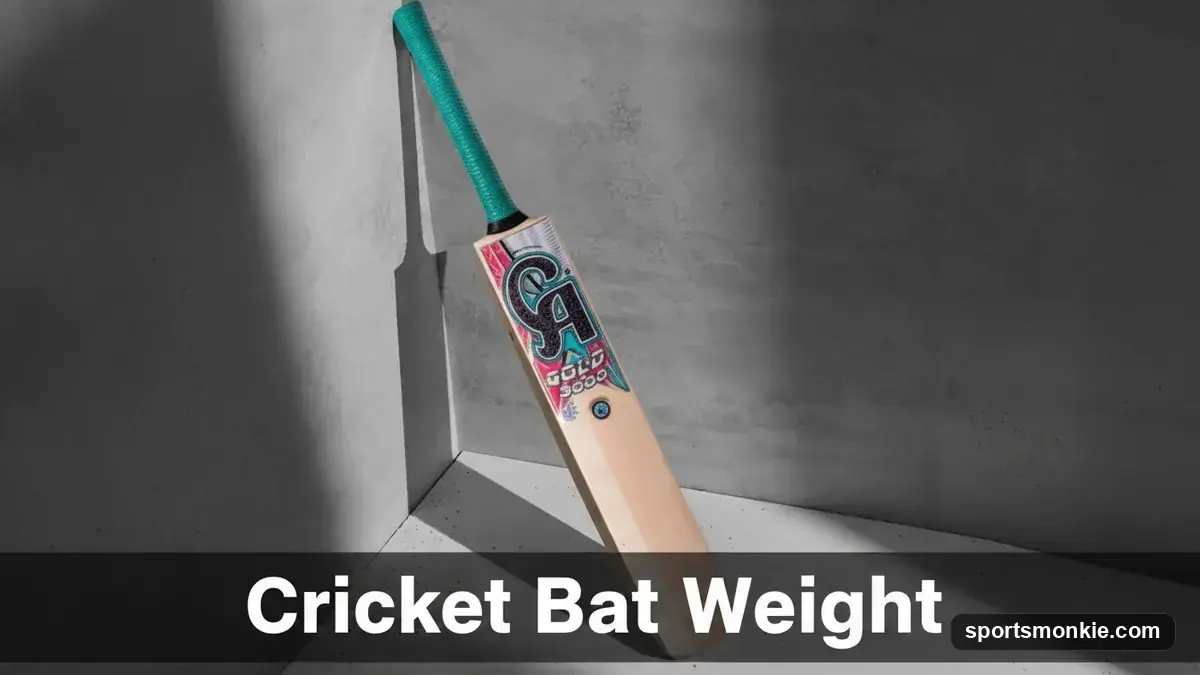
Pick up a pro’s bat and the first thing that surprises most people is how light it feels for its size. That’s down to willow quality more than anything else, and it explains why two bats of identical weight can play completely differently. Most professionals settle somewhere between 2 lb 7 oz and 2 lb 12 oz (roughly 1.1 to 1.25 kg), but the Laws of Cricket never actually cap the weight. They regulate the bat’s dimensions instead, so what a player carries to the crease comes down to feel, technique, and the conditions they expect to face.
Typical bat weights by level
| Player level | Typical weight range |
|---|---|
| International / professional | 2 lb 7 oz – 2 lb 12 oz (1.10–1.25 kg) |
| Senior club / amateur | 2 lb 6 oz – 2 lb 13 oz (1.08–1.27 kg) |
| Junior (Harrow / Size 6) | ~1 lb 12 oz – 2 lb 2 oz (0.79–0.96 kg) |
| Junior (Size 4–5) | ~1 lb 6 oz – 1 lb 12 oz (0.62–0.79 kg) |
What the Laws actually regulate
Law 5 of the MCC Laws of Cricket sets limits on the blade’s physical dimensions, not its weight:
| Dimension | Maximum |
|---|---|
| Overall bat length | 38 inches (96.5 cm) |
| Blade width | 4.25 inches (10.8 cm) |
| Blade thickness (edges) | 1.56 inches (4.0 cm) |
| Blade depth | 2.64 inches (6.7 cm) |
The MCC updated these dimension rules after its 2017 review. Weight was never part of the equation.
How bat weight affects playing style
A heavier bat, 2 lb 10 oz and up, adds power to pull shots and lofted drives, but it takes a toll over a long innings and demands more from the arms and shoulders. That’s why it shows up so often in the hands of T20 power hitters, who need six-hitting force more than a full day at the crease.
Go lighter, under 2 lb 8 oz, and the swing speeds up. Batters get better control and quicker hands, which helps against spin or on pitches where the ball moves fast off the seam. Technically correct players, and anyone facing serious pace, tend to gravitate here.
Handle types and their effect on feel
The handle shapes how a bat feels as much as the blade does. Most senior bats use a short handle; long handle versions exist for taller players. Handles also vary by how much cane goes into them:
| Handle type | Characteristics |
|---|---|
| Short handle | Standard; suits most heights |
| Long handle | Extra reach, suits taller batters |
| Round handle | Balanced grip, classic feel |
| Oval handle | More wrist control, preferred by many pros |
Willow grade and its relationship to weight
Bat blades come from willow, English willow for top-grade bats, Kashmir willow for budget options, and the grade affects playing quality as much as weight. Grade 1 English willow has straight grains and stays light and responsive. Grade 2-3 willow is good quality but slightly denser. Kashmir willow runs heavier and less responsive, which is why it’s common in junior and entry-level bats.
A well-balanced Grade 1 blade can feel lighter in the hand than the number stamped on it. That’s the willow doing its job, not a trick of the scales.
Frequently asked questions
How heavy is a cricket bat?+
Most professional and senior club cricketers use bats in the range of 2 lb 7 oz to 2 lb 12 oz (roughly 1.1 kg to 1.25 kg). Some players prefer lighter bats around 2 lb 6 oz or heavier bats up to 2 lb 14 oz or beyond.
Is there a maximum weight limit for a cricket bat?+
No. The Laws of Cricket (Law 5) specify maximum dimensions for the bat — length, blade width, and depth — but do not set a maximum weight. There is no weight limit; the dimensions are what's regulated.
What size bat do junior cricketers use?+
Junior bats come in sizes from Size 1 (very young children) up to Size 6 and Harrow, which are stepping stones to the full adult (Short Handle) bat. Weights for junior bats range from under 1 lb to around 2 lb, increasing with size.
Sources
Play & tools
Free browser games and tools — no account, no download.
- Play today's Sports Connections — Today's Sports Connections — daily hints, answers, and play the grid.
- Play Guess the NFL Player — A new mystery NFL player every day. Eight guesses, with a clue on each — plus free unlimited mode.
- Explore all our games →
Related cricket guides
View all →
What Is a Cricket Bat Called? Names, Parts, and Rules
A cricket bat is simply called a cricket bat, but its parts have specific names and it must meet strict ICC rules on size, weight and material. Full guide.
Cricket Ball Size and Weight: Full Comparison by Format
A cricket ball weighs 155.9-163 g with a circumference of 22.4-22.9 cm in men's cricket. Women's and youth balls are slightly smaller and lighter.
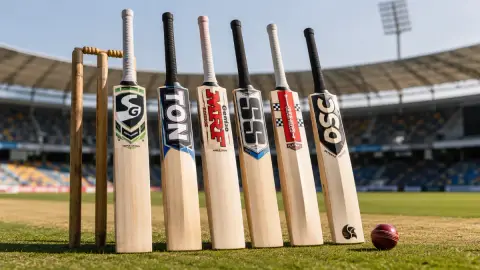
Best Cricket Bats: What to Look for and Top Brands
The best cricket bat depends on your level, preferred weight, and budget. This guide covers the key specs and the brands players consistently rate highest.

What Weight Bowling Ball Should I Use?
A common guideline is a bowling ball about 10% of your body weight, up to the 16 lb max. How to pick the right weight you can actually control.

Dream11 Captain & Vice-Captain: How to Pick Wisely Every Match
Your Dream11 captain scores 2x points and your vice-captain scores 1.5x — so picking them wisely is the single biggest lever in fantasy cricket. Here's how.
Fastest Century in Cricket (Every Format)
AB de Villiers holds the fastest ODI century at 31 balls. The fastest hundreds in T20, ODI and Test cricket explained, with the record-holders for each format.