
Best Utility Players in MLB: Who Plays Everywhere
On this page7
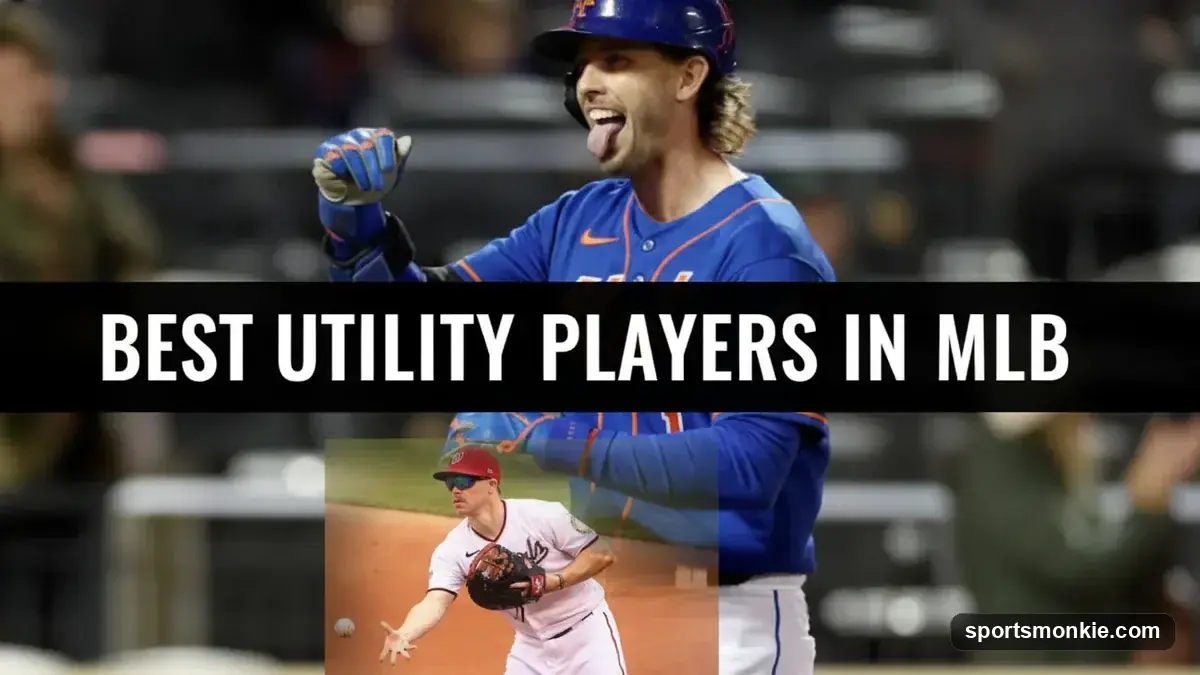
Ask a manager what keeps them up at night in September and it is often not the rotation — it is whether the bench can cover an injury without the lineup falling apart. That is the problem a true utility player solves: someone who can start at shortstop Monday, move to center field Wednesday, and still hit enough that the offense does not skip a beat. Ben Zobrist set the modern template, and today Tommy Edman is the position’s leading practitioner.
What defines an MLB utility player
A real utility player is far more than a fill-in body. The best ones share a few traits:
- Positionally flexible: capable at two or more spots, usually shortstop, second base, third base and the outfield corners
- Offensively productive: not glove-only depth, but a bat managers can pencil into the lineup
- Trusted in leverage: used in meaningful late-game spots, not just lopsided blowouts
There is a real difference between a bench body who can technically fill in and a starting-caliber player who happens to be versatile. The names below are the latter.
Ben Zobrist: the blueprint
Zobrist kept landing on championship-contending rosters for a simple reason — he could play almost anywhere and still hold his own at the plate. That mix of on-base skill and positional range fit exactly how front offices began building rosters in the sabermetric era. He won back-to-back World Series titles with the Kansas City Royals in 2015 and the Chicago Cubs in 2016, taking home 2016 World Series MVP honors before retiring after the 2019 season. Most evaluators still call him the best utility player the game has seen.
Tommy Edman: the modern standard-bearer
Since arriving in Los Angeles, Edman has become the profile every contender wants. The switch-hitter can cover second base, shortstop, third base and all three outfield positions, and he pairs that range with Gold Glove defense and disruptive speed on the bases. He was a key contributor to the Dodgers’ World Series championships in 2024 and 2025. As of mid-2026 he was working back from offseason right-ankle surgery, with the Dodgers slotting him primarily at second base while mixing in third base and left field.
Key achievements at a glance
| Player | Positions | Signature achievement (as of 2026) |
|---|---|---|
| Ben Zobrist | 2B, OF, SS, 1B | 2x World Series champ (2015 KC, 2016 CHC); 2016 WS MVP |
| Tommy Edman | 2B, SS, 3B, OF | 2024 & 2025 World Series champion, Dodgers |
| Kiké Hernández | OF, 2B, SS, 3B, 1B | Postseason standout; has played every spot but catcher |
| Chris Taylor | SS, 2B, 3B, OF | 4-year, $60M Dodgers deal; multiple title runs |
| Trea Turner | SS, 2B, OF | Elite speed and bat; primary SS for the Phillies |
| Ketel Marte | 2B, SS, CF | Silver Slugger seasons; extended by Arizona in 2025 |
Current utility landscape (2025-26)
The role kept shifting through the 2025 and 2026 seasons. Edman remains the benchmark in Los Angeles. Veteran super-utility man Kiké Hernández re-signed with the Dodgers on a one-year deal in February 2026 and, when healthy, still fills any spot except catcher, though injuries limited his 2026 availability. Chris Taylor, once a Dodgers postseason hero, was released by Los Angeles in May 2025 to make room for Edman and later signed with the Los Angeles Angels — a reminder of how quickly the market moves. Meanwhile stars like Ketel Marte blur the line between utility and everyday standout, having earned a long-term Arizona extension in 2025 while primarily anchoring second base.
Why the role keeps gaining value
Tighter roster limits and heavier bullpen usage have squeezed the bench spots teams can afford. That makes a player who credibly covers shortstop, center field and second base worth more than a specialist who does one thing. Front offices now target this profile in free agency and the draft rather than treating it as a fallback. The “super-utility” label that has caught on says it all: players once written off as having “no real position” are today’s coveted roster pieces.
What to look for when evaluating utility players
- Defensive grades at each position: do they grade average or better, not just passable?
- Plate discipline and contact: getting on base multiplies a utility player’s value
- Baserunning and durability: speed adds value, and moving around the diamond taxes the body differently
- Manager trust: the best utility men appear with a one-run lead in the seventh, not only in garbage time
A utility player who only sees the field in lopsided games is a different animal from one a manager trusts to protect a close lead — and that trust is what separates the names above from ordinary bench depth.
Frequently asked questions
Who is the best utility player in MLB right now?+
As of 2026, Tommy Edman of the Los Angeles Dodgers is widely regarded as the game's premier utility man. He can play second base, shortstop, third base and all three outfield spots, and he won a World Series with the Dodgers in 2024 and again in 2025. His combination of switch-hitting, elite baserunning and Gold Glove defense makes him a genuine everyday starter who happens to be positionless.
What makes a great utility player in MLB?+
A great utility player grades out as average or better defensively at multiple positions rather than merely surviving there. They also contribute at the plate, so managers trust them in close games rather than only blowouts. The best combine plate discipline, baserunning value and the durability to move around the diamond without wearing down.
Who is considered the greatest utility player in MLB history?+
Ben Zobrist is the modern gold standard. Playing mostly second base and the outfield, he won back-to-back World Series titles with the Royals in 2015 and the Cubs in 2016, earning 2016 World Series MVP honors. His blend of on-base skill and positional range made him the template front offices have chased ever since. He retired after the 2019 season.
What is the difference between a utility player and a super-utility player?+
A utility player typically covers a few related spots, often across the infield or the outfield. A super-utility player can handle nearly every position on the field — both infield and outfield — at a high level. Ben Zobrist popularized the modern super-utility role, and players like Kiké Hernández and Tommy Edman carry it today.
Do utility players get paid well in MLB?+
Pay varies widely with proven versatility. Elite utility players who start and produce command significant money — Chris Taylor signed a four-year, $60 million deal with the Dodgers, for example. Pure bench utility players usually earn closer to the league minimum. Demonstrated above-average play across several positions is what drives market value.
Why have utility players become more valuable in MLB?+
Tighter roster limits and heavier bullpen usage have squeezed the number of bench spots teams can carry. A player who can credibly cover shortstop, center field and second base in the same week is worth more than a one-position specialist. Front offices now actively target this profile in free agency and the draft rather than treating it as a fallback.
Are Mookie Betts and Trea Turner utility players?+
Not in the traditional sense. Both are primarily everyday shortstops — Betts with the Dodgers and Turner with the Phillies as of 2026 — even though each has the athleticism to move around the diamond. Betts has played second base and right field at an elite level, so he shows super-utility versatility, but he is deployed as a star regular, not a utility man.
Do utility players make good fantasy baseball picks?+
They can be valuable because multi-position eligibility gives fantasy owners lineup flexibility, letting them slot the player wherever a gap opens. A utility man who also posts solid offense and steals bases across a full season becomes a roster-friendly asset. Edman-type players who qualify at several positions are especially useful in deeper formats.
Sources
Play & tools
Free browser games and tools — no account, no download.
- Play 162-0 — Draft nine and see if your roster can survive a flawless 162-game MLB season.
- Explore all our games →
- Analyze a trade — Compare both sides of a fantasy baseball trade before you accept.
- Run the MLB predictor — Simulate the MLB postseason bracket down to a World Series champion.
- Open the ERA calculator — Work out earned run average from earned runs and innings pitched — handles the .1/.2 thirds convention.
- Explore all our free sports tools →
Related baseball guides
View all →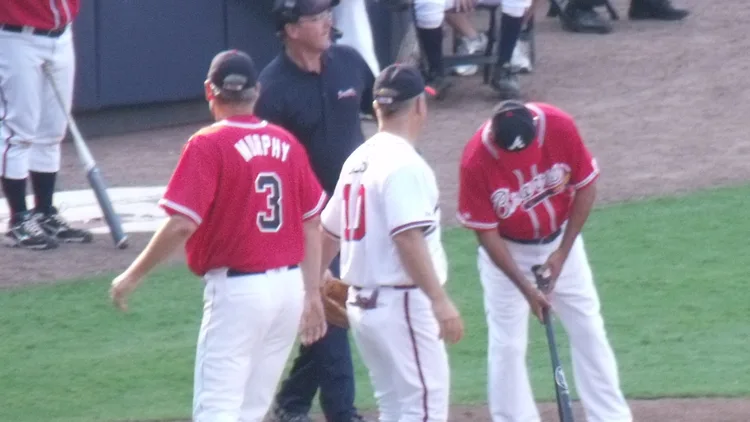
Dale Murphy Backs His Son as Alex Call Asks MLB to Drop the Risque Playoff Ads
A fan's post about playoff commercial breaks drew in his Hall of Fame father and a Dodgers outfielder. The argument is really about who controls the breaks.
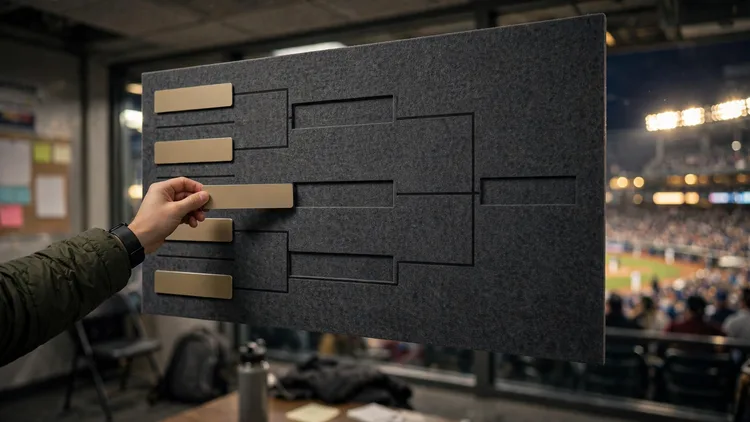
MLB Proposes Letting Top Seeds Choose Their Playoff Opponents, and Fans Are Not Buying It
MLB's labour proposal would let higher seeds pick their Wild Card and Division Series opponents from 2027, inside a package the union says hangs on a salary cap.
How Many Innings Are in a Baseball Game? (9 in MLB)
A baseball game has nine innings in MLB, the minors, and college. High school plays seven and Little League six. Here's every level, plus how long games last.
How Do the MLB Playoffs Work? (12-Team Format)
The MLB playoffs are a 12-team bracket: six per league — three division winners and three wild cards — through the Wild Card Series, Division Series, LCS and World Series.
How Does the MLB Wild Card Work?
MLB's wild card gives each league three playoff berths to the best non-division winners. The lower seeds meet in a best-of-three Wild Card Series.
Does MLB Have a Salary Cap? No — Here's Why
MLB has no salary cap. Instead it uses a competitive balance (luxury) tax to slow big spenders, which is why baseball payrolls vary more than any major US league.