
Best Spin Bowlers in Cricket History: All-Time Greats

On this page19
- 01The greatest spin bowlers at a glance
- 02Muttiah Muralitharan
- 03Shane Warne
- 04Anil Kumble
- 05Nathan Lyon
- 06Ravichandran Ashwin
- 07Rangana Herath
- 08Harbhajan Singh
- 09Daniel Vettori
- 10Lance Gibbs
- 11Derek Underwood
- 12Bishan Singh Bedi
- 13Abdul Qadir
- 14Saqlain Mushtaq
- 15How We Ranked Them
- 16What Separates a Great Spinner From a Good One
- 17Leg-Spin, Off-Spin, and Left-Arm Orthodox
- 18The 13 Greatest Spin Bowlers: At a Glance
- 19Why Spin Still Wins Test Matches
We rank on Test-match output first — wicket count and bowling average earned over long, taxing spells — then adjust for influence on the craft, longevity, and returns away from friendly home pitches. A bowler who invented or revived a delivery outranks where his tally alone would place him.
The greatest spin bowlers at a glance
| Rank | Bowler | Test record or legacy |
|---|---|---|
| 1 | Muttiah Muralitharan | Record 800 Test wickets |
| 2 | Shane Warne | 708 wickets; revived leg-spin |
| 3 | Anil Kumble | 619 wickets; relentless accuracy |
| 4 | Nathan Lyon | 560+ wickets and still active |
| 5 | Ravichandran Ashwin | 537 wickets in 106 Tests |
| 6 | Rangana Herath | 433 wickets; left-arm benchmark |
- Career leader
Muttiah Muralitharan
Muralitharan retired as Test cricket's leading wicket-taker with 800 in 133 Tests, a margin of 92 over Warne that no active bowler is close to threatening. He also took 534 ODI wickets and held the ICC's No. 1 Test bowler ranking for a record 1,711 days between 2006 and 2009.
His off-break turned prodigiously from a hyper-flexible wrist, and the doosra — a delivery spun the opposite way, indistinguishable from his stock ball at the point of release — meant batters could not commit to a shot even when they knew it was in his repertoire.
Country: Sri Lanka · Test wickets: 800 in 133 Tests · Signature: doosra
- The craft-reviver
Shane Warne
Warne finished with 708 Test wickets in 145 Tests and revived leg-spin at a point when the art had all but vanished from Test cricket. He ranks above Kumble here not on tally alone but on range: a leg-break, googly, flipper, and zooter, plus relentless verbal pressure between deliveries.
His 1993 delivery to Mike Gatting, the "Ball of the Century," pitched outside leg and clipped off — still the sport's most replayed ball, and the moment leg-spin became box office again.
Country: Australia · Test wickets: 708 in 145 Tests · Signature: leg-break, flipper
- Accuracy over turn
Anil Kumble
Kumble rarely spun it square, yet his 619 wickets remain India's Test record because of relentless accuracy and steep bounce that made him dangerous on flat surfaces where other spinners went missing. In February 1999 he became one of only two bowlers, with Jim Laker, to take all 10 wickets in a Test innings, 10 for 74 against Pakistan in Delhi.
Three years later in Antigua he returned to bowl with a jaw broken by a Mervyn Dillon bouncer, jaw wired and strapped, and dismissed Brian Lara — the image that fixed his reputation for stubbornness.
Country: India · Test wickets: 619 in 132 Tests · Signature: top-spinner, flipper
- Modern off-spin leader
Nathan Lyon
Lyon is the rare active name still climbing this list. He took Australia's spin slot in 2011, passed 500 Test wickets during the 2023 Ashes, and overtook Glenn McGrath in late 2025 to move past 560 wickets and into sixth on the all-time list — behind only Muralitharan among off-spinners.
His stock ball drifts into the rough outside a right-hander's off stump and grips hard on worn fourth- and fifth-day pitches. More than 130 Tests without a serious form dip is as unusual as the tally itself.
Country: Australia · Test wickets: 560+ (active) · Signature: overspin and bounce
- Variation merchant
Ravichandran Ashwin
Ashwin retired in December 2024 with 537 Test wickets in 106 Tests, second to Kumble on India's list and reached in 26 fewer matches. He carried more variations than most finger-spinners — the carrom ball, the arm ball, changes of pace inside an over — and used them to attack rather than to contain.
He sits below Lyon here mainly on where the wickets came: a large share on home pitches tailored to spin, against Lyon's returns across all conditions. His craft ranged far beyond the ODI wicket-takers he shared an era with.
Country: India · Test wickets: 537 in 106 Tests · Signature: carrom ball
- Late bloomer
Rangana Herath
Herath took most of his 433 Test wickets after turning 33, having spent years as Muralitharan's understudy before inheriting the frontline role in his mid-thirties. He finished as Sri Lanka's leading wicket-taker not named Murali.
His left-arm orthodox leaned on drift, subtle pace changes, and reading a batter's footwork rather than raw turn — and it kept winning Tests into his forties, an age most spinners are long retired.
Country: Sri Lanka · Test wickets: 433 in 93 Tests · Signature: drift, pace variation
- The Turbanator
Harbhajan Singh
Harbhajan's breakout was the 2001 Border-Gavaskar series: a hat-trick against Australia and 32 wickets as India won after following on in the first Test, ending a 16-match Australian winning streak.
His off-spin generated sharper turn and bounce than most finger-spinners manage, and he stayed India's first-choice spinner for close to a decade. His 417 Test wickets rank third among Indian bowlers, behind Kumble and Ashwin.
Country: India · Test wickets: 417 in 103 Tests · Signature: bounce, the doosra
- All-round anchor
Daniel Vettori
Vettori debuted for New Zealand at 18 and was still playing internationals two decades later. His left-arm orthodox was built on accuracy over turn, which let him captain the side and bowl long, economical spells on unhelpful pitches.
He finished with 362 wickets and more than 4,000 Test runs, joining Kapil Dev and Ian Botham among the few to pair both totals — the reason he outranks bowlers here with bigger single-discipline tallies.
Country: New Zealand · Test wickets: 362 · Also: 4,500+ Test runs
- First to 300
Lance Gibbs
Gibbs was the first bowler in history to reach 300 Test wickets, passing the mark in 1976 when it felt almost unreachable. Unusually long fingers let the West Indian rip his off-break harder than most of his generation.
He finished with 309 wickets from 79 Tests and held the world record until Dennis Lillee passed him in 1983 — the benchmark every spinner on this list was later measured against.
Country: West Indies · Test wickets: 309 in 79 Tests · Signature: hard-spun off-break
- Sticky-wicket specialist
Derek Underwood
Nicknamed "Deadly," Underwood turned rain into a weapon. On the uncovered English pitches of the 1960s and 70s, wet surfaces dried unevenly into "sticky dogs," and his brisk left-arm spin skidded through faster and lower than batters expected.
He took 297 Test wickets in 86 Tests, and his 8 for 51 to topple Australia at The Oval in 1968, with fielders crowded in as the light faded, remains Ashes folklore.
Country: England · Test wickets: 297 in 86 Tests · Signature: quicker, skidding spin
- The purist's spinner
Bishan Singh Bedi
Bedi anchored India's celebrated 1970s spin quartet alongside Erapalli Prasanna, Bhagwat Chandrasekhar, and Srinivas Venkataraghavan. His left-arm orthodox relied on flight and loop, drawing batters forward and punishing any hesitation.
Many judges still rate his high, rhythmic action the most elegant left-arm spin the game has seen. He finished with 266 wickets from 67 Tests and later managed the national side.
Country: India · Test wickets: 266 in 67 Tests · Signature: flight and loop
- Kept leg-spin alive
Abdul Qadir
Qadir carried leg-spin almost single-handedly through the 1980s, when the craft had all but disappeared from international cricket. His googly, flipper, and top-spinner were disguised well enough to trouble the best players of spin.
His 236 Test wickets are modest next to the names above, but he is widely credited as the bowler who inspired a young Shane Warne to take leg-spin seriously — an influence that outweighs the raw count.
Country: Pakistan · Test wickets: 236 · Legacy: inspired Warne's leg-spin
- The doosra's architect
Saqlain Mushtaq
Saqlain is widely credited with inventing the doosra in the 1990s, the delivery Muralitharan and later the teesra were built on. His off-spin paired that disguise with a low, skiddy trajectory that made him lethal in one-day cricket.
He took a World Cup hat-trick against Zimbabwe in 1999 — only the second in the tournament's history — and finished with 208 Test wickets. The tally undersells how far his innovation reshaped off-spin for two decades after.
Country: Pakistan · Test wickets: 208 · Signature: invented the doosra
Reader interaction
Build your ranking
Drag the names into the order you think is right — or use the arrows — then submit to see how your list compares with everyone else's.
- Muttiah Muralitharan
- Shane Warne
- Anil Kumble
- Nathan Lyon
- Ravichandran Ashwin
- Rangana Herath
- Harbhajan Singh
- Daniel Vettori
- Lance Gibbs
- Derek Underwood
- Bishan Singh Bedi
- Abdul Qadir
- Saqlain Mushtaq
Audience ranking
How everyone ranked them
Built from reader rankings using position-based points.
A leg-spinner’s stock ball travels maybe 85 km/h — slower than most club-level medium pace — and yet it has undone batters who handle 150 km/h thunderbolts without blinking. That gap between speed and difficulty is what makes spin such a strange, compelling craft, and why the greatest cricketers of all time who bowled it are judged on far more than raw pace.
How We Ranked Them
Test-match output comes first: wicket count and bowling average earned over long spells, because Tests examine a spinner’s control and stamina more than any shorter format. Beyond the numbers, three adjustments move bowlers up or down. Influence on the craft matters — Saqlain’s doosra and Qadir’s revival of leg-spin lift both above where their tallies alone would sit. Longevity is weighted heavily, which is why an accurate, adaptable bowler like Kumble ranks over spinners with flashier deliveries but shorter careers. So are returns away from helpful home pitches, the main reason Lyon edges Ashwin despite the smaller gap in their numbers. Active careers, such as Lyon’s, are ranked on wickets and performance to date, not a projected final total.
What Separates a Great Spinner From a Good One
Wickets alone don’t settle it. The bowlers above share four traits that a merely competent spinner lacks:
- Turn and disguise — spinning it sharply while hiding a change of direction, as Muralitharan did with the doosra
- Flight and loop — tossing the ball up to lure a false shot, Bedi’s stock-in-trade
- Control — landing it in the same spot for hours at a low economy rate, which is what carried Kumble and Vettori
- Adaptability — winning on unresponsive pitches and in foreign conditions, not only when the surface is turning square
Leg-Spin, Off-Spin, and Left-Arm Orthodox
The list spans three families. Leg-spinners (Warne, Kumble, Qadir) turn the ball away from a right-hander using the wrist and can bowl a googly that goes the other way — the most attacking style, and the hardest to control. Off-spinners (Muralitharan, Lyon, Ashwin, Harbhajan, Gibbs, Saqlain) spin it in with the fingers, trading some variety for tighter economy. Left-arm orthodox bowlers (Herath, Vettori, Bedi, Underwood) angle it across the right-hander and rely on drift and flight; Underwood’s quicker, skidding version was a category of its own on wet pitches. No single family owns the top of the list, which is part of why the debate never fully settles.
The 13 Greatest Spin Bowlers: At a Glance
| # | Bowler | Country | Style | Test Wickets |
|---|---|---|---|---|
| 1 | Muttiah Muralitharan | Sri Lanka | Off-spin / doosra | 800 |
| 2 | Shane Warne | Australia | Leg-spin | 708 |
| 3 | Anil Kumble | India | Leg-spin | 619 |
| 4 | Nathan Lyon | Australia | Off-spin | 560+ (active) |
| 5 | Ravichandran Ashwin | India | Off-spin | 537 |
| 6 | Rangana Herath | Sri Lanka | Left-arm orthodox | 433 |
| 7 | Harbhajan Singh | India | Off-spin | 417 |
| 8 | Daniel Vettori | New Zealand | Left-arm orthodox | 362 |
| 9 | Lance Gibbs | West Indies | Off-spin | 309 |
| 10 | Derek Underwood | England | Left-arm spin | 297 |
| 11 | Bishan Singh Bedi | India | Left-arm orthodox | 266 |
| 12 | Abdul Qadir | Pakistan | Leg-spin | 236 |
| 13 | Saqlain Mushtaq | Pakistan | Off-spin | 208 |
Tallies reflect career totals at retirement, except Nathan Lyon, an active international whose count is still rising.
Why Spin Still Wins Test Matches
Spin carries a disproportionate share of the workload in subcontinent conditions, where captains lean on it to build pressure over long spells, take wickets through the middle overs, and exploit pitches that crumble across five days. The 13 bowlers here didn’t just accumulate wickets — they decided series largely on their own, and today’s best active spin bowlers are still chasing the standard they set.
If the batting side of this duel interests you, How to Play the Periscope Shot in Cricket, the Ramp Shot, and the Uppercut all cover how batters try to counter bowling like this.
Frequently asked questions
Who is considered the greatest spin bowler of all time?+
Muttiah Muralitharan and Shane Warne dominate the debate. Muralitharan holds the all-time Test wicket record with 800, taken over 133 Tests, while Warne is more often credited with the artistry — reviving leg-spin as a match-winning craft and producing the sport's most famous single delivery, the 1993 'Ball of the Century' to Mike Gatting. Most rankings, this one included, place them one and two.
How many Test wickets did Muttiah Muralitharan take?+
Muralitharan took 800 Test wickets in 133 Tests, still the most in the format's history by 92 over Warne, plus 534 in ODIs. His doosra — a delivery that spun the opposite way to his stock off-break, released with an identical action — made him almost impossible to read even when batters knew it was in his armory. He retired in 2010 with the record intact.
How many Test wickets did Shane Warne take, and what made him special?+
Warne finished with 708 Test wickets in 145 Tests for Australia. He revived leg-spin when it was fading from the Test game, combining a leg-break, googly, flipper, and zooter with constant psychological pressure between deliveries. Beyond the numbers, his 1993 'Ball of the Century' to Mike Gatting turned an unfashionable craft back into a genuine match-winning weapon.
Who is the best Indian spin bowler ever — Kumble, Ashwin, or Harbhajan?+
Anil Kumble is India's leading Test wicket-taker with 619, prized for accuracy and steep bounce over sharp turn. Ravichandran Ashwin, who retired in December 2024 with 537 in 26 fewer Tests, brought more variations and a higher strike rate. Harbhajan Singh sits third with 417 and the 2001 hat-trick that helped beat Australia at home. Most rate Kumble first on career weight.
Who invented the doosra?+
Pakistan's Saqlain Mushtaq is widely credited with inventing the doosra in the 1990s, an off-spinner's delivery disguised to turn the other way. Muttiah Muralitharan later made it famous worldwide and the most feared version of the ball. The same disguise principle underpins the teesra, a follow-on variation designed to skid straight on rather than turn either direction.
Who is the best left-arm spinner in Test cricket?+
Rangana Herath of Sri Lanka (433 wickets) and Daniel Vettori of New Zealand (362) are the standard left-arm orthodox references. Bishan Bedi (266) is the purist's pick for flight and loop, while England's Derek Underwood, devastating on rain-affected pitches, took 297 with a quicker, skiddier style. Herath's post-33 wicket haul makes him the statistical leader of the group.
Sources
Play & tools
Free browser games and tools — no account, no download.
- Play today's Sports Connections — Today's Sports Connections — daily hints, answers, and play the grid.
- Play Guess the NFL Player — A new mystery NFL player every day. Eight guesses, with a clue on each — plus free unlimited mode.
- Explore all our games →
Related cricket guides
View all →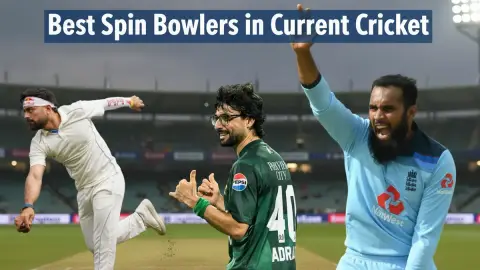
Best Spin Bowlers in Current Cricket: Top Active Spinners Ranked
The best active spin bowlers in cricket right now, ranked across Tests and white-ball — from Rashid Khan's two-format No. 1 to Nathan Lyon's 560-plus Test wickets.
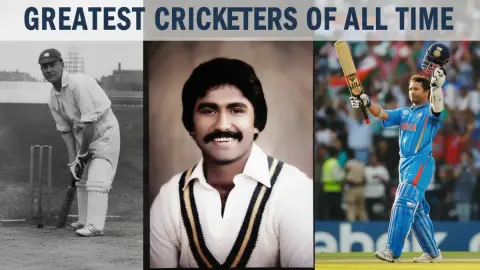
Greatest Cricketers of All Time: The Full Ranked List
Don Bradman's 99.94 average tops our ranked list of the 14 greatest cricketers ever, from Tendulkar and Sobers to Warne, Murali and Kohli, with the stats behind each.
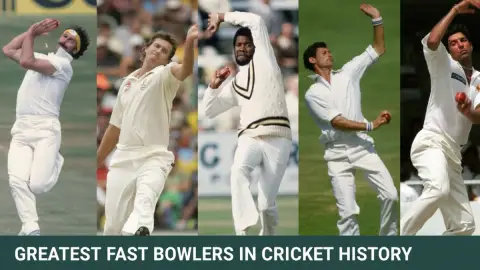
Greatest Fast Bowlers in Cricket History, Ranked
The 12 greatest fast bowlers in cricket history, ranked by Test average, strike rate, and longevity: Marshall, Akram, McGrath, Ambrose, Steyn, and more.

Most Successful Cricket Teams in History: The All-Time Rankings
Every major cricket nation ranked by ICC titles: Australia's 10 trophies, the West Indies dynasty, India's seven, and South Africa's 2025 WTC breakthrough.
Best Cricket Coaches Ever: 12 Greatest Ranked (2026)
John Buchanan leads our best cricket coaches ranking. See the all-time top 12 plus the 2026 cases for Gautam Gambhir, Andrew McDonald and Gary Kirsten.
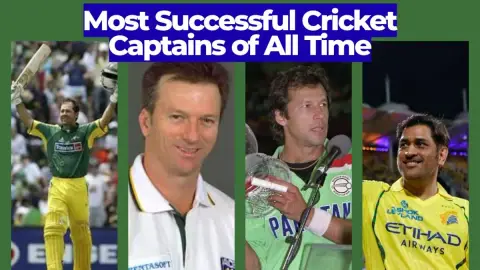
Most Successful Cricket Captains of All Time
The 12 most successful cricket captains ever, ranked by ICC trophies won and win records — from MS Dhoni's white-ball treble to Graeme Smith's Test mark.