
Best Soccer Socks: What to Look for and Top Options
On this page7
Ask most players what they’d change about their kit and socks won’t come up. Ask a physio how many blisters and shin guard complaints trace back to a bad pair, and you’ll get a different answer. Football socks do real work: they hold equipment in place, manage moisture for ninety minutes, and stop friction before it becomes a problem.
Why Socks Matter More Than Players Realise
A sock that’s too loose lets the shin guard slide down mid-sprint. One that’s too thin bunches up inside the boot and rubs a blister into your heel by halftime. None of this shows up on a stat sheet, but it changes how a match feels for the person wearing them.
Key Features to Look For
| Feature | Why It Matters |
|---|---|
| Material blend | Polyester/nylon/elastane wicks moisture and retains shape; avoid cotton |
| Cushioning zones | Padding at heel and forefoot reduces impact and blister risk |
| Grip strips or grip sole | Prevents the foot sliding inside the boot |
| Over-the-calf length | Required for match play; must cover shin guards |
| Compression fit | Light compression reduces fatigue and keeps the sock in place |
| Seamless toe | Eliminates rubbing that can cause blisters on long matches |
Match Socks vs Training Socks
Match-grade socks and training socks serve different purposes:
Match socks are usually thinner, designed to fit precisely inside a match boot, and prioritise lightweight feel and a clean look for team uniformity.
Training socks can be thicker and more heavily cushioned, designed for repeated daily use and less focused on appearance.
The Rise of Grip Socks
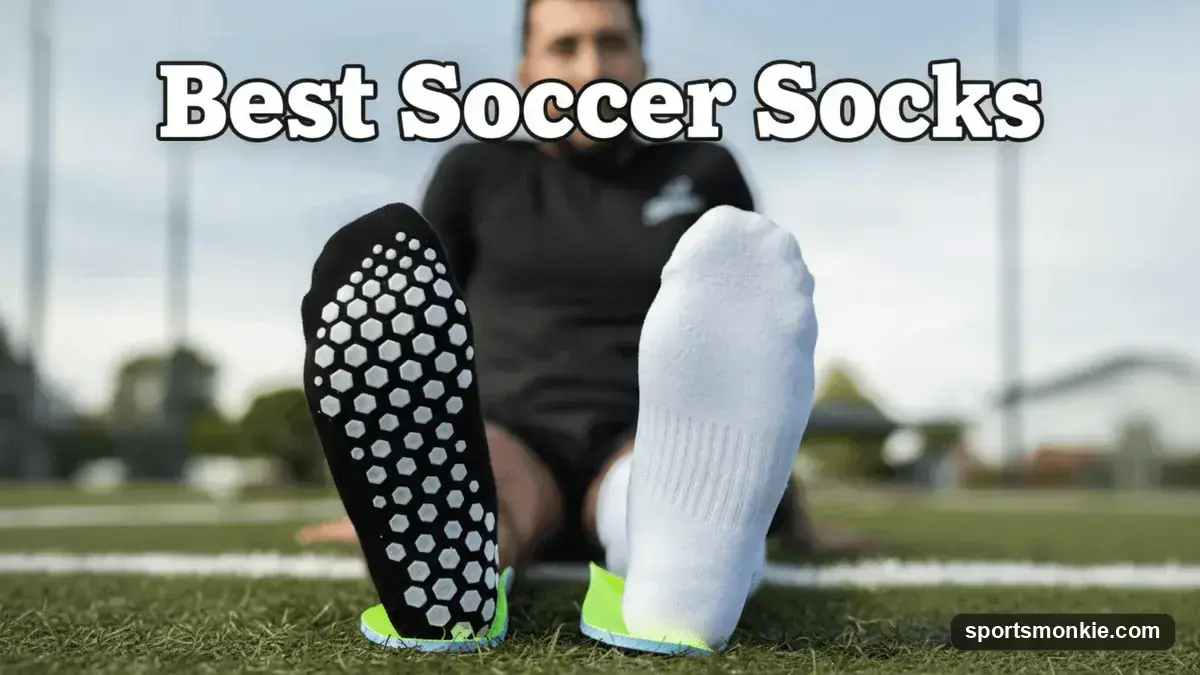
The biggest shift in football sock design over the past several years has been the grip sock: a shorter sock, usually ankle or calf length, with rubber or silicone nodules on the foot bed. They stop the foot sliding inside the boot during a sharp cut or a sudden stop.
Since grip socks aren’t team-coloured, many players cut the foot off their official club socks and wear that over a grip sock underneath. From the ankle up it looks like standard club kit; underneath, the grip does its job. This setup is now common even in the professional game.
What to Look For by Playing Level
| Level | Priority |
|---|---|
| Recreational/casual | Comfort, durability, value |
| Youth players | Secure grip, correct length, easy to launder |
| Club/semi-professional | Grip socks compatibility, lightweight, moisture management |
| Performance/elite | Compression, minimal seam interference, in-boot feel |
Sizing and Fit
Football socks sizing follows shoe size rather than height. A sock that is too large will bunch at the ankle or inside the boot; one that is too small will cut circulation and create discomfort at the calf. Most manufacturers offer size guides mapped to standard shoe sizes, so check these before buying.
The sock should sit comfortably at the top of the calf, just below the knee, with no slipping during movement. Over-the-knee socks are not standard for adult football and may get in the way of free knee movement.
Caring for Football Socks
- Wash at low to medium temperatures. High heat degrades elastane and causes shrinkage
- Avoid tumble drying where possible. Line dry to preserve elasticity
- Turn inside out before washing to protect the outer surface
- Do not bleach. It weakens fibres and fades colour faster
Frequently asked questions
What are grip socks in football?+
Grip socks have rubber or silicone nodules on the sole that reduce slipping inside the boot. Many professional players now cut the feet off their club-issued socks and wear grip socks underneath to combine club colours with better in-boot traction.
Should soccer socks go over or under shin guards?+
Soccer socks are worn over shin guards in all organised match play. The sock holds the shin guard in place against the leg. Some players use a separate sleeve or tape underneath for extra security, then pull the standard sock over the top.
What material is best for football socks?+
A blend of polyester and nylon with some elastane is the standard for performance football socks. This combination is lightweight, moisture-wicking, and durable. Avoid 100% cotton, which retains sweat and loses its shape during a match.
Sources
Play & tools
Free browser games and tools — no account, no download.
- Play 38-0 — Sign a 4-4-2 of all-time football legends and chase a perfect 38-0 league season — perfect, not just unbeaten.
- Explore all our games →
Related football guides
View all →
How Should Soccer Cleats Fit? The Complete Sizing Guide
Soccer cleats should fit snugly with about a thumb's width at the toe. A proper fit prevents blisters, improves ball touch, and supports ankle stability.
Carrick Benches Fernandes for Bournemouth and Calls It Pure Football
Michael Carrick dropped Manchester United captain Bruno Fernandes for Sunday's Bournemouth game days after Fernandes criticised his tactics following the 4-1 loss at Como, insisting the call was pure football.

Mourinho Fires Back at Fermin Ahead of El Clasico: We Are Tired of Other Things
Jose Mourinho answered Fermin Lopez's complaint about Real Madrid's refereeing talk with a pointed reply at his pre-Clasico press conference, as Barcelona chase a nine-point lead.

Palmer Sent Off for the First Time as Spurs End 36-Year Wait for a Win at Chelsea
Cole Palmer was sent off for the first time in his senior career as Tottenham beat Chelsea 2-0 at Stamford Bridge, their first win there since 2018.
Vincent Kompany Out for Weeks After Bayern Training-Ground Collapse
Bayern Munich say Vincent Kompany is stable but out for weeks after collapsing at training on Friday, with his coaching staff taking charge from Sunday.
FA Cup first-round TV picks: BBC bets both games on non-league minnows
The FA Cup first-round TV picks are out: eight ties live on TNT Sports, with the BBC showing Altrincham v Notts County and Cray Wanderers v Stockport.