
Best NFL Fullbacks of All Time, Ranked
On this page11
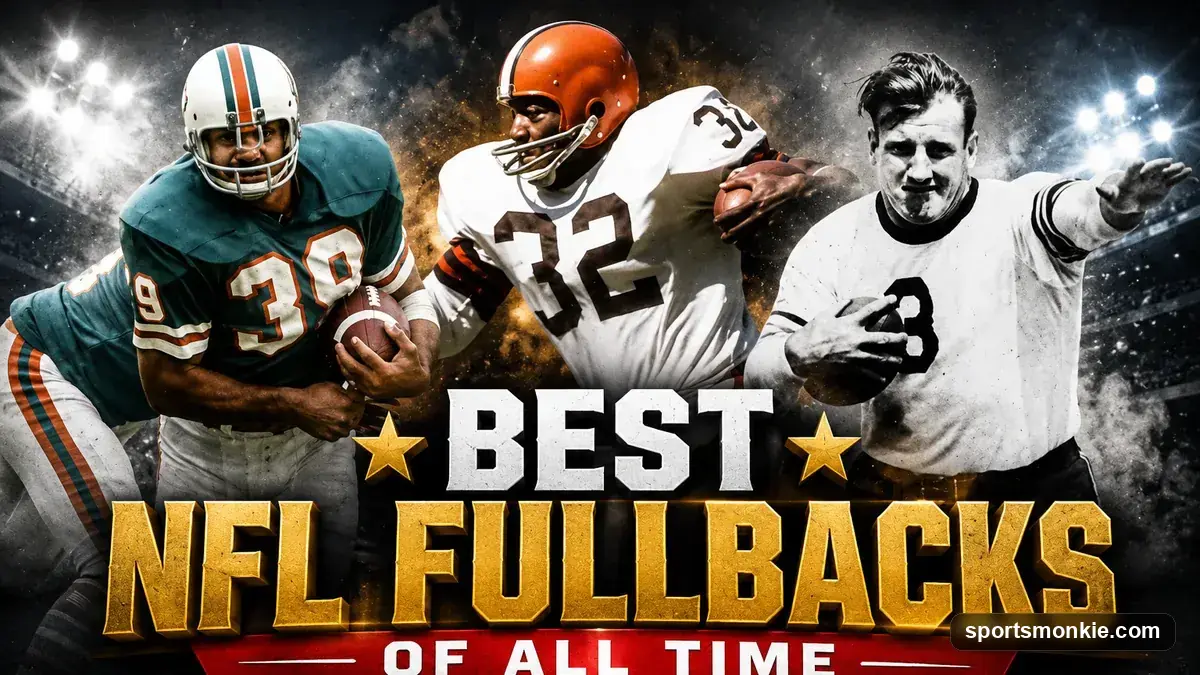
Ranked by how completely a player mastered the true fullback job — lead blocking first, then pass protection, short-yardage rushing, and receiving — with championships and accolades used to break ties. Backs listed at fullback who really functioned as feature runners are weighted down for the blocking their teams didn't ask of them.
The greatest NFL fullbacks at a glance
| Rank | Fullback | Strongest legacy |
|---|---|---|
| 1 | Lorenzo Neal | Lead-blocking gold standard |
| 2 | Larry Csonka | Perfect-season power runner |
| 3 | John Riggins | Super Bowl short-yardage icon |
| 4 | Kyle Juszczyk | Record ten Pro Bowl selections |
| 5 | Mike Alstott | Modern power-running archetype |
| 6 | Tom Rathman | Championship-era blocking and receiving |
- Lead-block gold standard
Lorenzo Neal
Neal's entire value was the part of the position everyone else on this list did part-time: clearing the first defender so the tailback never had to. He blocked for a 1,000-yard rusher in 11 straight seasons from 1997 to 2007, doing it for five different franchises and five different backs — Eddie George, Corey Dillon, Warrick Dunn, Michael Turner, and LaDainian Tomlinson.
He ranks above the Hall of Fame runners below him precisely because he wasn't one. When Tomlinson set the single-season record with 28 rushing touchdowns in 2006, Neal was the man hitting the linebacker first. A four-time Pro Bowler and three-time All-Pro who carried the ball only when the situation demanded it, he is the reference point for a pure lead blocker at the running back position.
Career: 1993–2008 · Accolades: 4× Pro Bowl, 3× All-Pro · Defining feat: 11 straight seasons blocking for a 1,000-yd back · Peak: sprang LaDainian Tomlinson's 28-TD 2006
- Power-run archetype
Larry Csonka
Csonka was the engine of the only NFL team to finish a season unbeaten. He ran for 1,117 yards during Miami's 17-0 campaign in 1972 and cleared 1,000 in all three of the Dolphins' Super Bowl years, finishing with 8,081 rushing yards and 64 touchdowns before his enshrinement in the Pro Football Hall of Fame in 1987.
He edges John Riggins for the second spot on two grounds: two rings to Riggins' one, and a role closer to a true fullback inside Miami's ground-first attack, where he shared the backfield rather than carrying a whole offense. Riggins owns the flashier individual line, which is why the gap between them is thin.
Career: 1968–1979 · Titles: back-to-back champion (Super Bowls VII & VIII) · Line: 8,081 rush yds, 64 TD · Honor: Hall of Fame, 1987
- Short-yardage hammer
John Riggins
Riggins turned goal-line and third-and-short into a near-certainty, retiring with 11,352 rushing yards and 104 rushing touchdowns. His signature night was Super Bowl XVII, where he took 38 carries for 166 yards and broke a 43-yard fourth-quarter touchdown run to beat Miami and win MVP.
He sits just behind Csonka despite the bigger career numbers because he was used more as a bell-cow back than a lead blocker, doing less of the dirty work the position is built on. The size, the short-yardage certainty, and the 1992 Hall of Fame induction still make him one of the era's defining big backs.
Career: 1971–1985 · Line: 11,352 rush yds, 104 TD · Signature: Super Bowl XVII MVP (166 yds) · Honor: Hall of Fame, 1992
- Modern hybrid, record holder
Kyle Juszczyk
Juszczyk is the reason the position isn't extinct. He earned 10 consecutive Pro Bowl selections from 2016 through 2025 — the most ever by a fullback — plus first-team All-Pro honors in 2023 and 2025, and he led all NFL fullbacks in receiving yards in 2025.
He ranks above the classic weapons below him because he redefined the job rather than excelling within its old limits: San Francisco lines him up in the backfield, the slot, and as an in-line tight end on the same drive. Released and then re-signed by the 49ers in March 2025 on a two-year deal, he entered 2026 still the face of the position.
Career: 2013–present · Teams: Ravens, 49ers · Record: 10 Pro Bowls (most by a FB) · Edge: catches passes from anywhere in the formation
- The A-Train
Mike Alstott
Alstott was a fullback defenses had to game-plan for, not just account for. A six-time Pro Bowler, he could truck a linebacker in short yardage on one snap and catch a swing pass for a first down on the next, and he started at fullback for Tampa Bay's Super Bowl XXXVII win over Oakland.
He lands below the record-setting Juszczyk because his value leaned on carrying and catching more than the lead blocking that defines the pure role, but few fullbacks have ever been a bigger fan favorite or a more genuine scoring threat inside the 5-yard line.
Career: 1996–2007 · Team: Tampa Bay Buccaneers · Accolades: 6× Pro Bowl · Peak: Super Bowl XXXVII starter and short-yardage weapon
- Dynasty engine
Tom Rathman
Rathman did the invisible work behind two Super Bowl offenses, blocking and catching for San Francisco's dynasty backfields. He sprang Roger Craig on outside runs and stayed home to protect Joe Montana and Steve Young, the kind of dual assignment most fullbacks handle in only one direction.
He rounds out the list because his production never showed up in headline stats, but coaches valued the profile enough that he built a long second career teaching it — spending years as an NFL running backs coach after he retired.
Career: 1986–1994 · Team: San Francisco 49ers · Role: blocked and received for the 49ers dynasty · After: longtime NFL RB coach
Reader interaction
Build your ranking
Drag the names into the order you think is right — or use the arrows — then submit to see how your list compares with everyone else's.
- Lorenzo Neal
- Larry Csonka
- John Riggins
- Kyle Juszczyk
- Mike Alstott
- Tom Rathman
Audience ranking
How everyone ranked them
Built from reader rankings using position-based points.
The ranked cards above are the list. The sections below explain how the order was built and give the context that makes a fullback’s value legible even though it rarely shows up in a box score.
How we ranked these fullbacks
We weighed the true fullback job most heavily: lead blocking, pass protection, short-yardage rushing, and receiving, roughly in that order. A player who dominated the blocking and dirty-work end of the role scored higher than one with gaudier rushing totals but a lighter blocking load, which is why a non-Hall-of-Famer like Lorenzo Neal sits ahead of two enshrined runners. Championships and All-Pro recognition broke ties where the on-field profiles were close.
That framing intentionally penalizes backs who were fullbacks in name only. Jim Brown and Franco Harris carried a fullback label but ran the ball like elite tailbacks, so they belong on a list of great runners, not great fullbacks.
What the fullback actually does
The role is defined by tasks other positions don’t handle as well:
- Lead blocking — attacking linebackers and safeties in space to spring the tailback.
- Pass protection — picking up blitzing linebackers to keep the quarterback clean.
- Receiving threat — catching swing passes and short routes out of the backfield.
- Short-yardage rushing — driving through the pile when a single yard is all that’s needed, often on a play as blunt as a QB sneak run by a bigger body.
- Special teams — covering kicks and blocking on returns to justify a roster spot.
A fullback who does one of these well is a specialist. The players ranked above did most or all of them, which is exactly why coaches kept finding room for them.
How the position changed
Through the 1960s and 1970s, a fullback led nearly every running play out of the I-formation. Once teams shifted to shotgun snaps and spread sets, that lead-blocking assignment became optional rather than standard, and rosters stopped carrying a player whose only job was clearing a lane. Tight ends and H-backs absorbed most of what fullbacks used to do.
Teams that still run outside zone or gap-scheme power tend to keep one anyway. As long as a coach values a dedicated lead blocker who can also catch and cover kicks, the fullback survives as football’s rarest, most stubbornly useful role.
Fullback vs. the roles that replaced it
Understanding why the position shrank is easier when you see what each nearby role now covers:
| Role | Lines up | Primary job | Why it took fullback snaps |
|---|---|---|---|
| Fullback | Backfield, ahead of the RB | Lead block, short-yardage, protection | The classic role being displaced |
| H-back | Off the line, flexed | Move blocker + receiver | Offers the same blocking with more passing flexibility |
| Tight end | On or off the line | Block and receive | Bigger passing threat from a similar body type |
| Halfback / tailback | Backfield, deep | Carry the ball | Takes the carries fullbacks once shared in two-back sets |
Related backfield terms
Fullback overlaps with several blocking and backfield concepts. An H-back is a hybrid tight end/fullback who lines up off the line of scrimmage; a lead blocker is any back — usually the fullback — who runs ahead of the ball-carrier. In short-yardage and goal-line packages, the fullback still shares the backfield with the halfback or tailback in a two-back set.
If you want to use those role distinctions instead of just reading about them, Flawless Six makes you balance skill positions, defense, and a coach in a six-pick roster. For a daily test of position groups, teams, and football vocabulary, try NFL Connections.
Frequently asked questions
Who is considered the greatest NFL fullback of all time?+
It depends on how you define the position. Jim Brown and Franco Harris were listed at fullback but functioned as feature runners and rank among the greatest ball-carriers ever. Among true lead-blocking fullbacks, Lorenzo Neal is the most cited for blocking a 1,000-yard back in 11 straight seasons, while Larry Csonka and John Riggins are the Hall of Fame standard-bearers of the power-run era.
Is the fullback position dying in the NFL?+
The traditional role has declined sharply as spread and shotgun offenses took over, and many teams no longer roster a dedicated fullback, using tight ends or H-backs instead. As of 2026 only a handful of clubs keep a true fullback on the depth chart. The Pro Bowl still reserves a roster spot for the position, which keeps a competitive incentive alive even as demand shrinks.
Why is a pure lead blocker like Lorenzo Neal ranked above Hall of Famers?+
Because this list ranks fullback play, not overall rushing careers. Csonka and Riggins are in the Hall of Fame largely for what they did as ball-carriers, a job closer to running back. Neal mastered the actual fullback assignment — blocking, pass protection, and short-yardage grunt work — more completely than anyone, blocking for a 1,000-yard rusher 11 years running across five franchises.
How many Pro Bowls does Kyle Juszczyk have?+
Juszczyk earned 10 consecutive Pro Bowl selections from 2016 through 2025, the most ever by a fullback. He added first-team All-Pro honors in 2023 and 2025 and led all NFL fullbacks in receiving yards in 2025. The 49ers released him briefly in March 2025 before re-signing him to a two-year deal, so he remained the position's most decorated active player heading into 2026.
What actually separates a great fullback from an average one?+
Elite fullbacks pair devastating lead blocking with enough receiving and short-yardage threat to keep defenses honest. The defining traits are pass protection against blitzing linebackers and physicality at the point of attack, since a fullback who can be ignored in the passing game is easy to defend. The best also cover kicks on special teams, which helps justify a roster spot in a league that carries few of them.
Are there any pure fullbacks in the Pro Football Hall of Fame?+
Several Hall of Famers played fullback, including Marion Motley, Bronko Nagurski, John Henry Johnson, Larry Csonka, and John Riggins, but most were used as primary runners rather than lead blockers. No modern blocking-first specialist such as Lorenzo Neal has been enshrined yet, which reflects how hard it is for a role that produces almost no counting stats to gain Hall of Fame recognition.
Sources
Play & tools
Free browser games and tools — no account, no download.
- Play 17-0 — Draft nine and chase a flawless NFL regular season — the perfect 17-0 run, no playoffs.
- Play 20-0 — Draft nine and chase a perfect NFL season — regular season and playoffs, undefeated.
- Play 16-0 — Draft nine and chase a perfect 16-0 — the classic 16-game NFL regular season, no playoffs.
- Play Flawless Six — Draft five players and a head coach, then chase a perfect NFL season with the right chemistry.
- Play Guess the NFL Player — A new mystery NFL player every day. Eight guesses, with a clue on each — plus free unlimited mode.
- Play NFL Wordle — A Wordle for football — guess the daily NFL player in eight tries, with green-amber-grey feedback on every clue.
- Play NFL Connections — Sort sixteen football tiles into four hidden groups of four. A new daily puzzle, four mistakes allowed, plus unlimited mode.
- Explore all our games →
- Open the schedule simulator — Pick every 2026 NFL game and watch the standings and playoff seeds update live.
- Open the squares generator — Generate a randomized, printable Super Bowl squares grid for your party — free, no sign-up.
- Open the trade calculator — Weigh any fantasy football trade instantly — clear winner and value gap.
- Run the NFL predictor — Simulate the NFL bracket and see who your picks send to the Super Bowl.
- Open the passer rating calculator — Calculate the official NFL passer rating (0–158.3) from any passing line, with the formula shown.
- Explore all our free sports tools →
Related nfl guides
View all →
Best NFL Nose Tackles of All Time
The best NFL nose tackles eat double teams, hold the point of attack, and free up linebackers. Here is our ranking of the greatest nose tackles in NFL history.
Best NFL Long Snappers of All Time: The Invisible Specialists
The best NFL long snappers go unnoticed for a decade, then one bad snap ends a season. Here are the greatest ever ranked, with the records that separate them.
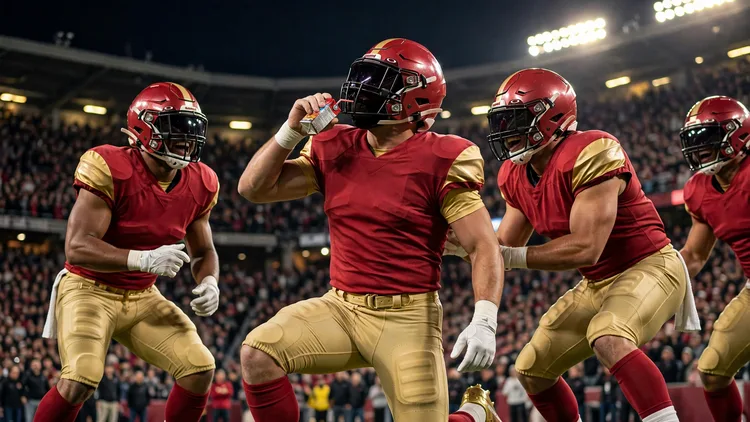
NFL Rescinds Juszczyk's $14,926 Juice-Box Fine and Allows Drinking Celebrations
The NFL has rescinded Kyle Juszczyk's $14,926 fine, accepted his juice-box explanation, and said drinking celebrations will no longer be disciplined.
The Most Valuable NFL Teams
The Dallas Cowboys are the most valuable NFL team at $13 billion (Forbes 2025), the world's richest sports franchise. See the full top-10 value leaderboard.
The Oldest NFL Players in History
George Blanda played until age 48, the oldest in NFL history. The full ranked leaderboard of the league's longest-lasting players, from Blanda to Brady.
Highest-Paid NFL Players: The Full 2026 Rankings by AAV
Patrick Mahomes' record $64M-a-year deal tops the highest-paid NFL players of 2026, ahead of Dak Prescott, Joe Burrow and Josh Allen, ranked by average salary.