
Best Cricket Bats: What to Look for and Top Brands
On this page6
Buy the wrong bat and you’ll feel it every innings: a sluggish pick-up, mistimed drives, edges that don’t carry. Get the willow grade, weight, and profile right, and the bat almost disappears in your hands. Here’s what separates a bat that works for you from one that just looks the part on a shop shelf.
English Willow vs Kashmir Willow
The first decision when buying a bat is the willow grade:
| Type | Best for | Key trait |
|---|---|---|
| English Willow | Club, amateur, professional players | Lighter, more responsive, better performance |
| Kashmir Willow | Beginners, junior players, practice | Heavier, more durable, lower cost |
If you’re playing regular club cricket or above, English Willow is the standard. It comes from trees grown specifically for bat-making in England, and the lighter, more open grain gives you more power for less swing weight.
English Willow grades
English Willow bats are graded, typically from Grade 1 (top) down to Grade 4 or 5. Higher grades have:
- Straighter, tighter grains
- Fewer or no blemishes on the face
- Better pick-up and ping out of the middle
Grade 1+ or Grade 1 bats are what professionals use, and the price reflects that. Grade 2 and 3 bats are still excellent for serious club cricketers, and the difference is often cosmetic rather than performance-related.
Key bat specs to consider
| Spec | What it means |
|---|---|
| Weight | 2 lb 6 oz – 2 lb 12 oz is the common adult range |
| Profile | Low/mid/high swell changes where the sweet spot sits |
| Edge thickness | Thicker edges improve off-edge shots; more common in modern bats |
| Spine height | Affects pick-up feel; higher spine suits aggressive batters |
| Handle | Oval handles give more control; round handles suit personal preference |
Weight on the label rarely tells the whole story. Two bats stamped 2 lb 8 oz can feel completely different depending on where the wood is concentrated, which is why pick-up matters more than the number itself. Pick up a few bats before buying if you can.
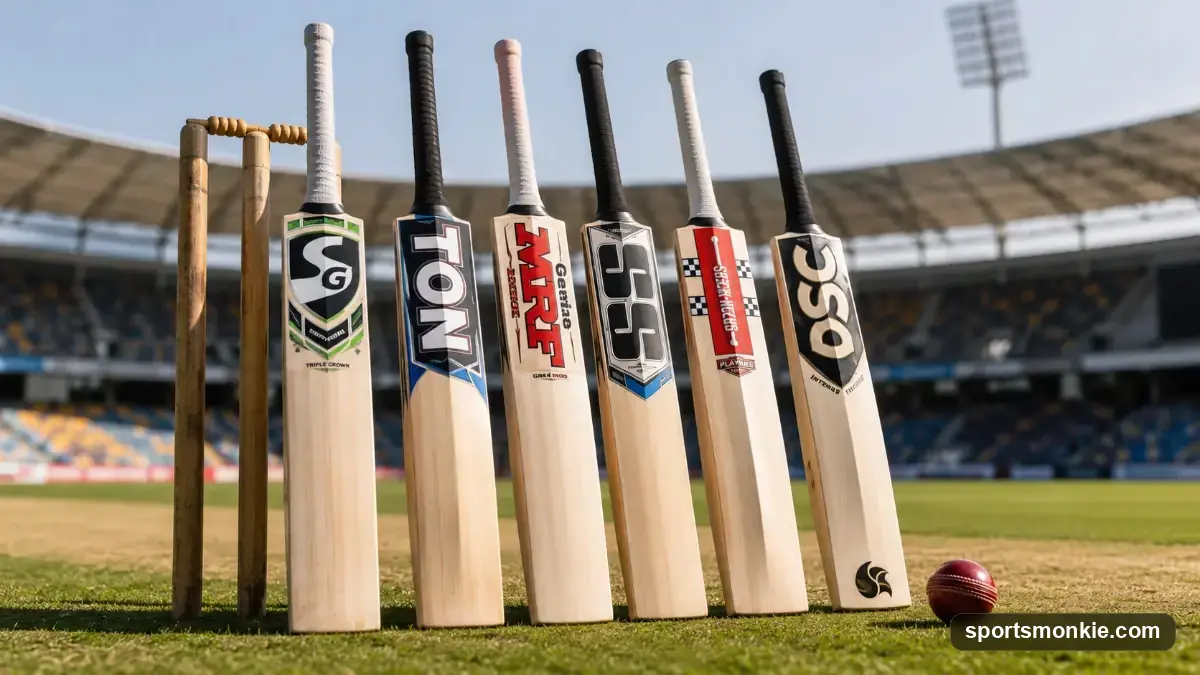
Top cricket bat brands
These names show up consistently at club and international level:
- Gray-Nicolls: one of the oldest bat manufacturers in the game, known for balanced pick-up and consistent quality control.
- Kookaburra: supplies the match ball for most international cricket, and its bats sell well across every skill level.
- SS Ton / Sunridges: used by a number of international players, strong value at multiple price points.
- Gunn & Moore (GM): built a reputation on craftsmanship, especially popular in England and county cricket.
- Dukes: better known for its match balls, but its bat range has a following at professional level too.
- New Balance: a newer entrant to cricket, gaining ground with modern bat profiles.
- MRF / Thrax: used by some of the world’s top batters, sits at the premium end of the market.
What professionals use
International batters often have sponsorship deals tying them to a brand, but the specifications they favour tend to be consistent: top-grade English Willow, pronounced edges, a high spine, and a weight they can swing freely through the ball. Many pick bats individually rather than by brand name alone, checking grain count and feel before deciding.
Maintenance tips
- Knock in your new bat gradually before match use
- Oil the face with raw linseed oil a few times a season (avoid the splice)
- Store in a cool, dry place, away from extreme heat or moisture
- Use a toe guard to prevent the base from cracking
If you found this useful, our breakdown of Greatest Test Matches Ever Played in Cricket covers related ground.
For a closer look at a related topic, see Hardik Pandya Net Worth.
It is worth pairing this with our guide to How Much Do Professional Cricketers Make?.
Frequently asked questions
What is the best wood for a cricket bat?+
English Willow is regarded as the best wood for cricket bats at professional and serious amateur level, offering an ideal blend of strength and flexibility. Kashmir Willow is a more affordable alternative suited to beginners.
What weight cricket bat should I use?+
Most adult batters use bats in the range of 2 lb 6 oz to 2 lb 12 oz. Heavier bats can hit harder but demand more strength; lighter bats offer more manoeuvrability and are better for quick formats.
Does a cricket bat need to be knocked in?+
Yes. A new English Willow bat should be knocked in — gradually hardening the face with a mallet or old ball — before use in a match. This prevents cracking and extends the bat's life significantly.
What are the best cricket bat brands?+
Leading cricket bat brands include Gray-Nicolls, Gunn & Moore, Kookaburra, SG, SS, MRF, and New Balance. Many international players use bats from these makers, and the best choice depends on personal feel, budget, and the profile that suits your batting style.
What is the difference between English and Kashmir willow?+
English willow is lighter, softer, and offers a better rebound and 'ping', making it the choice for serious and professional players, but it is more expensive and needs knocking in. Kashmir willow is denser, heavier, cheaper, and lower-maintenance, making it ideal for beginners and casual play.
How long does a cricket bat last?+
With proper care — knocking in, oiling where required, and avoiding damp storage — a good English willow bat can last one or more full seasons of regular use. Heavy use, mistimed shots, and poor maintenance can shorten its life, while occasional players may keep a bat for years.
How do I choose the right size cricket bat?+
Bat size should match the player's height and reach. Junior sizes run from around size 1 up to Harrow, with full adult (short handle) bats for taller teenagers and adults. Standing the bat beside you, the top should reach roughly the top of your thigh for a comfortable fit.
Sources
Play & tools
Free browser games and tools — no account, no download.
- Play today's Sports Connections — Today's Sports Connections — daily hints, answers, and play the grid.
- Play Guess the NFL Player — A new mystery NFL player every day. Eight guesses, with a clue on each — plus free unlimited mode.
- Explore all our games →
Related cricket guides
View all →
What Is a Cricket Bat Called? Names, Parts, and Rules
A cricket bat is simply called a cricket bat, but its parts have specific names and it must meet strict ICC rules on size, weight and material. Full guide.
Cricket Ball Size and Weight: Full Comparison by Format
A cricket ball weighs 155.9-163 g with a circumference of 22.4-22.9 cm in men's cricket. Women's and youth balls are slightly smaller and lighter.
Cricket Bat Weight: What Weight Do Cricketers Use?
Most professional cricketers use bats weighing 2 lb 7 oz to 2 lb 12 oz (about 1.1-1.25 kg). The Laws cap blade size but set no weight limit at all.
Fastest Century in Cricket (Every Format)
AB de Villiers holds the fastest ODI century at 31 balls. The fastest hundreds in T20, ODI and Test cricket explained, with the record-holders for each format.
Highest Score in ODI Cricket (Individual and Team)
Rohit Sharma holds the highest individual ODI score with 264. England's 498/4 is the record team total. Full lists of both, explained.
Most Centuries in International Cricket
Sachin Tendulkar has the most international centuries with 100, across Tests and ODIs. The all-time century-makers ranked, with Virat Kohli closing in.