
Appealing in Cricket: What It Is and How It Works
On this page8
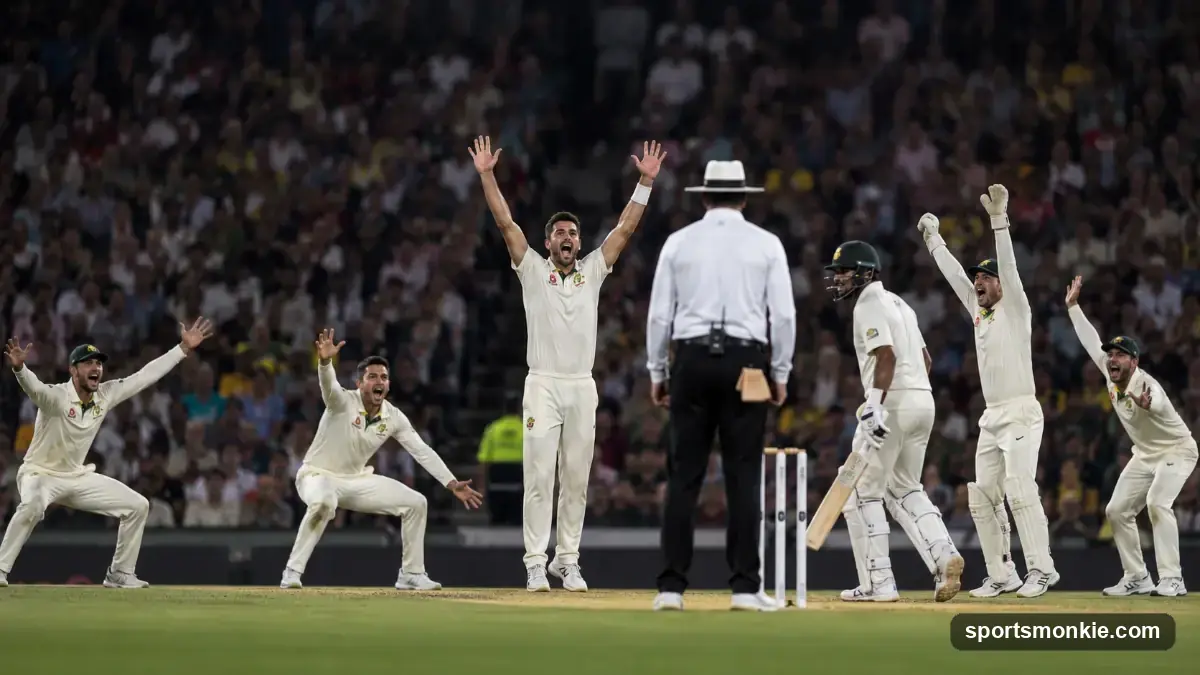
Picture a ball that clips the top of off stump and the bails don’t fall, but every fielder freezes, certain the batter should walk. If nobody shouts, nobody’s out. That’s the strange logic built into Law 31: a dismissal only counts once the fielding side formally asks for it. The batter can be plumb in front, dead to rights, and the umpire’s hands are tied without a request.
What the law says
Law 31 states that the fielding side must appeal before an umpire gives a decision of out. That appeal can come from any fielder, including the bowler and the wicketkeeper. It doesn’t need to be elaborate; any verbal appeal at the right moment counts.
”Howzat!” — the traditional call
The most recognizable phrase in the sport is “How’s That!”, commonly rendered phonetically as Howzat. It’s directed at the umpire and asks for a ruling on a potential dismissal. Other variations, like “Out!” or “How was that?”, are equally valid under the Laws.
When an appeal must happen
An appeal has to be made before the next ball is delivered. Once the bowler starts the run-up for the following delivery, the window for appealing the previous one has closed.
Which umpire handles which appeal?
| Appeal type | Primary umpire |
|---|---|
| Bowled | Square leg or bowler’s end umpire |
| Caught | Umpire closest to the action |
| LBW | Bowler’s end umpire |
| Run out | Umpire at the end where the wicket was broken |
| Stumped | Bowler’s end umpire |
In professional cricket, the on-field umpire can also refer a decision to the Third Umpire (TV umpire), who reviews it using ball-tracking, Hawk-Eye, or ultra-edge technology.
The Decision Review System (DRS)
DRS added a formal check on the appeal process in international cricket. If a team disagrees with an on-field decision, or the lack of one, it can request a review within a set time window. Each team gets a limited number of reviews per innings: successful reviews are retained, unsuccessful ones are lost.
Withdrawing an appeal
A fielding captain can withdraw an appeal before the next ball is bowled. It doesn’t happen often, but when it does, it’s usually because a batter is clearly injured, the fielding side suspects a misfield played a part in the wicket, or simply as a show of fair play.
Spirit of the game
The Laws and the Spirit of Cricket ask fielders to appeal only when they genuinely believe a dismissal occurred, not as a routine tactic to pressure the umpire. Excessive or frivolous appealing can draw a rebuke from the umpire or match referee under the Code of Conduct.
What happens after the appeal
- Umpire signals out: the batter leaves the field; the next batter comes in.
- Umpire signals not out: play continues from where the ball ended up.
- Umpire is unsure: they may consult the other on-field umpire or refer to the TV umpire under DRS.
We dig into a related angle in Cricket Bat Weight.
For a closer look at a related topic, see Dream11 Captain & Vice-Captain.
This connects to another question fans ask a lot: Duck in Cricket.
Frequently asked questions
What happens if the fielding side doesn't appeal in cricket?+
If the fielding side does not appeal, the umpire cannot give the batter out, regardless of how clear the dismissal appears. An appeal is mandatory before any decision is made.
What is the phrase used when appealing in cricket?+
The traditional appeal is 'How's That!' (often written Howzat). Any verbal appeal counts — the precise wording is not specified in the Laws.
Can an appeal be withdrawn in cricket?+
Yes. The fielding captain can withdraw an appeal at any time before the next ball is bowled. This is relatively rare but is considered a gesture of sportsmanship.
Why do fielders appeal in cricket?+
Fielders appeal because, under the Laws, an umpire cannot give a batter out unless the fielding side asks. Even for an obvious dismissal like a clean bowled, an appeal formally requests the umpire's decision, so appealing is a required part of how wickets are given.
Is excessive appealing against the rules?+
Persistent, aggressive appealing designed to pressure the umpire is considered poor sportsmanship and can breach the sport's code of conduct. Umpires and match referees can penalise players for excessive or intimidatory appealing, though a single genuine appeal is a normal part of the game.
Can a batter be given out on appeal after replays?+
In matches with technology, a not-out or out decision can be reviewed through the Decision Review System (DRS), but only after an appeal and a review request. The third umpire then uses replays and tracking to confirm or overturn the on-field call.
What is the appeal for a caught dismissal?+
When fielders believe the batter has edged the ball to a fielder or wicketkeeper, they appeal, often calling 'Howzat' or simply turning to the umpire. If the umpire is satisfied the ball was caught cleanly after touching the bat, the batter is given out caught.
Sources
Play & tools
Free browser games and tools — no account, no download.
- Play today's Sports Connections — Today's Sports Connections — daily hints, answers, and play the grid.
- Play Guess the NFL Player — A new mystery NFL player every day. Eight guesses, with a clue on each — plus free unlimited mode.
- Explore all our games →
Related cricket guides
View all →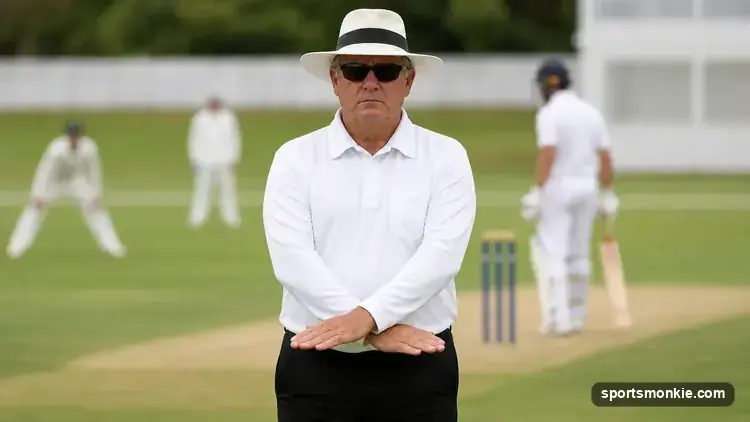
What Is a Dead Ball in Cricket? Rule and Common Situations
A dead ball is a delivery from which no runs score and no batter is out. Learn when the ball goes dead, who decides, and why it matters in a tight finish.
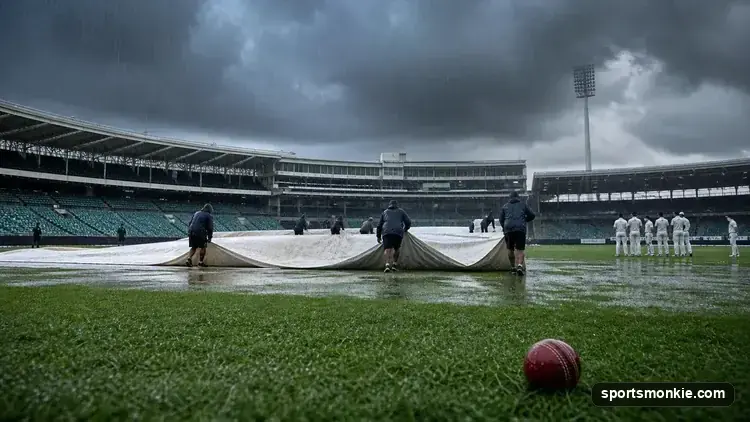
DLS Method in Cricket Explained: How Rain Targets Are Set
The Duckworth-Lewis-Stern (DLS) method resets targets in rain-hit limited-overs cricket using overs and wickets left. Here's the logic, with examples.
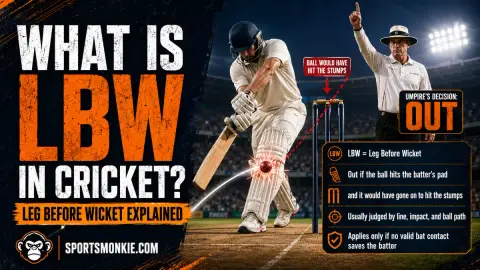
What Is LBW in Cricket? Leg Before Wicket Explained
LBW means the ball would have hit the stumps but struck the pad first. Here are the exact conditions umpires check and how DRS decides close calls.
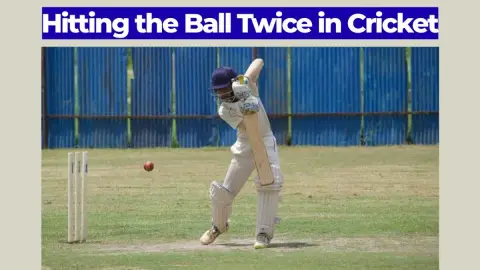
Hitting the Ball Twice in Cricket: Law 34 Explained
Law 34 lets a batter hit the ball twice only to defend the wicket. Do it for any other reason and you are out 'hit the ball twice'. Here is how the rule works.
15 Basic Rules of Cricket Every Fan Should Know
Cricket has a detailed rulebook, but these 15 core rules cover how the game is played, how batters are dismissed, and how runs are scored.
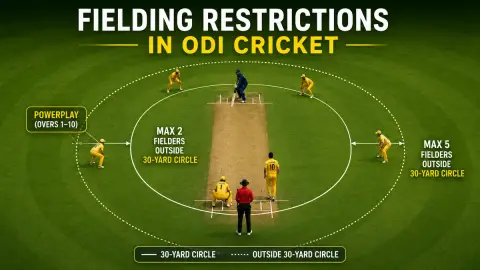
Fielding Restrictions in ODI Cricket: Powerplay Rules Explained
ODI cricket uses fielding restrictions called powerplays that limit the number of fielders outside the 30-yard circle. Here is exactly how they work.