
15 Basic Rules of Cricket Every Fan Should Know
On this page15
- 011. Two teams, 11 players each
- 022. The objective
- 033. An innings
- 044. How runs are scored
- 055. The wicket
- 066. The crease
- 077. Overs
- 088. The no-ball
- 099. The wide
- 1010. The 10 ways to be dismissed
- 1111. LBW in detail
- 1212. The fielding restrictions (powerplays)
- 1313. The follow-on
- 1414. Duckworth-Lewis-Stern (DLS) method
- 1515. Fair and unfair play
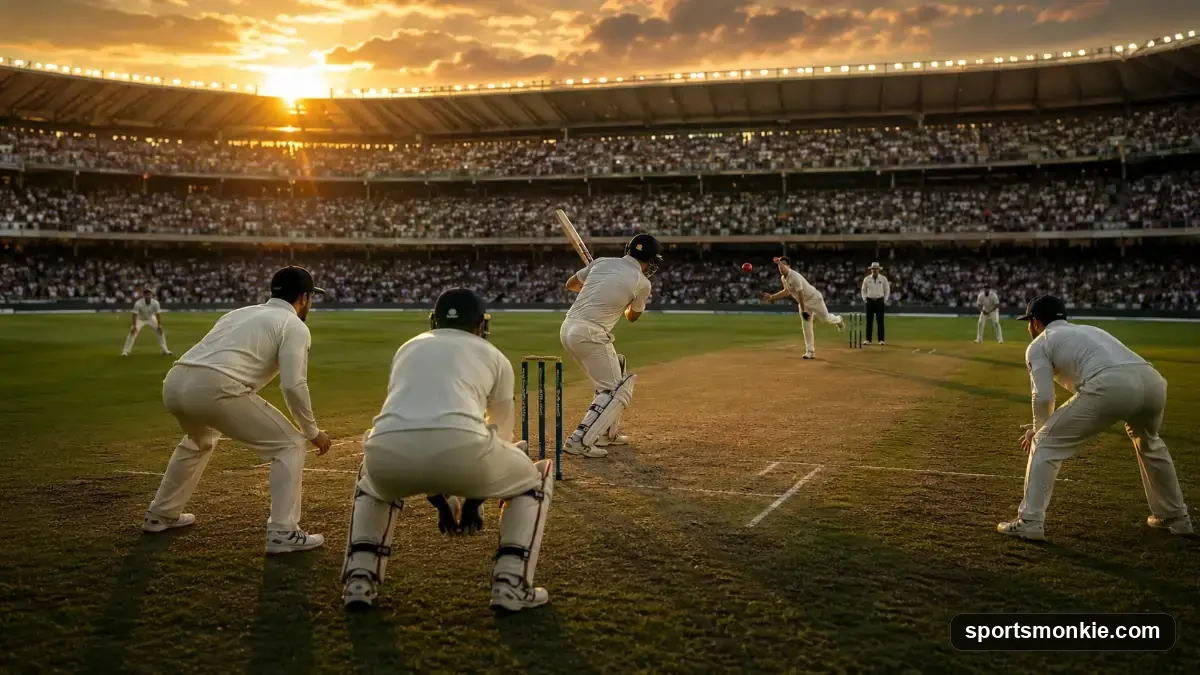
A new viewer dropped into a Test match could watch for twenty minutes and still not know why the fielders just erupted in celebration over a ball that missed the bat entirely. Cricket rewards patience with its rules the same way it rewards patience at the crease. Once the basics click, the appeals, the field placements, and the stoppages all start to make sense. Here are the 15 rules that get you there.
1. Two teams, 11 players each
Each side has 11 players. The toss decides which team bats or fields first.
2. The objective
The batting team scores as many runs as possible. The fielding team tries to dismiss all 10 batting wickets (one batter always has no partner left to bat with, which ends the innings).
3. An innings
Each team gets one innings (T20, ODI) or up to two innings (Test cricket). An innings ends when 10 wickets fall, the overs run out, or the captain declares.
4. How runs are scored
- Running between the wickets: 1 run per completed run
- Ball reaches the boundary after bouncing: 4 runs
- Ball clears the boundary without bouncing: 6 runs
- Extras (wides, no-balls, byes, leg-byes) also add to the total
5. The wicket
A wicket is three stumps with two bails balanced on top. Dislodging the bails dismisses the batter, unless they’re grounded behind the crease in time.
6. The crease
Batters need bat or body grounded behind the popping crease to be “in.” Crossing the crease at the wrong moment leads to run outs or stumpings.
7. Overs
An over is six legal deliveries bowled by one bowler from one end. A different bowler takes over from the opposite end after each over.
8. The no-ball
A no-ball gets called for a range of infractions: overstepping the crease, a waist-high full-toss, and others. The batting side gets one extra run, the delivery must be re-bowled, and the batter can’t be caught or bowled out off it.
9. The wide
A wide is a delivery the umpire judges too far from the batter to hit in a normal stance. One extra run is awarded and the delivery is re-bowled.
10. The 10 ways to be dismissed
| Dismissal | How it happens |
|---|---|
| Bowled | Ball hits and dislodges the stumps |
| Caught | Fielder catches ball before it bounces |
| LBW | Ball would have hit stumps but hits batter’s body first |
| Run out | Batter fails to reach crease before fielder breaks the wicket |
| Stumped | Wicketkeeper removes bails while batter is out of the crease |
| Hit wicket | Batter dislodges their own stumps |
| Obstructing the field | Batter deliberately blocks a fielder |
| Hit the ball twice | Batter deliberately strikes the ball a second time |
| Handled the ball | (Merged into obstructing the field) |
| Timed out | New batter takes too long to arrive at the crease |
11. LBW in detail
Leg Before Wicket causes more arguments than any other law in the book. The ball must not pitch outside leg stump, it must hit the batter’s body, and the umpire has to judge that it would have gone on to hit the stumps. If the impact is outside off stump, the batter can still be given out, but only if they offered no shot.
12. The fielding restrictions (powerplays)
In limited-overs cricket, fielding restrictions apply during powerplay overs, capping how many fielders can stand outside a set ring. This gives the batting side room to attack early in the innings.
13. The follow-on
In Test cricket, if the team batting second finishes well short of the first team’s total, the leading side can enforce the follow-on and send the trailing side straight back out to bat again.
14. Duckworth-Lewis-Stern (DLS) method
In rain-affected limited-overs matches, DLS resets the target using a formula that accounts for overs lost, so a shortened match still has a fair result.
15. Fair and unfair play
Bowlers can’t scuff or alter the ball illegally. Batters can’t obstruct the field on purpose. Umpires can impose five-run penalties for breaches of fair play.
If that interests you, Appealing in Cricket is a good next stop.
We dig into a related angle in C.K. Nayudu.
A natural follow-up read is Cricket vs Football.
Frequently asked questions
How many ways can a batter be dismissed in cricket?+
Under the current Laws there are ten ways to be out: bowled, caught, leg before wicket (LBW), run out, stumped, hit wicket, obstructing the field (which now includes the old 'handled the ball'), hitting the ball twice, timed out, and retired out. Caught, bowled, and LBW are by far the most common.
How many players are in a cricket team?+
Each cricket team has 11 players. Both sides bat, bowl, and field across one or two innings depending on the format.
How many runs is a six worth in cricket?+
A six is worth 6 runs and is awarded when a batter hits the ball over the boundary rope without it bouncing first.
What is an over in cricket?+
An over is a set of six legal deliveries bowled by one bowler from one end of the pitch. After each over, a different bowler bowls the next over from the opposite end, and no bowler may deliver two overs in a row.
What is LBW in cricket?+
Leg Before Wicket (LBW) is a way of being dismissed when the ball strikes the batter's leg (or body) in line with the stumps and would have gone on to hit the wickets, provided the batter did not first hit the ball with the bat. The umpire judges several conditions before giving it out.
What is the difference between Test, ODI and T20 cricket?+
Test cricket is played over up to five days with unlimited overs per innings. One Day Internationals give each side 50 overs, and Twenty20 (T20) limits each side to 20 overs. The shorter the format, the more aggressive the batting tends to be.
What is a wide and a no-ball in cricket?+
A wide is a delivery bowled too far from the batter to play a normal shot, and a no-ball is an illegal delivery, often from overstepping the crease. Both add a penalty run to the batting side, and a no-ball also gives the batter a 'free hit' in limited-overs cricket.
Sources
Play & tools
Free browser games and tools — no account, no download.
- Play today's Sports Connections — Today's Sports Connections — daily hints, answers, and play the grid.
- Play Guess the NFL Player — A new mystery NFL player every day. Eight guesses, with a clue on each — plus free unlimited mode.
- Explore all our games →
Related cricket guides
View all →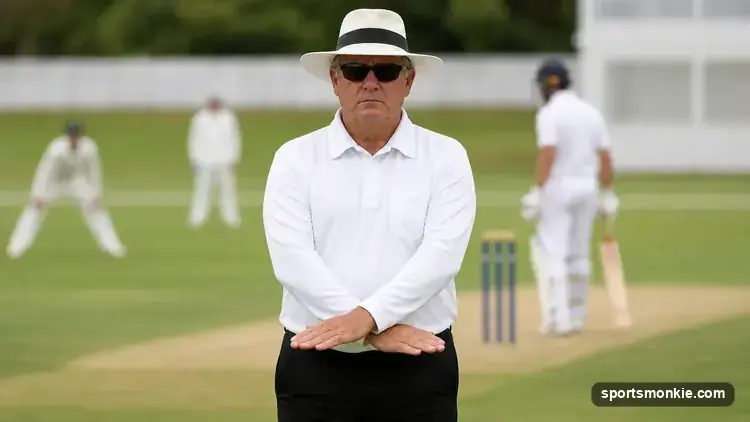
What Is a Dead Ball in Cricket? Rule and Common Situations
A dead ball is a delivery from which no runs score and no batter is out. Learn when the ball goes dead, who decides, and why it matters in a tight finish.
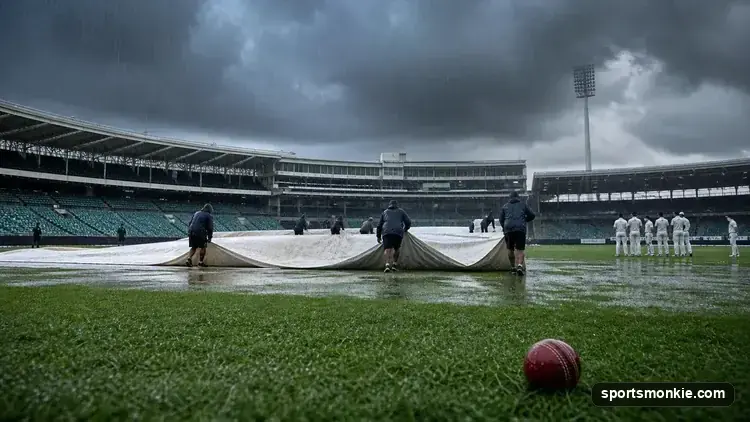
DLS Method in Cricket Explained: How Rain Targets Are Set
The Duckworth-Lewis-Stern (DLS) method resets targets in rain-hit limited-overs cricket using overs and wickets left. Here's the logic, with examples.
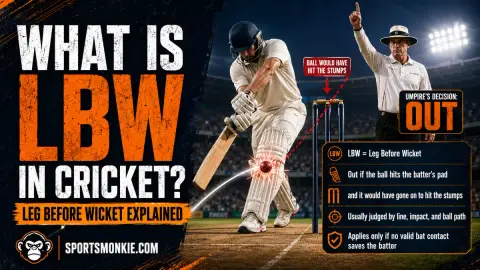
What Is LBW in Cricket? Leg Before Wicket Explained
LBW means the ball would have hit the stumps but struck the pad first. Here are the exact conditions umpires check and how DRS decides close calls.
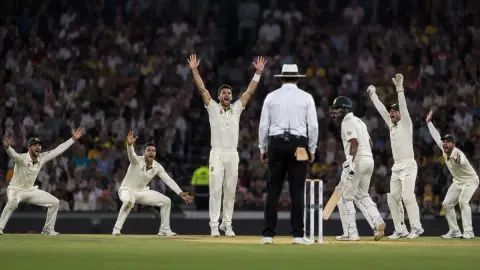
Appealing in Cricket: What It Is and How It Works
An appeal in cricket is the fielding side's formal request for a dismissal. Without one, an umpire cannot give a batter out, even one who clearly is.
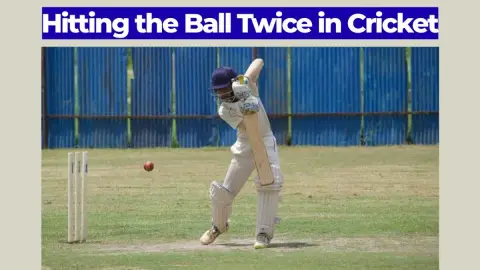
Hitting the Ball Twice in Cricket: Law 34 Explained
Law 34 lets a batter hit the ball twice only to defend the wicket. Do it for any other reason and you are out 'hit the ball twice'. Here is how the rule works.
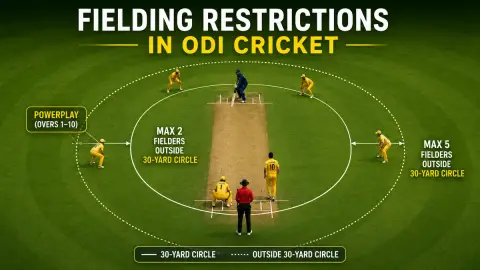
Fielding Restrictions in ODI Cricket: Powerplay Rules Explained
ODI cricket uses fielding restrictions called powerplays that limit the number of fielders outside the 30-yard circle. Here is exactly how they work.